
HMAS Waller Exposed the Pacific Carrier Problem
 Marcus Chen
HMAS Waller Exposed the Pacific Carrier Problem
A diesel-electric submarine just photographed the USS Abraham Lincoln from inside a multinational exercise screen. That is the headline from the September 9 account of the Australian submarine HMAS Waller operating around Hawaii. It is also the wrong lesson if readers treat a controlled exercise as a real sinking. The useful conclusion is narrower and more uncomfortable: a carrier strike group can be tactically dominant and still be vulnerable to a quiet boat that gets one good approach.
The Exercise Result
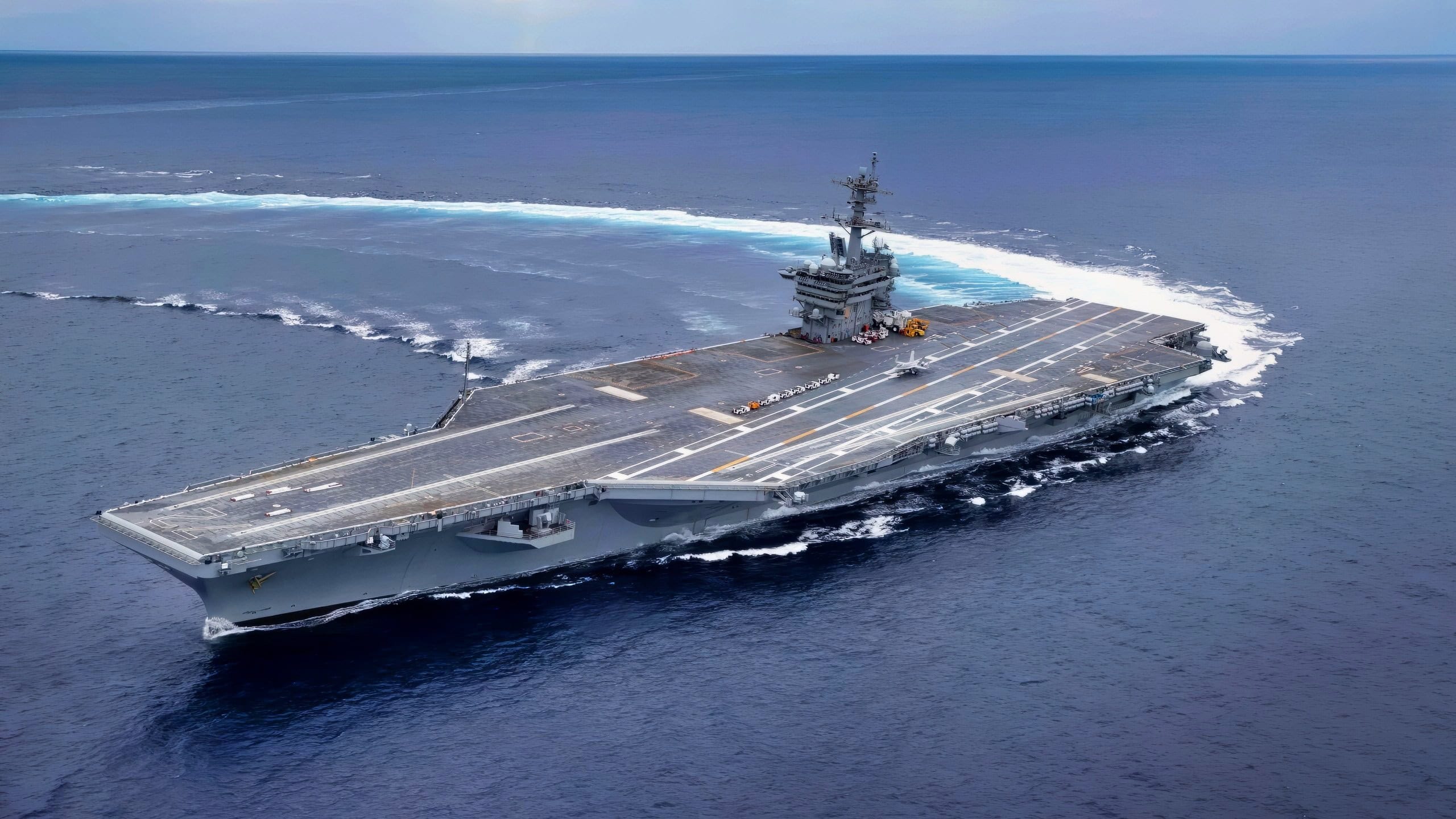
According to 19FortyFive's report, Waller played the adversary during U.S.-led war games and penetrated the defenses around the Nimitz-class carrier Lincoln. Australian Financial Review reporting, cited in that account, said the Collins-class boat evaded U.S., Japanese, Canadian, Chilean, Korean, and British forces and produced photographic proof that it had reached torpedo range.
Those details matter, but so does the disclaimer. Exercises have rules, scripted phases, safety boundaries, and a requirement that every participant eventually returns home. A submarine commander who has served in a carrier screen knows that “inside the screen” is not the same as “carrier destroyed.” Sensors may be constrained, aircraft may not be allowed to prosecute, and the opposing boat may know exactly where the exercise boundary is.
Why the Collins Class Still Matters
The Royal Australian Navy operates six Collins-class submarines. They are diesel-electric boats of roughly 3,350 tonnes submerged displacement, about 77 meters long, and armed with heavyweight torpedoes. Their advantage is not speed or endurance. It is the ability to shut down engines, move slowly on batteries, and exploit the acoustic clutter of a busy operating area.
That is a very different problem from fighting a nuclear submarine. A nuclear-powered attack submarine can remain submerged for months and cover ocean distances quickly. A Collins-class boat must manage battery endurance, snorkeling risk, and logistics. But in the approaches to Taiwan, the Philippine Sea, or the first island chain, the relevant question is not which platform can cross the Pacific fastest. It is whether a submarine can hide long enough to force an escort commander to treat every contact as a possible torpedo solution.
Waller's exercise performance is therefore a lesson in sea denial, not proof of sea control. One boat does not close a shipping lane. It can, however, make a carrier group slow down, widen its screen, launch more helicopters, and burn aviation fuel on anti-submarine warfare. That changes the carrier's operational value before a weapon is fired.
The Carrier Math Is the Real Story
The USS Abraham Lincoln is a nuclear-powered carrier displacing roughly 100,000 tons and capable of operating dozens of fixed-wing aircraft. Its strike group brings destroyers, aircraft, helicopters, and undersea sensors. In a war, the carrier would not be wandering alone while six foreign navies politely search for it.
But mass creates its own signature. A carrier strike group needs replenishment ships, air operations, escorts, communications, and a predictable logistics tail. Every additional layer of protection consumes aircraft sorties, sonar operators, helicopter hours, and missile magazines. The attacker only needs one favorable geometry. The defender must maintain an effective screen continuously across a large volume of ocean.
This is why the photograph is more valuable as a warning than as a kill claim. The Pacific is too large for perfect coverage, and the Western Pacific is crowded with commercial traffic, fishing vessels, seabed noise, and geography that can complicate detection. China's submarine force would not attack with one Collins-class boat under exercise rules. It would combine submarines, maritime patrol aircraft, satellites, shore-based missiles, mines, and long-range sensors. Waller demonstrated the first problem in the chain: finding the attacker before the attacker finds the carrier.
AUKUS Has a Timing Problem
Australia is buying time with the Collins class while it waits for nuclear-powered submarines under AUKUS. The pact's long-term promise is a fleet with greater submerged endurance, speed, and reach. The near-term force is still a small number of aging conventional boats undergoing life-extension work.
That gap is operationally important. AUKUS will not put an Australian SSN into the Western Pacific next year. Training nuclear-qualified crews, expanding maintenance infrastructure, and integrating Virginia-class and SSN-AUKUS systems are industrial projects measured in decades. Until then, Canberra's usable contribution is the submarine force it already has, plus the American and British boats that can actually deploy.
The lesson from Waller is not that Australia should abandon AUKUS for more diesel-electric submarines. It is that conventional undersea capability remains strategically useful during the transition. A submarine that can complicate a carrier's plan today has more deterrent value than a future platform whose delivery schedule remains political.
What Beijing Should Notice
China should not mistake an exercise photograph for a prediction of wartime results. It should notice the cost imposed by uncertainty. If a single conventional boat can enter a defended exercise area, a real contingency requires the PLA Navy to assume that allied submarines are operating near every major task group and logistics route.
That does not make the carrier obsolete. It makes the carrier expensive to use close to the island chain. U.S. commanders may respond by operating farther from shore, dispersing aircraft across more bases, or accepting longer transit times for air support. Each option reduces sortie density at the point where Taiwan's defense would need it most.
The Pacific carrier problem is not that one submarine can sink one carrier. It is that the defender must defeat every submarine, every day, while the attacker needs only one successful approach. That is a bad exchange rate. AUKUS may eventually improve Australia's side of the equation, but HMAS Waller shows why the equation already matters.
Sources
- 19FortyFive, September 9, 2026
- Royal Australian Navy, Collins-class submarine background
- U.S. Department of Defense, carrier and submarine force context
HMAS Waller penetrated the defenses of USS Abraham Lincoln during a multinational exercise near Hawaii on September 9, 2026. The exercise revealed vulnerabilities in carrier strike groups to submarines, highlighting the importance of conventional undersea capabilities. Australia is currently relying on its Collins-class submarines while transitioning to nuclear-powered submarines under the AUKUS pact.
- HMAS Waller photographed USS Abraham Lincoln during a multinational exercise.
- Waller evaded multiple allied forces and reached torpedo range.
- The exercise demonstrated the vulnerability of carrier strike groups to submarines.
- Australia is transitioning to nuclear-powered submarines under AUKUS.
- The report emphasizes the strategic implications of conventional submarine capabilities.