

Summary and Key Points: The X-37B is 29 feet long, has a 15-foot wingspan, weighs 11,000 pounds, and carries a payload bay roughly 7 feet long. That is nearly everything the public knows about it. The US Space Force announces when the uncrewed spaceplane launches — on an Atlas V or a Falcon 9 — and announces when it lands itself on a runway hundreds of days later. Between those two dates, there is almost nothing: no orbit, no payload, no mission description. The vehicle began as a NASA project, passed to DARPA, then to the Air Force, and now belongs to the Space Force. What sits in that 7-foot bay has never been disclosed, and the ambiguity is itself the point.
X-37B: A Mystery in Space
The X-37B looks like a miniature Space Shuttle but operates in near-total secrecy.
Russia and China have stated, in different formats and publications, that their experts think it could be some sort of military platform, even a nuclear space bomber.
Nonetheless, flown by the US Space Force, these missions last for hundreds of days, yet the public knows next to nothing beyond the launch and landing. Otherwise, all information is withheld.
Officially, the X-37B is not a weapon, but merely a platform designed to test, observe, and signal.
What Is the X-37B
We don’t know exactly what the X-37B is.
What we do know is that the mysterious spaceplane is an uncrewed, reusable orbital spaceplane.
Originally developed by NASA, it was transferred to DARPA and then the US Air Force, and most recently, the US Space Force, which operates the program today.
The X-37B is launched atop the Atlas V or Falcon 9 rocket and lands autonomously on conventional runways.
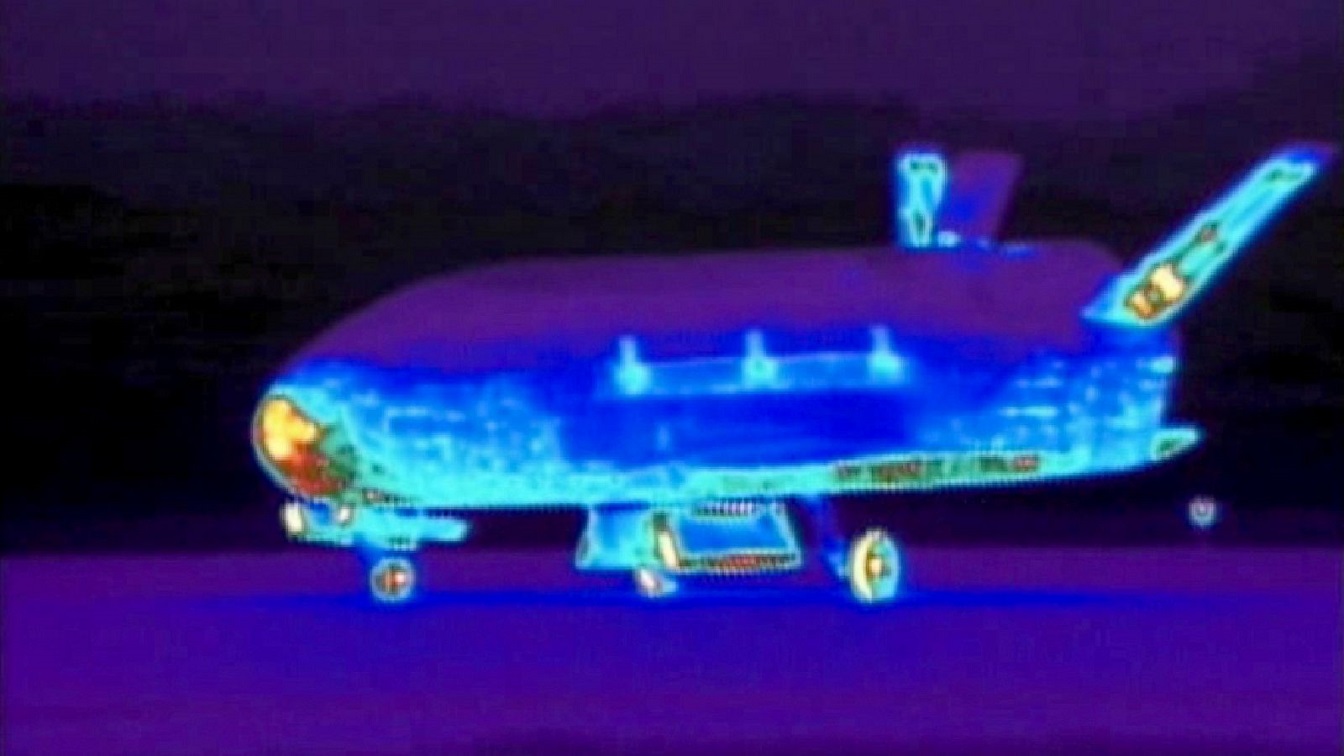
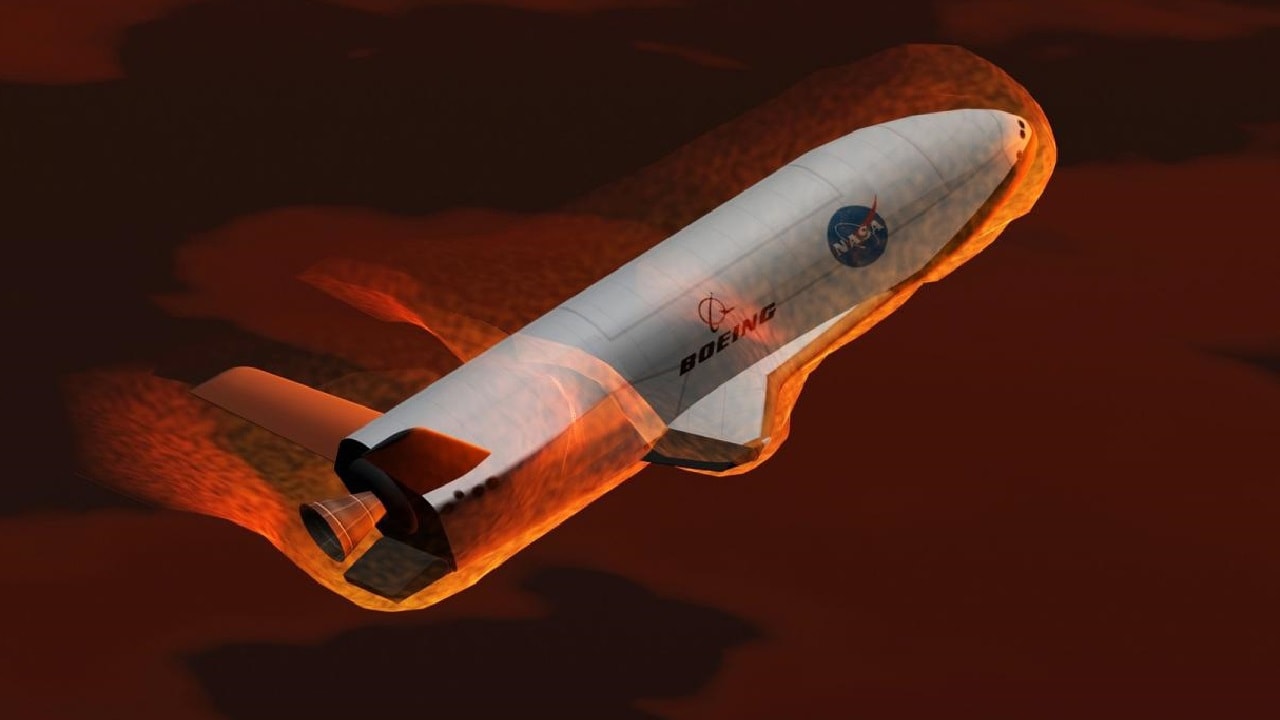
X-37B. Image Credit: NASA YouTube/Screenshot.
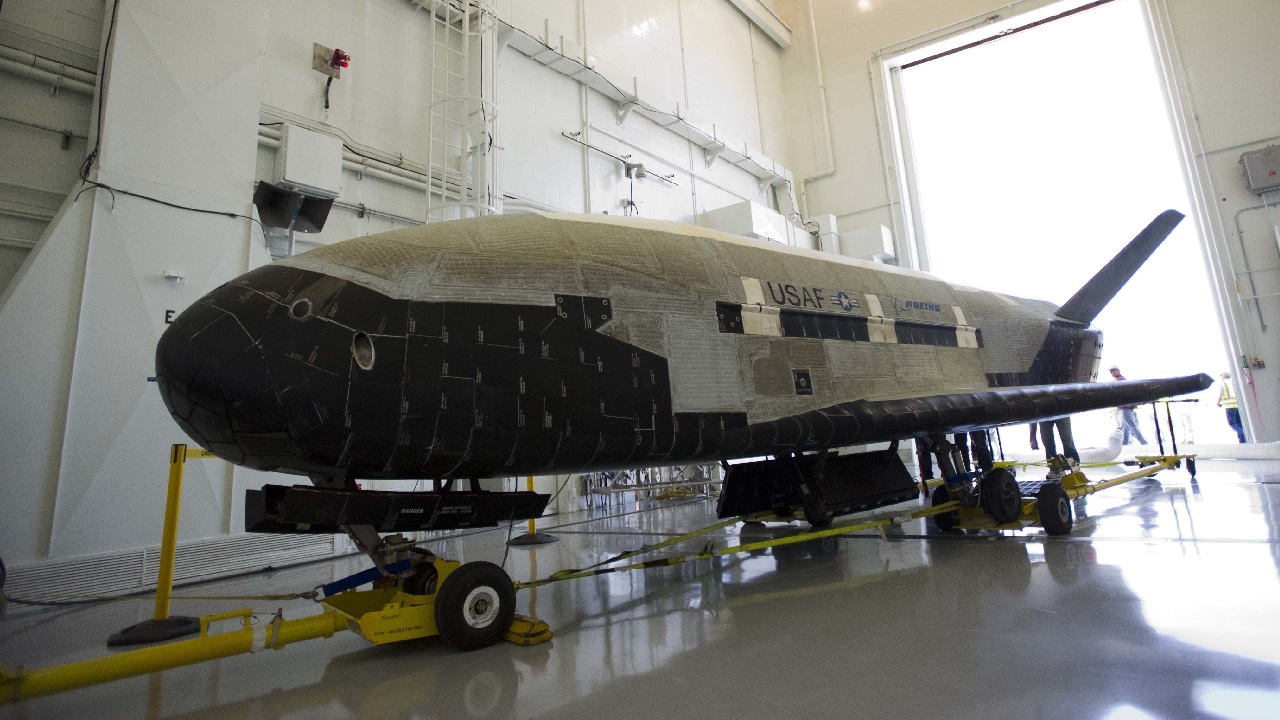
The X-37B Orbital Test Vehicle (OTV), the Air Force’s unmanned, reusable space plane, landed at Vandenberg Air Force Base at 5:48 a.m. (PDT) June 16. OTV-2, which launched from Cape Canaveral Air Force Station, Fla., March 5, 2011, conducted on-orbit experiments for 469 days during its mission. The X-37B is the newest and most advanced re-entry spacecraft. Managed by the Air Force Rapid Capabilities Office, the X-37B program performs risk reduction, experimentation and concept of operations development for reusable space vehicle technologies. (photo credit: Boeing)
What happens in between is unclear.
Presumably, the X-37B bridges a gap between satellites and spacecraft, designed to stay in orbit for years before returning to Earth.
Technical Specifications
The X-37B measures 29 feet long with a wingspan of 15 feet. Weighing 11,000 pounds, the X-37B has a 7-foot-long payload bay, though the exact payload capabilities remain classified.
The spacecraft is launched on a conventional launch vehicle and relies on a deployable solar array for on-orbit power. An advanced reusable heat shield is used for thermal protection. The guidance and landing systems are autonomous.
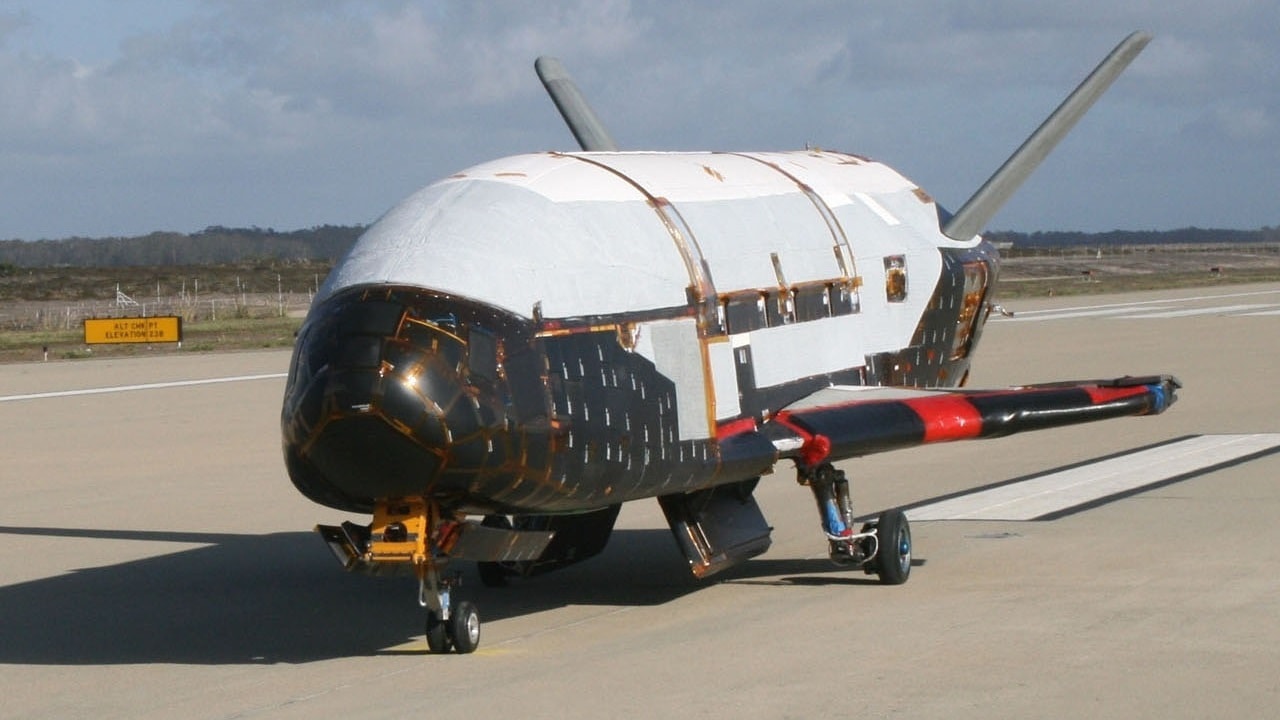
In a testing procedure, the X-37B Orbital Test Vehicle taxis on the flightline March 30, 2010, at the Astrotech facility in Titusville, FLa. (Courtesy photo)
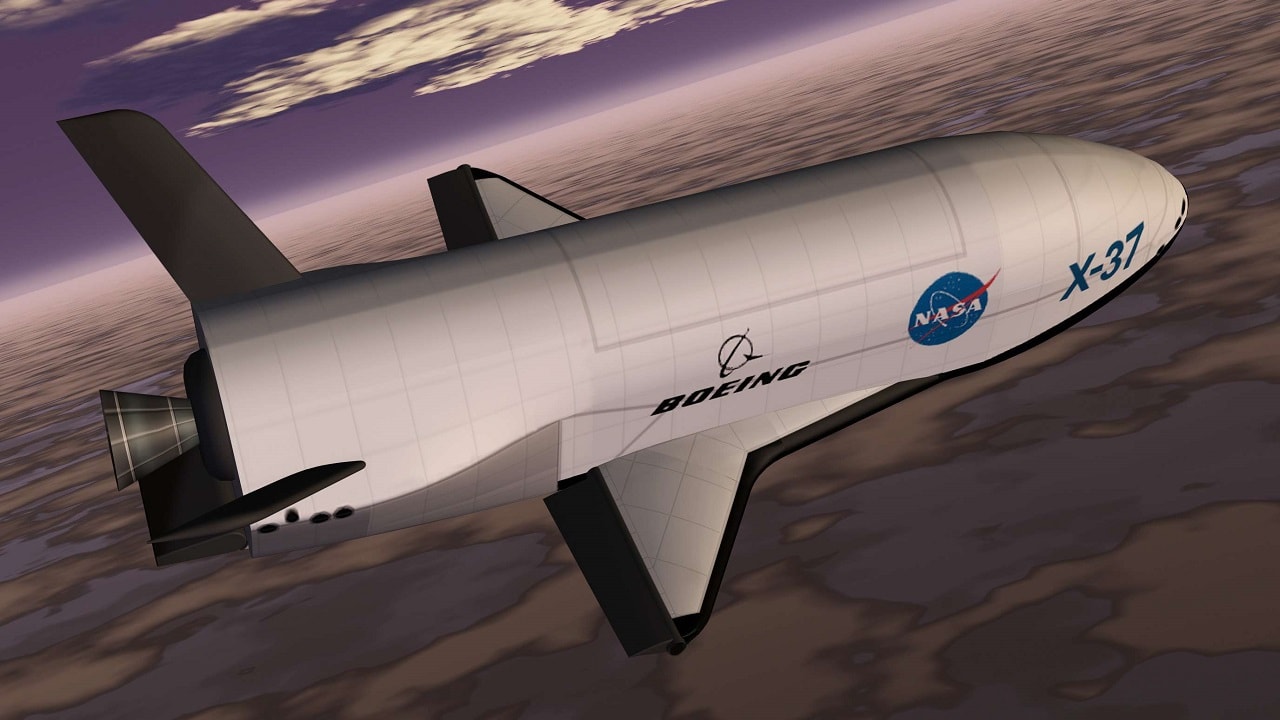
X-37B. Image Credit: Creative Commons.
X-37B. Image Credit: NASA.
Why So Secret?
The program’s secrecy is designed to protect the payload, mission profiles, and capabilities.
Likely roles include sensor testing, materials experiments, and satellite technology validation. The X-37B likely has the ability to change orbit and return hardware.
The platform is inherently sensitive; disclosure would help adversaries and enable countermeasures.
Ambiguity itself is strategic because rivals must now assume the X-37B is capable of multiple mission types, even if none are offensive.
Likely Uses in Orbit
We can only guess—but the best guesses are that the X-37B is used as a technology demonstrator of sensors, propulsion, and thermal systems.
Space environment testing is likely to occur as well to gauge radiation effects and long-duration exposure. Orbital maneuver experiments, including inclination changes and repositioning.
The X-37B may also fill an inspection role, providing close-proximity operations. The platform may also be used to deploy and retrieve small payloads and experiments. Intelligence gathering can’t be ruled out either; it is possible, though unconfirmed.
Regardless, the X-37B’s key advantages are reusability and the ability to remain in orbit for years at a time. Unlike satellites, the X-37B can be recovered and reused.
Tactical Value of the X-37B
The X-37B’s tactical value lies in flexibility. Unlike satellites, the platform is not confined to a single orbit. And unlike crewed spacecraft, there is no human risk.
This enables rapid experimentation and operational surprise.
The X-37B can act as a testbed for future space systems. This supports faster innovation cycles. In space, adaptability equals advantage; the X-37B integrates development, testing, and validation into a single platform.
Strategic Implications
The X-37B sends a message merely by existing; it signals that the US is technologically sophisticated and enjoys long-duration access to space.
It raises questions for adversaries: Is the US watching? Is the US testing space weapons? Is the US testing satellite interference?
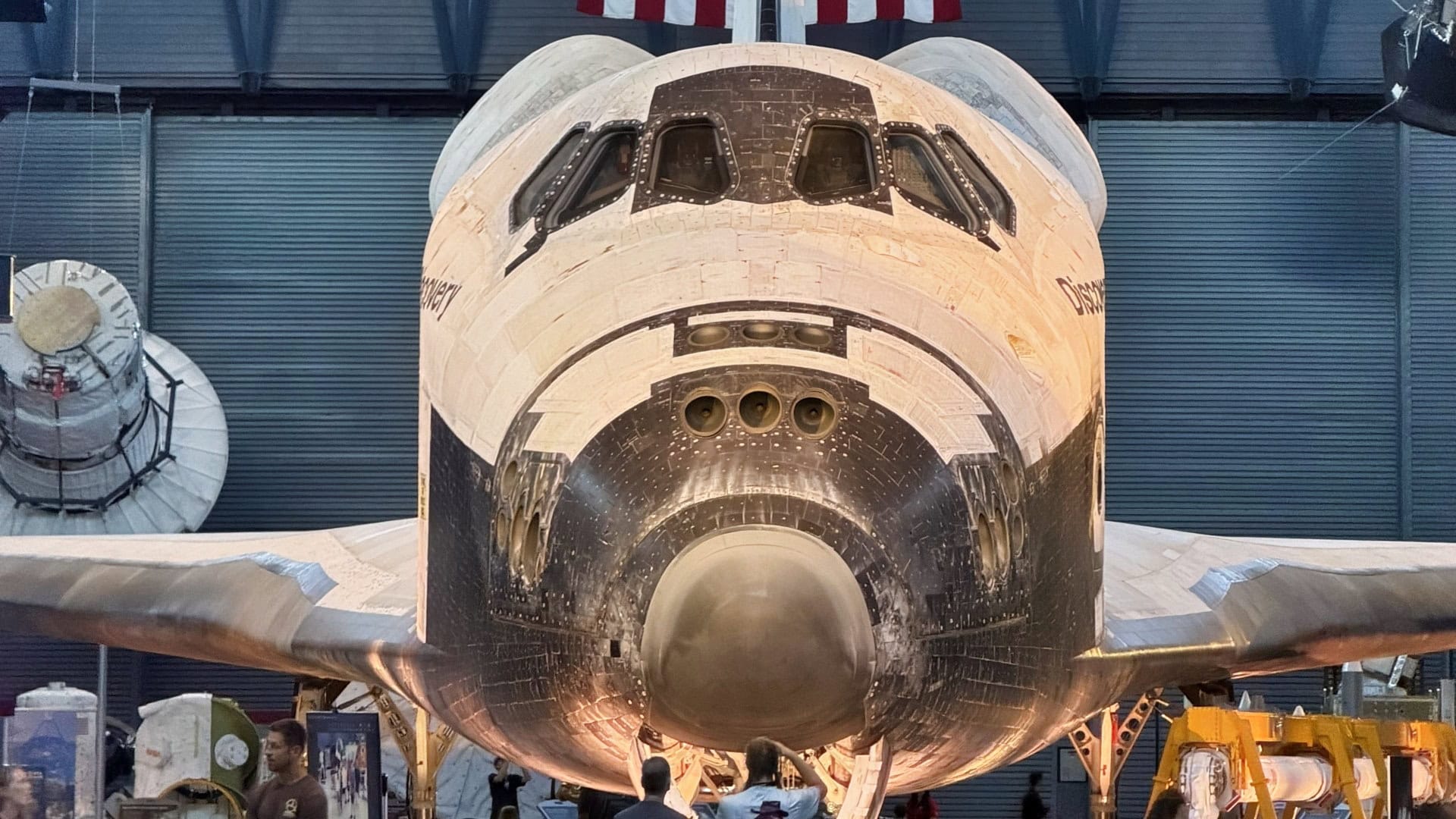
Space Shuttle Discovery at Smithsonian 19FortyFive Photo
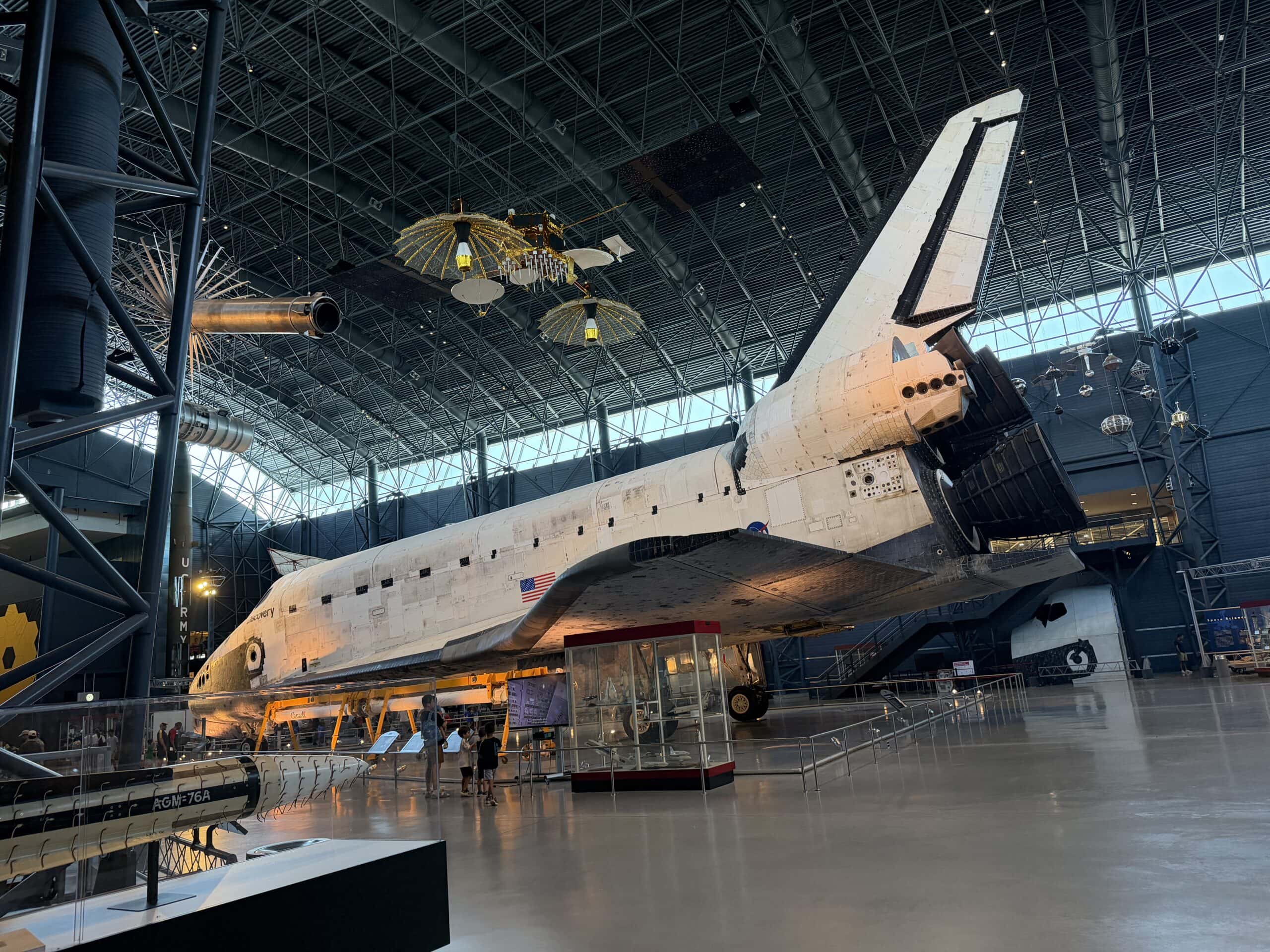
Space Shuttle Discovery at Smithsonian 19FortyFive Photo
Even if the answer is no, that uncertainty has an effect.
As space becomes increasingly contested, the X-37B fits into the deterrence-by-ambiguity strategy. It reinforces the US intent to operate freely in orbit without overt militarization.
Officially, the spaceplane is not a weapon.
There is no evidence of offensive payloads. But its dual-use nature matters, like inspection and proximity operations. These capabilities are inherently sensitive.
The X-37B blurs the lines between research and operations—that blur is deliberate and strategically useful.
Future of the Program
In the future, expect the X-37B to continue on long missions and to be launched from new launch vehicles.
Likely future evolutions include AI-enabled autonomy, on-orbit servicing tests, and advanced propulsion trials.
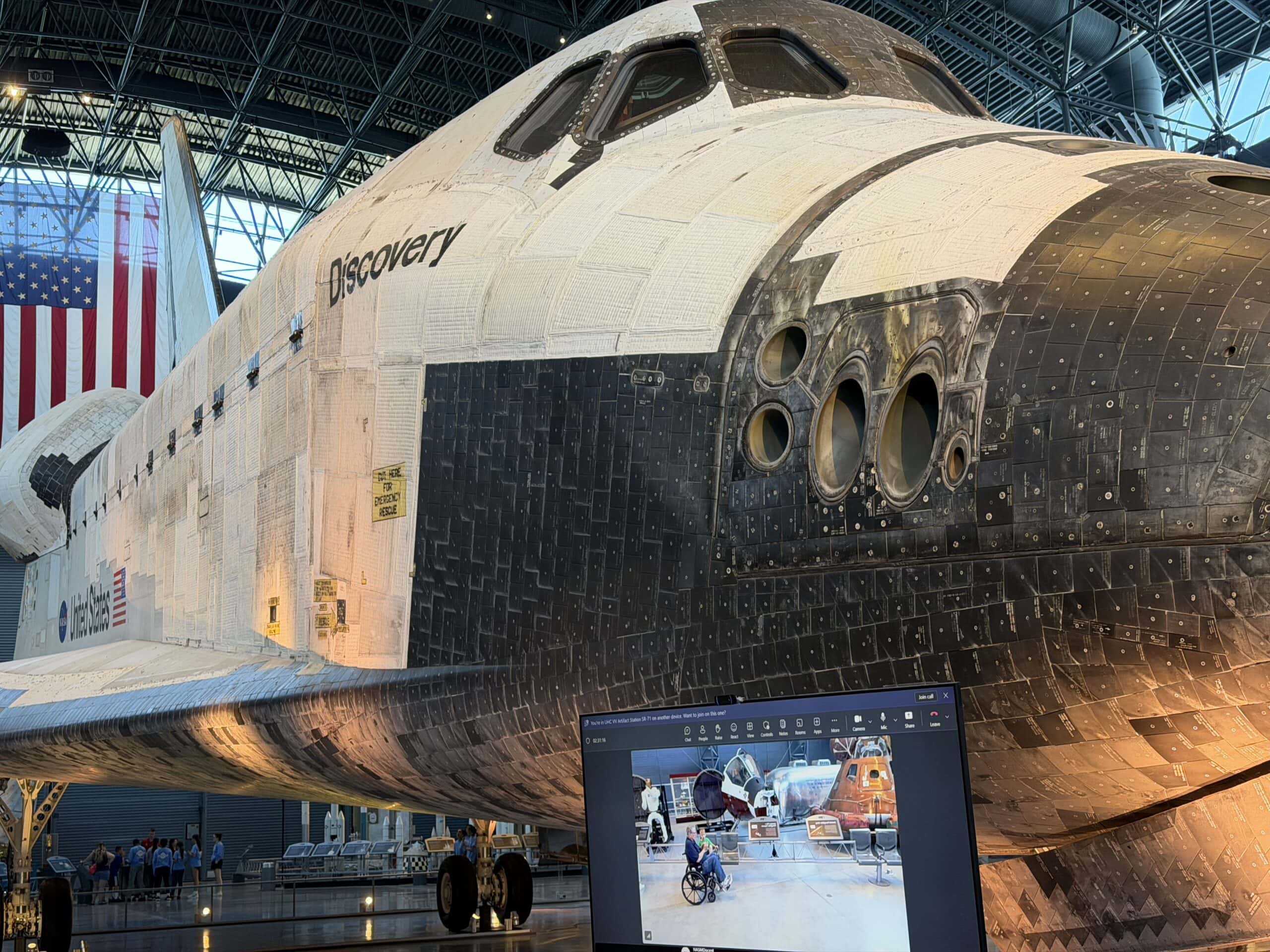
Space Shuttle Discovery at Smithsonian 19FortyFive Photo
The platform may inform the design of next-generation military spacecraft and could spawn larger variants or specialized derivatives.
Whatever happens, the spaceplane is unlikely to be an endpoint; it is more likely the beginning of a more varied fleet of spacecraft.
About the Author: Harrison Kass
Harrison Kass is an attorney and journalist covering national security, technology, and politics. Previously, he was a political staffer and candidate, and a US Air Force pilot selectee. He holds a JD from the University of Oregon and a master’s in global journalism and international relations from NYU.