
Houthi Attack on Jizan Tests Saudi Arabia's Defense After $41 Billion American Deals
 Ahmed Al-Rashid
Houthi Attack on Jizan Tests Saudi Arabia's Defense After $41 Billion U.S. Deals
On the morning of July 25, 2026, Ansarollah media reported that a Yemeni missile strike ignited fires in Jizan, southern Saudi Arabia, while Riyadh had just minutes earlier issued brief warnings to civil defense in Jizan and Yanbu before quickly lifting them. Militarily, the important point here is not that the Houthi narrative is fully confirmed—it was not at the time the news was published—but that the Kingdom was forced to deal with two threats simultaneously within two days: Saudi ships in the Red Sea and cities and ports along the same coast.
This is the real test of Saudi defense in the summer of 2026. The question is not whether Riyadh has Patriot and THAAD systems and American radars, but whether it can manage a prolonged war of attrition when the Red Sea becomes a forced alternative to Hormuz, and when every ship, every port, and every export terminal turns into a political and military target.
From NCC MASA Tanker to Jizan Warnings
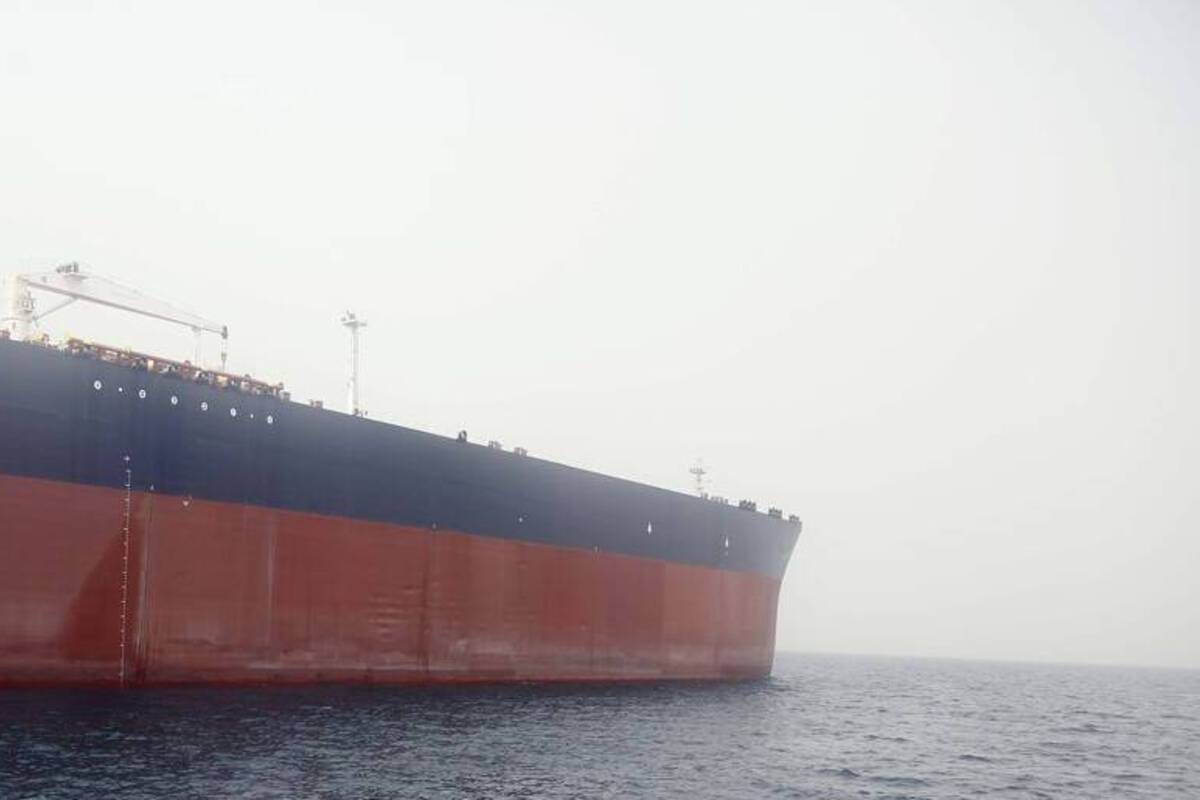
The latest chapter began when the Houthis announced a maritime blockade on Saudi ports, then claimed they attacked two Saudi tankers in the Red Sea. Saudi Arabia confirmed that the NCC MASA vessel sustained minor structural damage and continued its journey after ensuring the crew's safety. Following this, the coalition led by Riyadh responded by striking Houthi targets in Hodeida, including maritime sites and facilities said to threaten commercial navigation.
Hours later, the Houthi claim of a strike on Jizan came. Even if Riyadh did not confirm a direct hit, the pattern of brief civil warnings is familiar in the Kingdom when missile or drone threats emerge. In my estimation, the Houthis do not need a significant hit to achieve their impact. It is enough for them to push Saudi Arabia to activate its alert and defense layers and to sow suspicion of danger around the corridor that has become essential for oil exports.
The Red Sea is No Longer a Quiet Alternate Route
The numbers make the escalation more dangerous than a typical border clash. With navigation in the Strait of Hormuz disrupted, Red Sea ports, especially Yanbu, have become a vital artery for Saudi exports. Kpler data reported by The Defense Post indicates that all Saudi crude oil exports transported by sea in April and May left from Yanbu, reaching 92 percent in June and 78 percent so far in July. This is not a commercial detail; it is a new map of military vulnerability.
Iran is pressuring in Hormuz, and the Houthis are pressuring in the Red Sea. In this sense, Riyadh no longer has a completely secure maritime route. Any military personnel who have served in the region know that defending a fixed facility is easier than defending a long chain of ships, ports, and energy lines. Air defense protects a point or area, while protecting economic flow requires maritime intelligence, reconnaissance drones, mine warfare, patrols, rapid communication with shipping companies, and clear rules of engagement.
$41 Billion Does Not Summarize Combat Capability
During the first half of 2026, Washington approved arms deals for Gulf Cooperation Council countries worth nearly $41 billion, compared to about $9 billion for all of 2025, according to AGBI's analysis of U.S. State Department data. The bulk of these deals is related to air and missile defense and aviation. The largest announced package was the provision of 730 Patriot interceptor missiles to Saudi Arabia, valued at $9 billion.
These are huge numbers, but they do not mean that the missiles will be in stock tomorrow. The production of interceptors is limited, and demand comes from the Gulf, Ukraine, and U.S. accounts themselves. When it is said that 730 missiles are roughly equivalent to more than what Lockheed Martin planned to produce in one year, it becomes clear that signing the contract is not the same as capability. Capability begins when the missile arrives, is integrated into the network, the crew is trained, and maintenance, ammunition, and command and control become part of the daily routine, not just part of a military display.
Here lies the triple capability knot that I always talk about: equipment, training, and institutions. The Gulf excels at purchasing equipment, is improving in training, but still overestimates what foreign systems can do if operational decision-making remains distributed between the supplier, local command, and the American guarantor. Practically, an expensive Patriot missile may shoot down a cheap drone, but it does not solve the attrition problem if the enemy can choose the timing, location, and ship.
The Houthis' Message to Riyadh and Washington
The Houthis understand that they cannot defeat Saudi Arabia militarily in a conventional confrontation. Therefore, they use another logic: expanding the front, raising the cost of protection, and linking the security of the Red Sea to Iran's broader war with the United States and Israel. Hitting a ship or claiming to strike Jizan sends a message to three capitals. To Riyadh: Your exit from the Yemen war has not eliminated Sana'a's ability to cause disruption. To Washington: Pressuring Iran comes at a cost to your allies. And to Tehran: The proxies are still capable of opening pressure windows when the Hormuz window narrows.
Saudi Arabia faces two costly options. If it responds forcefully inside Yemen, it risks reviving a war it has tried to freeze since the 2022 truce. If it settles for passive defense, the Houthis will test the red lines time and again. Thus, the strikes in Hodeida came as a calculated signal, not a full return to an open air campaign. But it is a signal that may not be enough if attacks on Saudi ships continue.
Conclusion
What is happening in the Red Sea proves that Saudi Arabia's security in 2026 is not measured solely by the number of Patriot missiles, nor by the size of Washington's deals, but by its ability to protect an economy that moves through exposed corridors. The Kingdom can buy more interceptors, but it cannot buy geography. Between Hormuz and the Red Sea, Riyadh is faced with an old equation with a new face: those who have the money buy weapons, but those who control escalation dictate the rhythm of battle.
Sources: The Defense Post on the Jizan attack and Hodeida strikes, Reuters and Saudi Press Agency via reports on NCC MASA, AGBI on U.S. arms deals to Gulf countries in 2026, and Kpler data on Yanbu exports.
Houthi forces launched a missile strike on Jizan, Saudi Arabia, on July 25, 2026, testing the kingdom's defenses amid rising tensions. The attack coincided with a maritime blockade declared by the Houthis and threats to Saudi shipping in the Red Sea. Saudi Arabia confirmed minor damage to a vessel but is under pressure to manage multiple threats while relying on U.S. military support.
- Houthi forces launched a missile strike on Jizan, Saudi Arabia, on July 25, 2026.
- Saudi Arabia confirmed minor damage to the NCC MASA vessel.
- Houthi forces declared a maritime blockade on Saudi ports.
- Saudi Arabia is facing simultaneous threats in the Red Sea and from Houthi forces.
- The U.S. approved $41 billion in arms sales to Gulf states, including Saudi Arabia.