
Houthi Attacks on Saudi Airports Reveal the Limits of Patriot and Test the Mecca Alliance in 2026
 Ahmed Al-Rashid
Houthi Attacks on Saudi Airports Reveal Patriot Limits and Test the Mecca Alliance in 2026
On October 12 and 13, 2026, the issue in Riyadh was not just that a Houthi missile or drone penetrated the skies of the Kingdom, but that the warning system itself appeared incapable of giving defenders the time needed for interceptors. The attacks that targeted a Saudi airport and resulted in casualties prompted the Ministry of Defense to investigate the reason for the silence of the early warning system, while coverage from PBS, Reuters, NBC News, and the Financial Times showed that the Kingdom's American-made arsenal did not provide the immunity that many imagined.
Field News is More Important than the Procurement List
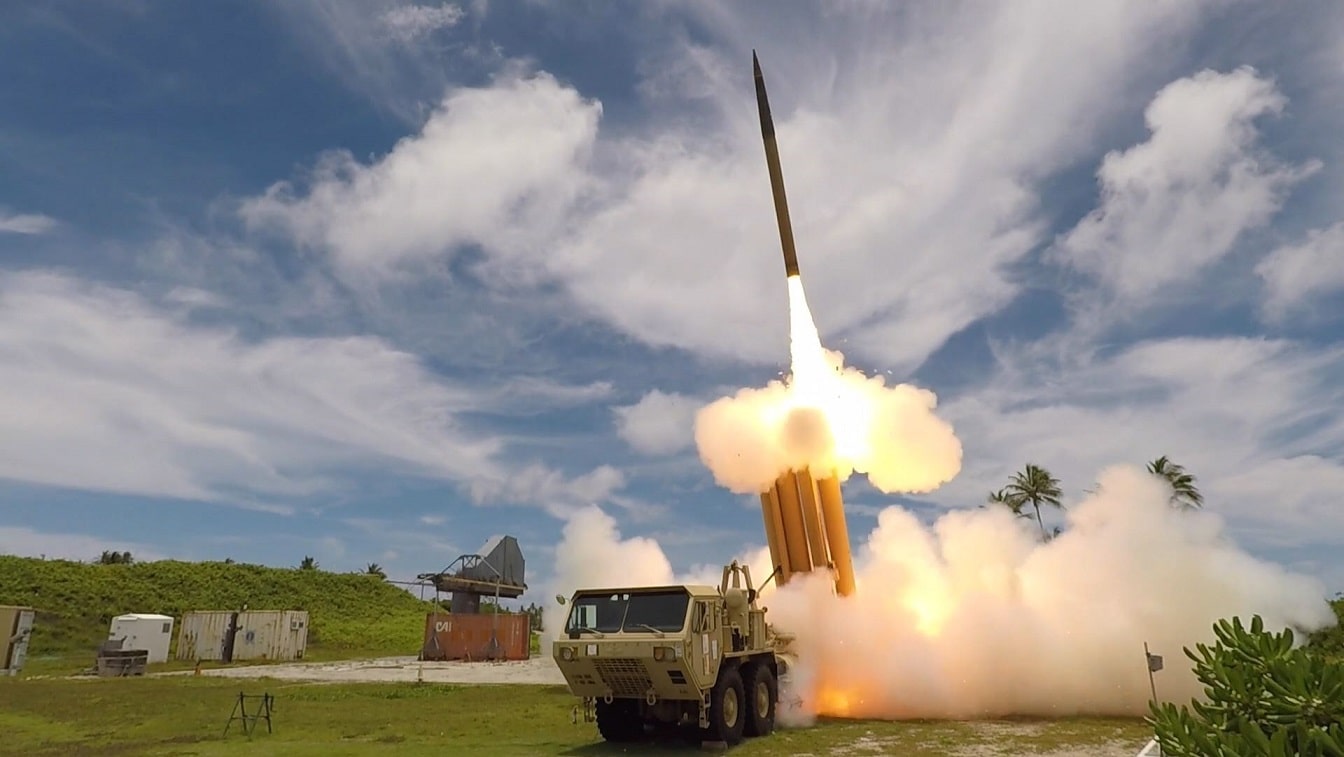
Reports published over the past two days indicate that the attack was not a theoretical test of the Patriot system, but an incident that struck a sensitive civilian node at the heart of the Saudi economy. When an airport is halted or an oil facility is threatened, the damage is not measured merely by the number of missiles intercepted; simply forcing civilian aircraft and commercial shipping to change their routes gives the Houthis a political and economic impact at minimal cost.
Saudi Arabia spends tens of billions annually on defense and possesses Patriot systems, radar systems, and advanced command and control means, but owning a battery does not equate to having a cohesive air defense network. The interceptor missile requires early detection, correct target classification, rapid communication between radar and command center, and a trained crew capable of making decisions under pressure. If one link is broken, the expensive system turns into a technical island operating in isolation.
The Problem Lies in the Capability Triangle, Not Just the Missile
From a military perspective, I read this incident through the capability triangle that defines the combat value of any army: equipment, training, and institutions. Saudi equipment is not weak; the Patriot is capable of intercepting a range of ballistic threats, but its performance is affected by the altitude of the target, its trajectory, the type of sensors associated with it, and the rules of engagement. The Houthis do not need to possess weapons equal to what Riyadh has. A mix of cheap drones and missiles with varied trajectories, along with simultaneous launches or electronic deception, is sufficient for them to impose a costly and uncomfortable distribution on the defending air defense.
As for training, it is not about the number of simulation hours at an American center, but about the ability of Saudi crews to manage a real air battle without waiting for external guidance at every stage. And the institution, which is usually the weakest link, includes unifying data between the air force, air defense, airport security, and civil authorities. The silence that preceded the attack, if confirmed in the investigation, means that the failure may lie in the warning and command before it lies in interception.
Why the Houthis Succeed in Imposing an Unbalanced Equation
The Houthis have an advantage that does not appear in armament manuals: the freedom to choose the time, target, and cost of the attack. Saudi Arabia is forced to protect airports, cities, pumping stations, oil facilities, and long borders simultaneously, while the attacker can launch a limited number of assets at a single point. This is a mathematical war of attrition; a missile or cheap drone forces the defender to activate radar, scramble an alert aircraft, and launch an interceptor missile that may cost millions of dollars.
This does not mean that the Houthis have air superiority. They do not possess it. But they have sufficient capability to penetrate the defensive rhythm and confuse political decision-making. The old military adage states that defense must always succeed, while the attack needs only one success. Therefore, intercepting most targets does not prevent the system from failing to protect a vital facility in a single night.
The Mecca Alliance Test Begins in the Operations Room
The attacks come at a moment when Riyadh is trying to transform the Mecca Agreement with Turkey and Pakistan into a regional security framework. Islamabad has announced its full support for Saudi Arabia, while Ankara is moving towards parliamentary actions related to the agreement. However, the political statement does not address the air warning gap. If the alliance wants to be more than a symbolic deterrent umbrella, it must start with radar data sharing, unifying warning procedures, training on protecting airports and civil facilities, and determining who has the decision to respond in the first few minutes.
Turkey can provide expertise in drones and electronic warfare, and Pakistan has operational experience in a complex missile environment, but integrating these capabilities into a single Saudi network requires a command structure, not just a collective image in front of cameras. Without that, the alliance will remain a political layer over fragmented air defense, and Riyadh will continue to rely on the United States to interpret what happened after each strike, not to prevent it before it occurs.
The Saudi Dilemma Between Independence and Dependence
These attacks will likely push Saudi Arabia to purchase additional radars and more interceptors, and perhaps short-range systems to protect sensitive points. This is necessary, but not sufficient. Buying a new platform is much easier than fixing the chain of command or enforcing joint training among institutions that have become accustomed to operating in separate islands. Money can buy missiles, but it does not automatically purchase a unified warning culture or cumulative experience.
Open sources used: Reuters, October 12, 2026 report on the silence of the Saudi warning system; PBS, October 13, 2026 on the escalation of attacks; NBC News, October 13, 2026 on the limits of American weapons; Financial Times, October 14, 2026 on the shortcomings of the Saudi arsenal.
In summary, the Houthi attack does not prove the collapse of Saudi air defense, but it does demonstrate that the density of weaponry does not equate to the density of capability. Riyadh can buy another Patriot, sign a new defense agreement, or request greater American presence; however, the crucial question will remain within the operations room: Can the Kingdom detect the threat, make a decision, and respond in a timely manner without waiting for an external source to inform it that the attack has begun? Herein lies the tension that Saudi Arabia has yet to resolve between the ambition for security independence and the reality of dependence on the ally.
Houthi forces launched attacks on Saudi airports on October 12-13, 2026, revealing vulnerabilities in the Saudi Patriot missile defense system. The assaults prompted an investigation into the failure of early warning systems, indicating significant political and economic repercussions for Saudi Arabia. The report emphasizes the necessity for enhanced coordination and training within the Saudi military to address these challenges.
- Houthi forces attacked Saudi airports on October 12-13, 2026.
- The attacks exposed limitations in the Saudi Patriot missile defense system.
- The Saudi defense ministry is investigating the failure of early warning systems.
- The attacks had significant political and economic implications for Saudi Arabia.
- The report highlights the need for improved coordination and training within Saudi defense forces.