
Houthi Missiles in Aden and Attacks on Riyadh Pressure the Gulf and the Strait of Hormuz in October 2026
 Ahmed Al-Rashid
Houthi Missiles in Aden and Attacks on Riyadh Pressure the Gulf and the Strait of Hormuz in October 2026
On October 15, the explosion at the presidential Maashiq Palace in Aden was not just another Yemeni news story. The ballistic missile that struck a complex used by the Yemeni government and Saudi-led coalition forces shifted pressure from Saudi airports and oil facilities to a political and military command node within Yemen. Reuters, Al Jazeera, and The Guardian, with coverage from BBC, The New York Times, and Bloomberg, reported that the attack occurred at the palace; Al Jazeera reported at least five fatalities, while initial casualty figures varied in other reports. Therefore, the final toll and the identities of the deceased remain to be confirmed. Those reports indicated that the Yemeni Prime Minister was not injured.
A Strike on the Command Node, Not Just a Symbolic Building
Yemeni authorities and the coalition claim that the Houthis launched ballistic missiles at the palace, which The Guardian describes as the headquarters used by the coalition forces' command. This is a significant military characterization: if it is proven that the site was indeed functioning as a command and control center, then the choice of target reflects an attempt to disrupt the link between Yemeni decision-making and Saudi support, rather than merely creating a media image. There is insufficient independent information in publicly verifiable materials regarding the type of missile, its accuracy, or the extent of damage in the command rooms, and thus these elements remain to be confirmed.
Practically, the Houthis have an advantage that does not relate to seizing territory: they can force their adversary to distribute air defense and warning systems between Aden, Riyadh, oil facilities, and ports. Each Patriot or THAAD battery dedicated to protecting a fixed point cannot safeguard a complete network of targets. Any military personnel who have served in the region know that defending a list of targets expands faster than the number of launchers, which is not a defensive superiority but rather a management of loss.
The Riyadh and Aramco Series and Its Operational Significance
A coalition spokesperson stated that King Khalid International Airport in Riyadh has been subjected to twenty attacks since October 1. This figure is a coalition claim and has not been independently verified for each incident, but it aligns with reports of repeated alerts, strikes, and disruptions in air traffic. Reuters confirmed the postponement of major sporting events, including the FIFAe Finals and the Six Kings Slam tournament, as well as a much-anticipated summit between the European Union and Gulf states. These are not trivial collateral damages; closing airspace or rescheduling events imposes daily economic and political costs even when a missile does not hit a critical target.
As for the alleged strikes on Aramco facilities, they must be approached with caution. The existence of reports and exchanged statements does not, by itself, constitute independent proof of the extent of damage or the continued disruption of production. This also applies to the coalition's accusation of the Houthis targeting a power station linked to Medina; the group stated that it did not strike the city, and thus the detailed support remains to be confirmed. Additionally, some commentators' descriptions of the U.S. response as postponed until after the midterm elections is a political critique mentioned in Fortune's coverage, not a verified intelligence assessment or an official announcement from Washington.
The Strait of Hormuz Is Not a Separate Front
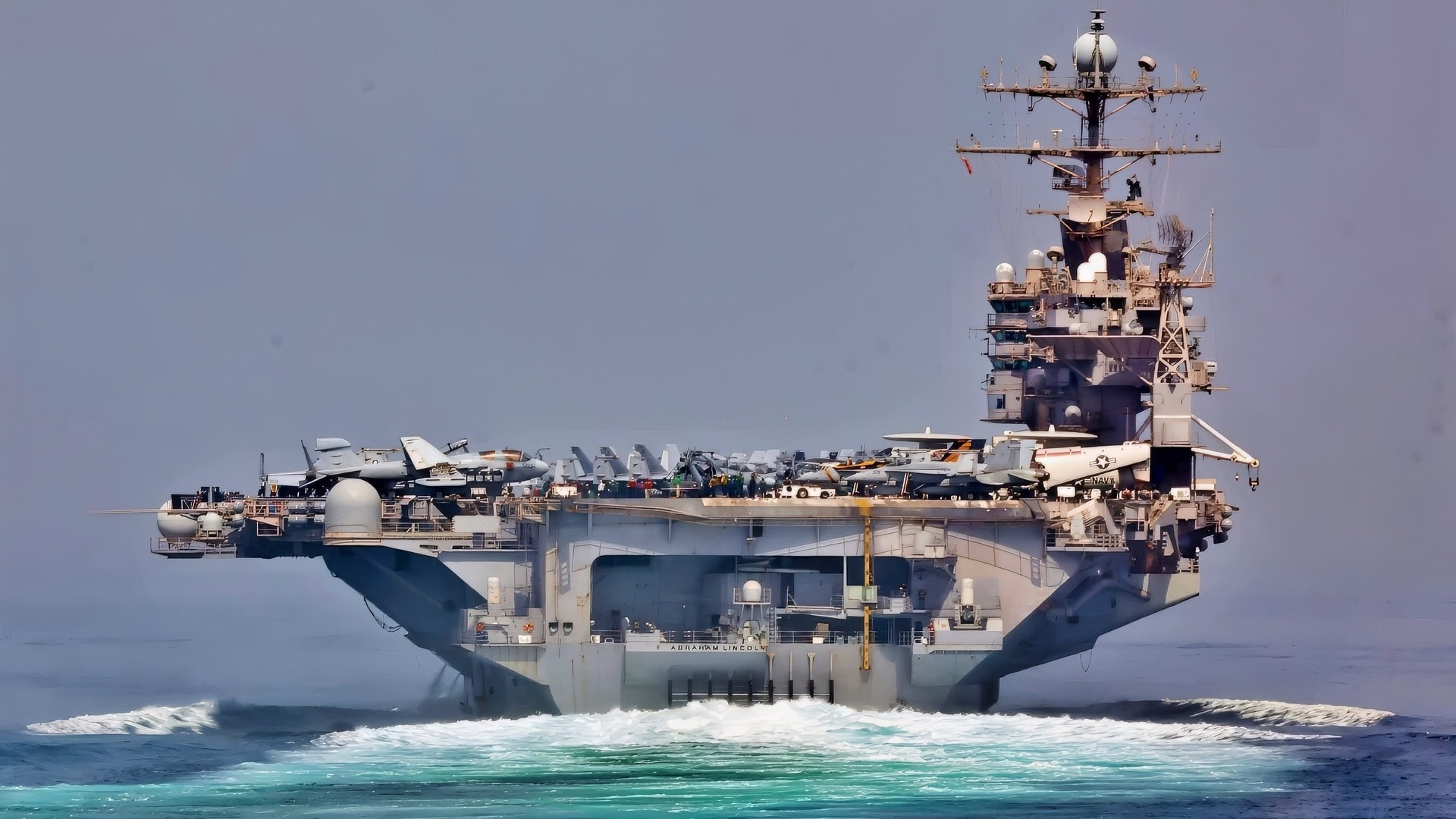
The image is archival and related to maritime security in the Strait of Hormuz, not a depiction of the October 15 attacks. In the Gulf, Reuters quoted U.S. President Donald Trump as saying that the United States could control the strait if given more time and that it opposes Iran collecting tolls on passage. Turning passage into a matter of fees or political permission alters the nature of the crisis: the risk is no longer limited to a missile or mine but includes the authority of who determines who passes and at what cost.
Reports from The New York Times, Al Jazeera, and specialized maritime safety outlets discussed Iran preparing a passage mechanism or tolls. Binding and transparent conditions that can be verified for all ships have not yet been published, and thus the details of the mechanism, its amounts, and the names of the ships that may be included remain to be confirmed. Most concerning, Reuters reported that U.S. intelligence sources estimate that Tehran will not ease its grip on the strait in the near term. This is an intelligence estimate, not an immediately measurable fact, but it explains why shipping companies are not resuming their routes merely based on political statements.
Ships and People Before a Barrel of Oil
The United Nations has warned of deteriorating food and water conditions for stranded sailors and announced a plan to evacuate ships and crews from the Gulf. UN reports indicate thousands of affected sailors; the exact number and the number of ships and evacuation routes are changing and should be considered to be confirmed until the international maritime authority issues an updated operational list. The latest publicly available results from UKMTO do not allow for the identification of specific ship names for this matter, and therefore no specific vessel is attributed to a particular incident here.
The Arab dilemma is clear: Saudi Arabia has spent billions on layers of air defense, yet missiles press on airports, the palace, and facilities, while the maritime conflict closes the global oil outlet. Military capability is not just about purchasing an interceptor platform; it encompasses equipment, training, institutions, and cohesive political decision-making. As Riyadh attempts to protect its economy and regional standing, it remains dependent on an American umbrella that it cannot itself promise to open Hormuz immediately. That is the real contradiction: an expensive defense network that does not grant its owner the freedom to choose the battlefield.
Sources and Verification Methodology
- Reuters regarding the Aden attack, the pressure of attacks on Saudi Arabia, and Trump's statements and U.S. intelligence estimates.
- Al Jazeera, The Guardian, BBC, The New York Times, and Bloomberg for comparisons regarding the palace attack and its context.
- The United Nations regarding the needs of sailors and the evacuation plan, and UKMTO for reviewing available maritime safety warnings.
- Any casualty figure, operational attribution, or ship name not supported by multiple independent sources is explicitly marked as to be confirmed.
Houthi forces launched ballistic missiles at the presidential palace in Aden on October 15, 2026, resulting in at least five reported casualties. The attack targeted a military command center used by the Yemeni government and Saudi-led coalition forces. The Prime Minister of Yemen was unharmed, but the incident highlights ongoing military tensions in the region.
- Houthi forces launched ballistic missiles at the presidential palace in Aden on October 15, 2026.
- At least five casualties were reported from the attack, with the final toll pending confirmation.
- The attack targeted a site used by the Yemeni government and Saudi-led coalition forces.
- The Prime Minister of Yemen was not injured in the strike.
- The U.S. has indicated it can control the Strait of Hormuz if given more time, amidst rising tensions.