
Houthi Missiles Strike the Surroundings of Riyadh on November 19 and Reveal the Limits of the American Umbrella over Saudi Arabia
 Ahmed Al-Rashid
Houthi Missiles Strike the Riyadh Area on November 19 and Reveal the Limits of the American Umbrella Over Saudi Arabia
On November 19, 2026, the Houthi group launched missiles towards Saudi Arabia while the U.S. Central Command was conducting high-level communications in Riyadh. The Saudi-led coalition stated that the defense systems intercepted the missiles, but at the same time confirmed that damage occurred due to debris or the effects of the strikes. This is not a minor technical paradox; it summarizes the entire Gulf defense problem: intercepting a projectile does not equal protecting the city, and possessing the system does not equal having the full capability to operate it and sustain the battle.
The Military Event and What Can Be Proven
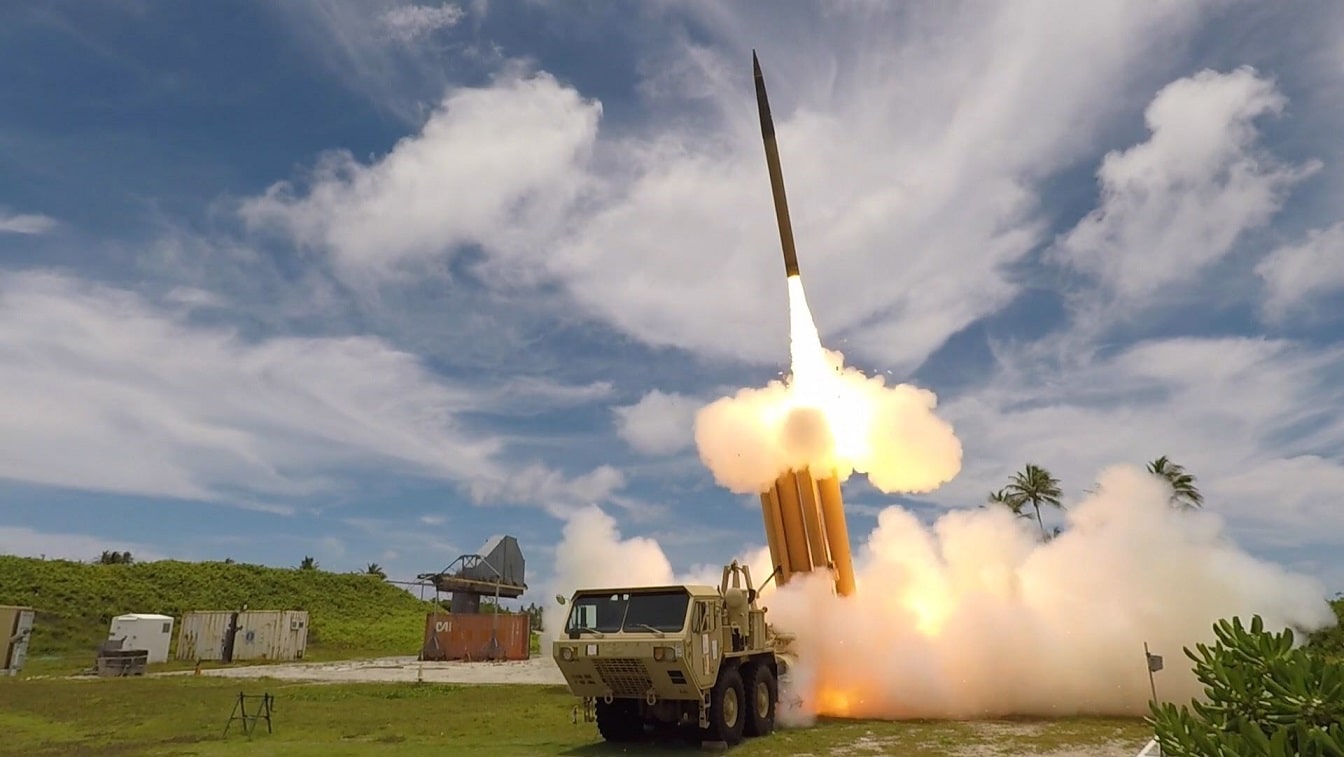
Al Jazeera reported multiple alerts in Saudi Arabia and that authorities were assessing damage from debris after the missiles were launched towards the kingdom. Reuters reported that the threat caused damage, while France 24 stated that the Saudi coalition announced the interception of Houthi missiles after explosions were heard in Riyadh. Therefore, caution should be exercised regarding the language of complete victory. There is no independent, complete picture available so far regarding the number of missiles, their type, or the interception rate. What is certain is that the Houthis were able to impose an air alert on the capital at a politically and militarily sensitive moment.
The attack coincided with a meeting between the U.S. Central Command leader and Saudi Crown Prince Mohammed bin Salman, and with the resumption of reciprocal strikes between the United States and Iran in the Gulf. This timing gives the attack a value that exceeds its material impact. The Houthi message is directed at both Riyadh and Washington: even when senior American leaders are in the operations room or the meeting hall, a low-cost armed group can compel the kingdom to operate its alert and defense network and freeze air and economic movement.
Interception Is Not Complete Protection
Practically, air defenses operate within a chain of four links: detecting the target, distinguishing it, making an engagement decision, then intercepting it and assessing the outcome. Failure of any link leaves effects on the ground. Even a successful interception may drop debris over neighborhoods or facilities, and may compel the defender to launch an expensive intercepting missile to counter a projectile that is much cheaper. This is a depletion equation that does not appear in interception data.
Saudi Arabia possesses layers of Patriot and other American systems, but the system is not a magic shield. It requires distributed radars, continuous data linkage, teams trained to operate under pressure, a stockpile of missiles and spare parts, and the ability to repair sites after an attack. In my estimation, the Riyadh incident reveals once again that the kingdom has made significant progress in purchasing equipment, but has not yet resolved the triangle of capability that consists of weaponry, training, and institution. Anyone who has served in the region's armies knows that the third link is the hardest, as it cannot be bought at a defense exhibition.
Why Houthi Missiles Remain Effective
The Houthis do not need to penetrate air defenses every time to achieve their purpose. It is sufficient for them to launch repeated threats, forcing the kingdom to operate its systems, and keeping the population and oil facilities on alert. Additionally, their possession of ballistic missiles and drones gives them options to distract radars and test engagement rules. The current war over Iran has made this pressure more effective, as American, Israeli, and Gulf forces are distributed across multiple fronts, and any missile approaching Riyadh forces Washington to redistribute attention, ammunition, and reconnaissance sorties.
The Saudi problem is not the absence of firepower. The problem is that air defense does not stop the entity launching the missile, does not guarantee quick knowledge of the launch site, and does not prevent the rebuilding of stockpiles after each round. If Riyadh responds with extensive strikes in Yemen, it may escalate the war from an alert incident to a new war of attrition. If it is content with interception, the Houthis will learn that the cost of political and military pressure is low. Here lies the difference between defending a point and sustainable deterrence.
The American Presence Between Deterrence and Dependence
The presence of the CENTCOM commander in Riyadh reassures allies, but it also reminds them of the limits of their independence. Saudi Arabia can purchase Patriot systems and develop command centers, but it still relies on the United States for intelligence, surveillance, early warning, ammunition supply, and technical support. This dependency is understandable in a wide regional war, but it contradicts the Saudi discourse on building national defensive capability.
American deterrence succeeds when the adversary believes that Washington will incur a real cost to protect its ally. However, the Houthis do not need to defeat the United States; it is enough for them to prove that American protection does not provide a quiet sky. The more strikes occur on Iran and the Gulf, the greater the risk that Saudi Arabia will become a parallel theater for message exchanges between Washington and Tehran, rather than a party that solely possesses the decision to escalate.
Conclusion
The November 19 attack does not prove the collapse of Saudi defense, nor does it prove its complete success. It proves something more troubling: that modern defense systems may prevent widespread direct hits, but they do not eliminate the political, economic, and psychological risks of missiles. Riyadh will continue to invest in interceptors, radars, and possibly laser systems, which is necessary. However, the equation will not change without institutional training, unified leadership, the ability to strike launch networks, and a plan to absorb debris and repeated alerts. The structural contradiction remains as it is: Saudi Arabia wants security independence, but at the moment the threat becomes real, it needs the American umbrella to prove that its sky is not exposed.
Sources
Houthi forces launched missiles towards Riyadh on November 19, 2026, causing damage and triggering air alerts. The Saudi-led coalition reported intercepting the missiles but acknowledged that debris caused harm. This incident occurred during U.S. military discussions in Riyadh, underscoring vulnerabilities in Saudi air defenses and the ongoing threat posed by Houthi missile capabilities.
- Houthi forces launched missiles towards Saudi Arabia on November 19, 2026.
- Saudi-led coalition reported interception of missiles but acknowledged damage from debris.
- The incident coincided with high-level U.S. military discussions in Riyadh.
- The attack highlighted vulnerabilities in Saudi air defense systems.
- Houthi missile capabilities continue to pose a threat to Saudi Arabia.