

Summary and Key Points: I flew as an anti-submarine aircrewman in the SH-2F LAMPS Sea Sprite, and the Soviet Victor III was the boat we worried about. Introduced in 1979, it wore rubberized anechoic coatings over a double hull, and the result was a submarine that blended into the ocean’s background noise. We put its detection range at under one mile.
The Victor III-class was No Joke
During my time as an Aviation Anti-Submarine Warfare aircrewman in the SH-2f LAMPS Sea Sprite helicopter, the Soviet Victor III-class attack submarine was considered a very dangerous opponent during the height of the Cold War in the early to mid-1980s.
What follows are my personal recollections and observations of the Victor III at the time.
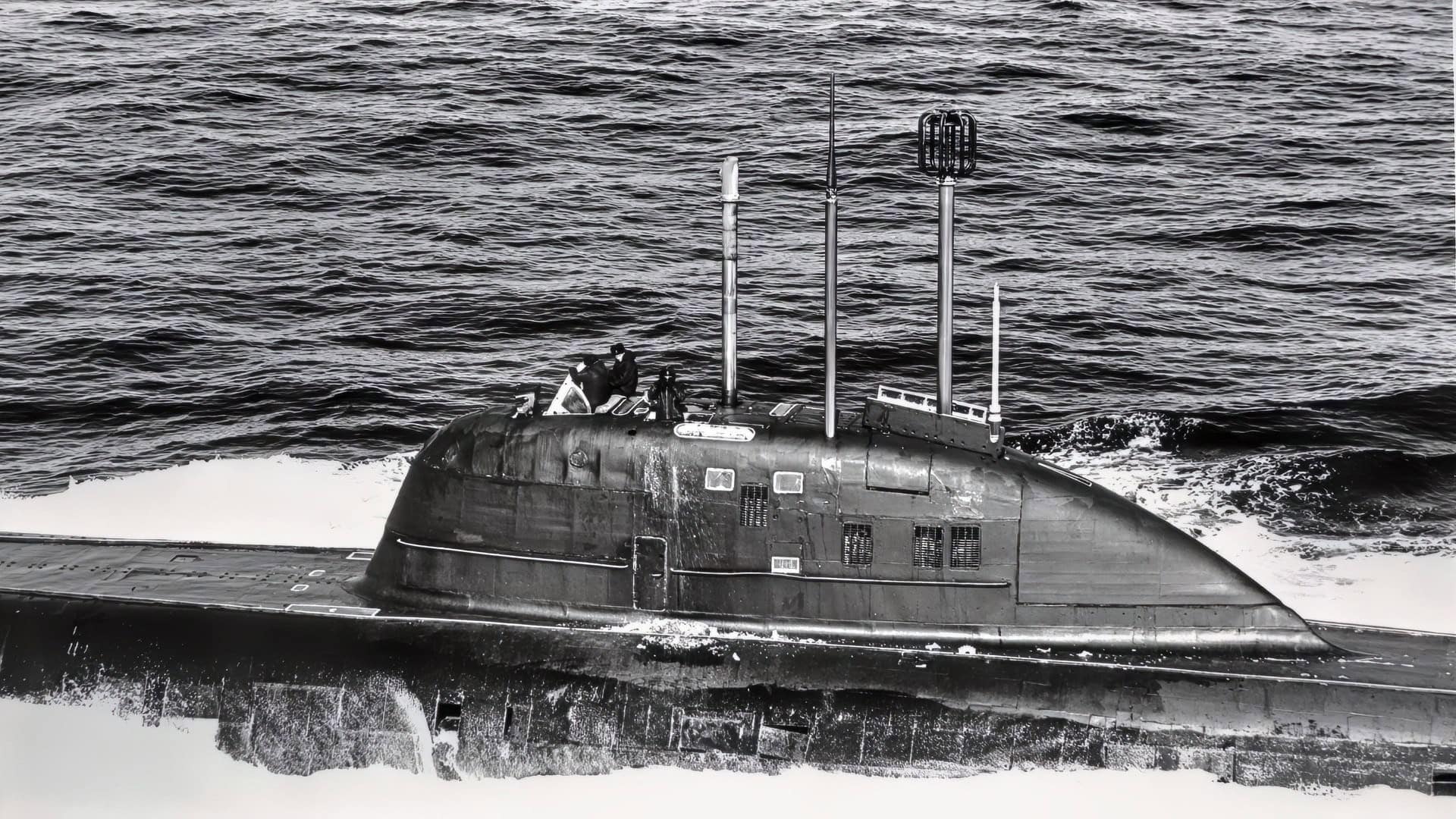
A port view of the sail of a Soviet Victor-II class nuclear-powered attack submarine underway.
The Victor III Class (Project 671RTM/RTMK Shchuka Class) Nuclear-Powered Attack Submarine of the USSR was an evolution of a very successful design dating back to 1967.
The Soviets would end up building 48 of the Victor-class, with two of them still in service today.
That is a very long lifespan for any submarine.
What made the Victor so successful was its tough double-hull design and a size that let them keep improving its reactors, weapons, sensors, and electronics without resorting to a clean-sheet design.
The Victor III, or “Vic-3” as we referred to it, was introduced in 1979 and was a stunning leap over the Victor I and II models.
What made it so different was its apparent departure from previous submarine doctrine, which saw subs racing across the oceans at high speed, making so much noise you could almost hear them by placing your ear close to the water’s surface.
A Mile Away and Mostly Silent: Tracking the USSR’s Deadliest Attack Sub
In the Victor III, the Soviets achieved a kind of Acoustic Convergence, adding rubberized anechoic coatings and internal vibration-absorbing “rafts” under its machinery; for the first time, the Soviet Navy had a submarine capable of blending into the ocean’s background noise.
It came as a major surprise to us in the Navy.
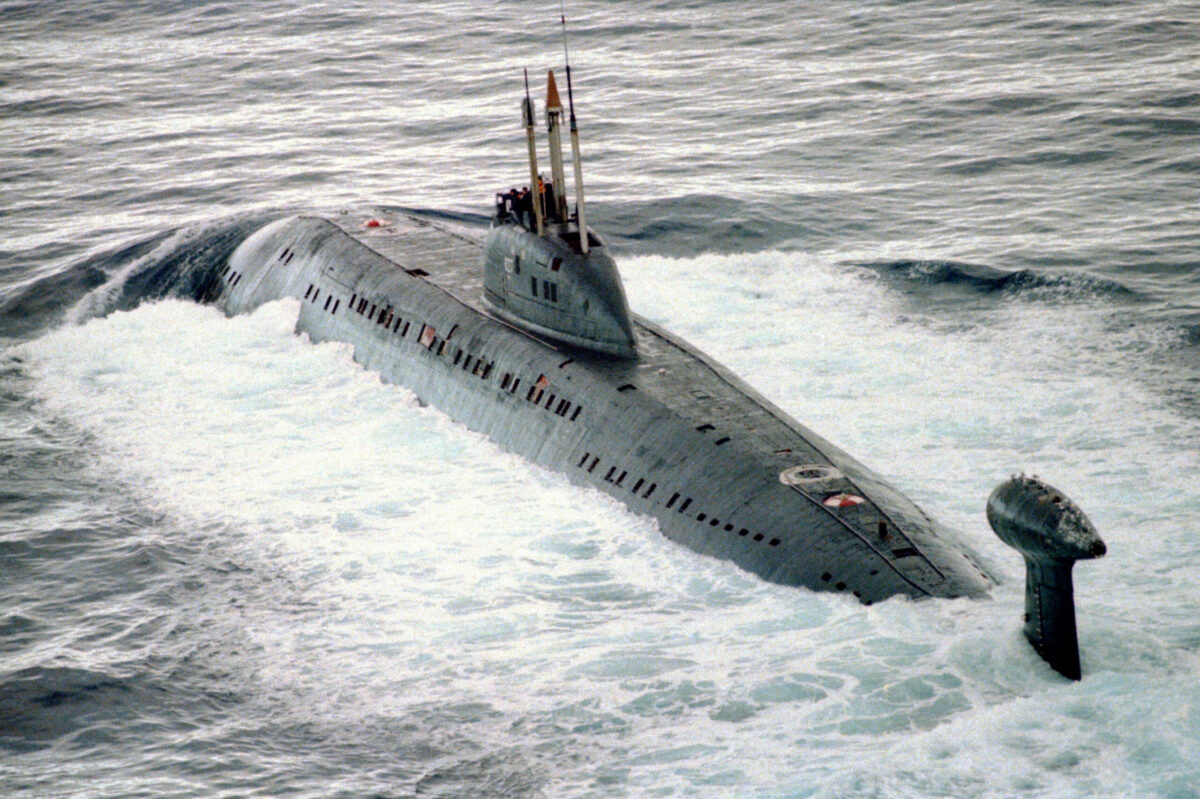
An aerial port quarter view of the Russian Northern Fleet VICTOR III class nuclear-powered attack submarine underway on the surface.
(Exact date unknown)
When acoustic recordings of the Victor III became available, mixed with the sound of its previous models, we thought we were listening to a different submarine type.
The noise of propellers and machinery was all but gone in the Victor III, replaced by a low thrum and a muted high-frequency whine from its turbine generators.
We estimated the Vic-3’s normal detection range at less than one mile.
In the ocean’s vastness, a mile is like a needle in a mountain-sized haystack.
It was so quiet that our own anti-submarine warfare aircraft and surface ships were very unlikely to detect it.
Much later, it was discovered that John Walker, a former Navy Warrant Officer and later a civilian specialist at the US Navy’s Atlantic Submarine Forces Headquarters, led the spy ring.
He provided the Soviets with the exact frequency signatures we used to track their submarines.
The Soviets then knew exactly which sound frequencies they had to eliminate to avoid detection or accurate identification in subs like the Victor III.
The KGB got their money’s worth with Walker. What he gave them worked very well.
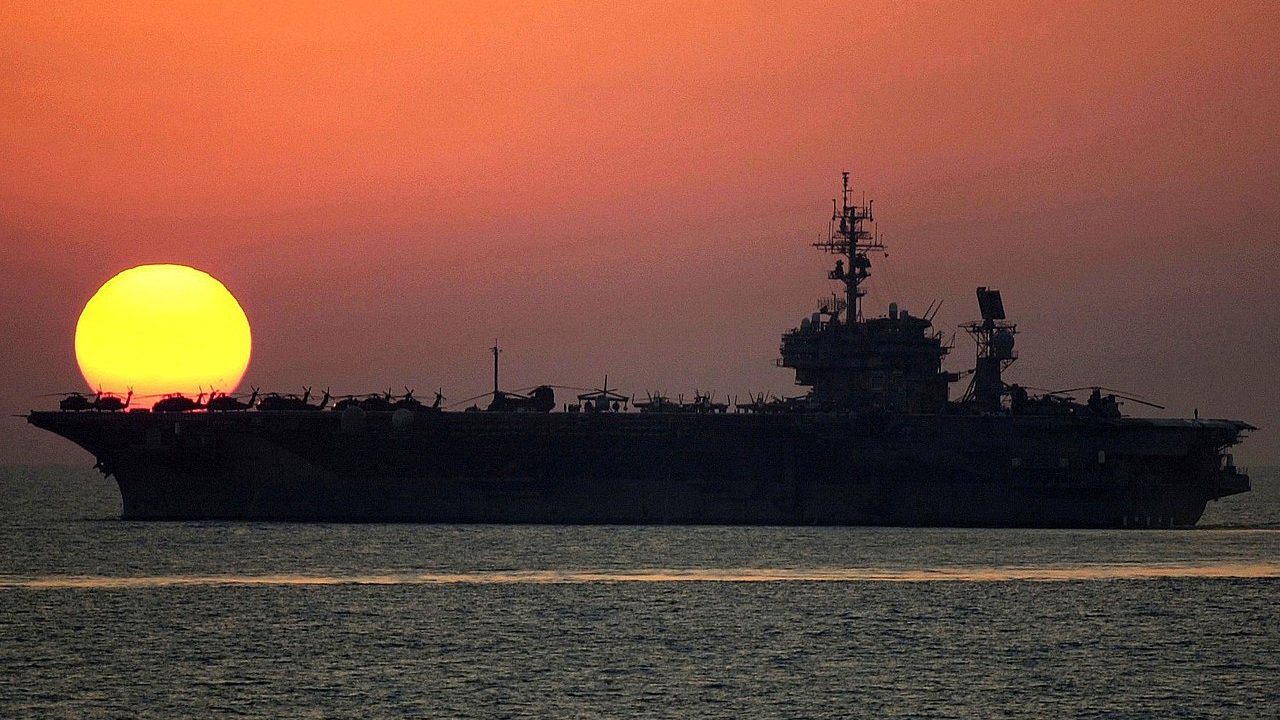
“The USS Kittyhawk (sic) underway in support of Operation Enduring Freedom-Afghanistan in 2001. 160th Special Operations Aviation Regiment helicopters are visible on the vessel’s flight deck.”
The Victor III Had A Reputation For Collisions Into Because It Was So Hard To Detect
The most common way to detect the Vic-3 was for embedded SOSUS arrays to catch it as it passed through the Greenland-Iceland-UK gap (GIUK), or for one of our own submarines to shadow it close enough without running into it.
When I entered the fleet in 1983, the Vic-3 already had a reputation for collisions with other ships and submarines that didn’t know how close they were.
In 1974, one of our SSBNs dived outside Holy Loch, Scotland, and collided with a Vic-2 silently waiting to fall in behind it and follow it around.
In 1981, one of our SSNs collided with a Vic-3 on the surface near Vladivostok in Russia.
Our submarine tried to photograph a teardrop-shaped “thing” topping the cruciform tail of the Vic-3.
At the time, the incident was a closely guarded secret, and we were not told which of our submarines was involved or how badly it was damaged.
We assumed the worst.
Decades later, I learned it was the USS Drum (SSN-667), and the collision caused structural damage and some flooding, forcing it to retire to S. Korea while evading a furious ASW pursuit by the Soviets.
I recall sitting in a classified briefing on the latest information on the Victor III where we were shown photographs of the sub on the surface with this odd addition to the vertical rudder: someone asked, “What is that thing?” to which our unidentified briefer in his civilian suit replied, “We have no idea. We’re showing you these pictures for suggestions from people like you. What do you think it could be?”
I recall being surprised by this.
I thought between the CIA, Naval Intelligence, and the Defense Intelligence Agency there was no secret the Russians could keep from us.
Well, they had kept this one.
It took a little time, but we discovered it was a Towed-Array Sonar System. We thought we were the only ones who had them.
A Victor III trailing hydrophones several miles behind the noise of its own hull and propellers could hear a US sub trying to follow it, making it a much more elusive submarine to track.
Catching The Ghost In Broad Daylight When A Victor III Tripped Over A Towed Array Cable
Two years later, in 1983, a Victor III-class submarine caught the towed array of the USS McCloy (FF-1038).
The submarine surfaced with mechanical issues 250 miles East of S. Carolina.
Two versions of this story exist: one public and one classified.
At the time, the US Navy simply said the Soviet sub surfaced with apparent mechanical problems and was limping South to Cuba on its backup diesel engines.
The classified version we heard was that a Victor III tried to capture McCloy’s towed array trailing behind the frigate.
The sub had been fitted with a clamp and cutting tool.
It would run under the cable, clamp it, cut it, and leave with the array trailing behind.
Instead, the cable fouled its own propellers, nearly destroying its reduction gears.
For that reason, it was forced to the surface and made for Cuba.
Its course took it past major US naval installations like the submarine base at Charleston and Jacksonville Naval Air Station, a hive of Anti-Submarine warfare squadrons including P-3 Orions, S-3A Vikings, SH-3 Sea Kings, and my own SH-2F Seaplane.
These aircraft converged on the hapless Victor III, dropping sonobuoys to track it for hundreds of miles as it limped along on the surface.
They used every kind of sensor, including infrared, signals surveillance, video, and photography.
Since then, Navy records indicate the array was cut accidentally, but I am reminded that the previous official story was that it had nothing to do with a Navy ship at all.
After that, the Victor III lost some of its mystique as a submarine for us.
It was certainly not invulnerable.
The Vic-3 was an important lesson in how the undersea Cold War could shift beneath our feet and make us mindful of our complacency in assuming superiority.
About the Author: Sean Spoonts
Sean Spoonts is the former Editor-In-Chief of SOFREP.com. He is a military analyst, writer, and commentator whose work has appeared in Newsweek, CS News, Ukrinform, and various military/veteran media networks and professional publications, including the Military Intelligence Professional Bulletin. He is a U.S. Navy veteran, having served as an Aviation Anti-Submarine Warfare Operator and Search and Rescue Helicopter Aircrewman.