

U.S. Navy aviators are used to being the best of the best. Many are U.S. Naval Academy grads who go through highly selective and demanding training.
Then the brightest pilots are assigned to aircraft carrier squadrons and launch and land on the flat-tops 24-7, sometimes in the worst night-time weather and terrible sea conditions.
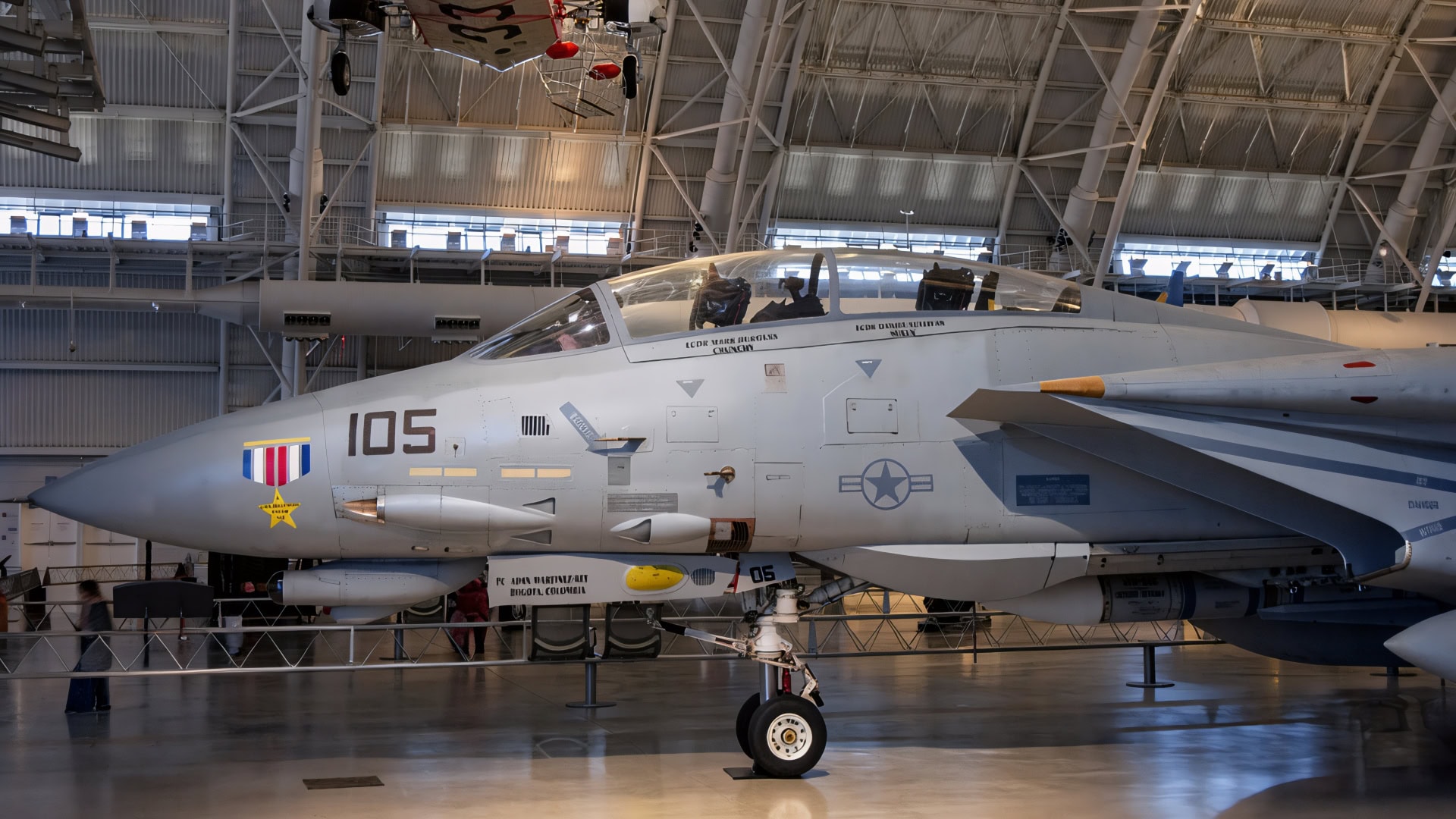
F-14D Tomcat 19FortyFive Photoshoot Back in 2025 at the Smithsonian. This photo is original to 19FortyFive.
The stand-out hotshot aviators can become test pilots who can control any airplane with aplomb.
What Caused this One-in-a-Million Event
That’s why this story is so unbelievable, as recounted by Stephen Ruiz of Military.com. In 1956, a naval test pilot had one harrowing mission that no one would forget.
He accidentally shot himself. Tom Attridge was at the controls of a Grumman F-11F Tiger.
The Navy had high hopes for this fighter and loved its speed and performance – so much that it already placed an order for 400 of the impressive warbirds. This was the Navy’s first supersonic fighter jet, and it was a clear improvement on the F9F-6/7 Cougar.
There Shouldn’t Have Been Any Problems
Attridge had already completed one test flight, and he was confident the second one would go off without a hitch.
The F-11F Tiger had shown the Navy that it may have a hit on its hands, and Attridge’s flight would gather important test and evaluation data to pave the way for full-time deployment of the Tiger.
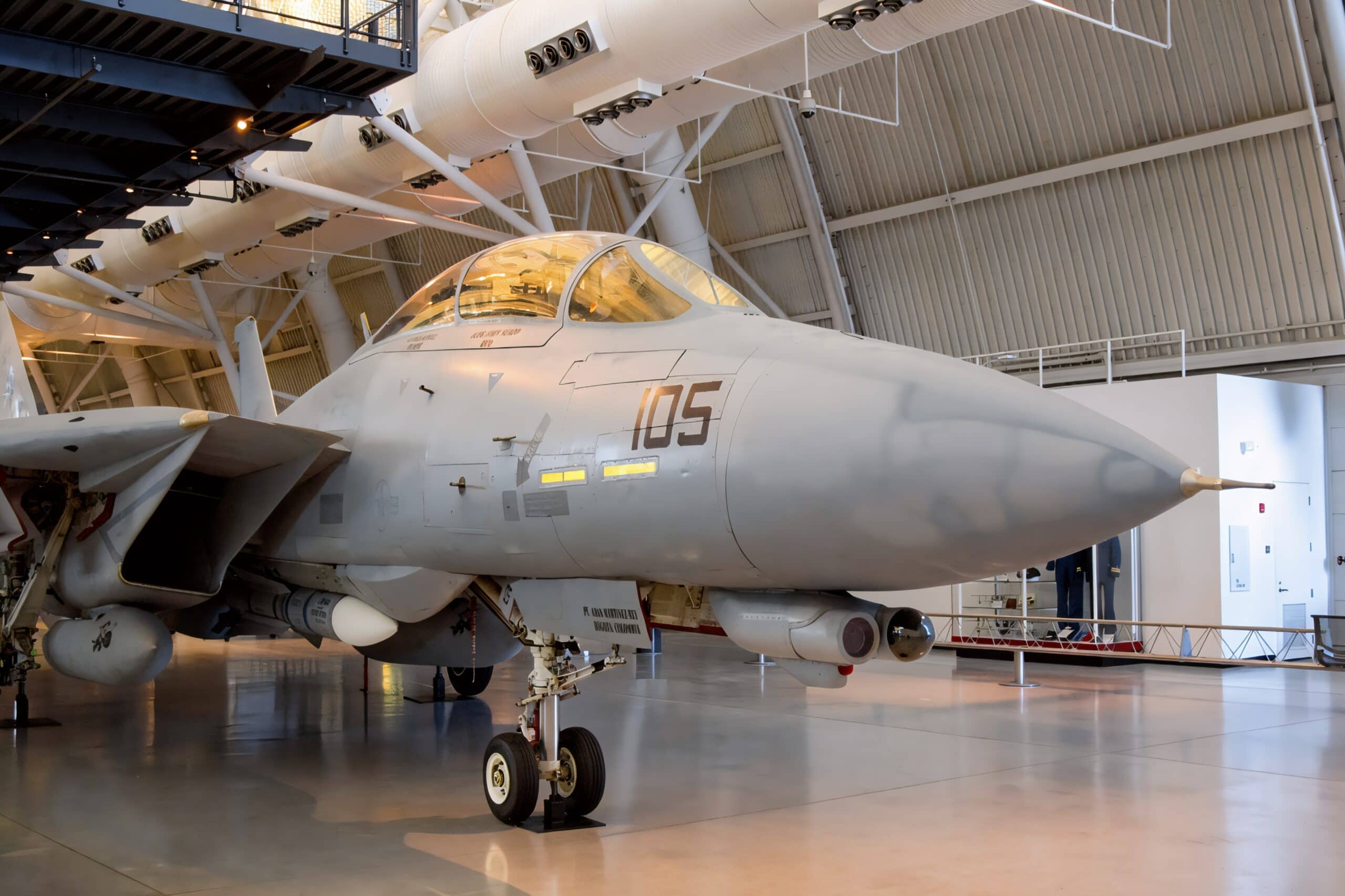
New F-14D Tomcat 19FortyFive Photoshoot Back in 2025
The test mission started from the airfield at Long Island, New York, and Attridge planned to head over the Atlantic Ocean. The weapons systems needed to be looked at closely.
Attridge flew to 20,000 feet, and everything looked good. Then he wanted to know how well the airplane could dive with his guns blazing.
He sped downward to 13,000 feet at over MACH 1 and tested his 20mm cannon for a few seconds.
Let’s See How the Guns Will Do With Another Shot
Attridge kept his nose downward and fired another short burst. He continued the dive down to 7,000 feet, and then he heard a loud noise.
What the heck was that, the test pilot wondered. Whatever it was, it couldn’t be good at that high a speed.
This Was Probably a collision with a Bird
Maybe it was a bird strike since that part of the ocean was known for seagulls. He was flying low enough at that point that hitting a bird was a possibility.
Attridge decided to slow to only 230 miles per hour and allow the airplane to settle down so he could determine what had happened.
The Tiger was new, so there might also have been another malady he could correct in flight.
More Noise Worried the Pilot
But with that slow a speed came more drag. He was not at full power. Attridge now got really worried because the noises continued.
This seemed to be coming from the engine, and the slick naval aviator thought the powerplant was “tearing up.”
Attridge needed to get this airplane on the ground. He got to within two miles of the base and then completely lost power.
Could he glide down safely? This was going to hurt if he crash-landed. Maybe it was time to punch out. Then a fire started, one of the wings fell off, and Attridge quickly ejected.
You Mean This Jet Had Bullet Holes?
Luckily, the airplane did not crash into a house or car; it descended until it struck a clump of trees. The Tiger skidded to a stop 300 feet beyond the vegetation.
The emergency crew rushed to the scene, and the test flight’s observers and controllers examined the damage.
They were awe-struck. The Tiger was full of bullet holes. The glass canopy was hit. The right engine had been victimized, as was the nose cone.
Further checking revealed that a round had penetrated the right engine, which explained the noise the pilot heard and what started the breakup.
Banged Up But Lucky to Be Alive
As for Attridge, he was in bad shape. The egress took a lot out of him. When he landed, he had a broken leg and back, and he thanked his lucky stars that he survived.
It Could Have Been Worse
What was amazing about the shoot down was that the airplane was only firing dummy test bullets. Had these been real live rounds, the Tiger would have exploded and killed the pilot.
The jet could have crashed and burned in a neighborhood and may have killed a large number of civilians.
Attridge could have immediately died from the rounds that hit the canopy, and that would have placed the airplane into a spiraling death dive, too.
Then the Navy had to figure out what happened because this was a mystery.
Attridge told the ground controllers what he had done and the sequence of events, but the tale did not make sense. Was he going fast enough to run into the fire of his own guns?
Difficult to Outfly Physics
The airplane has a top speed of over MACH 1, but Attridge was not going as fast as the bullets, which can travel at two times the speed of sound.
Indeed, the after-action review determined that the dummy rounds were going MACH 2. However, physics took over. As the airplane dived, air resistance slowed the bullets.
“The difference in distance was erased.
Their paths intersected a few miles after Attridge fired the rounds. It took 11 seconds from the time the bullets were fired until they struck the Tiger,” according to Military.com.
The Navy Thought It Was a Fluke
The Navy determined in an investigation that this was a totally rare event that would never be repeated. Attridge wasn’t so sure about that conclusion.
He thought that this could happen again at supersonic flight. He worried that the next test of the guns during a high-speed dive could place the airplane and its pilot in jeopardy.
It Happened Again Nearly Two Decades Later
This “own goal” shootdown happened again in 1973 to a test pilot flying an F-14 Tomcat that was “hit by its own dummy missile.” This aviator also had to eject.
The Navy learned to train its pilots to be careful when launching weapons during certain maneuvers. No one wanted this repeated.
But it’s not every day you hear of such a shootdown, and these two pilots were able to survive and tell their story to ground control.
Testing and evaluation technicians were always ready to brief new test pilots with this story, and that was enough to teach the aviators that not every mission would be successful with guns or missiles at high speed and daring dives.
About the Author: Brent M. Eastwood, PhD
Author of now over 3,500 articles on defense issues, Brent M. Eastwood, PhD, is the author of Don’t Turn Your Back On the World: A Conservative Foreign Policy and Humans, Machines, and Data: Future Trends in Warfare, plus two other books. Brent was the founder and CEO of a tech firm that predicted world events using artificial intelligence. He served as a legislative fellow for US Senator Tim Scott and advised the senator on defense and foreign policy issues. He has taught at American University, George Washington University, and George Mason University. Brent is a former US Army Infantry officer. He can be followed on X @BMEastwood.