

Summary and Key Points: On January 27, 1982, the nose wheel of an F-117 prototype detached on takeoff from Area 51 and bounced down the runway. Lockheed test pilot Tom Morgenfield kept flying his avionics tests, declined a suggestion to eject, and an hour later landed on a foam-covered runway, using the drag chute to keep the nose up. The only damage was the strut. Skunk Works chief Ben Rich and Kelly Johnson summoned him to Burbank and pretended to be angry as a joke.
NOTE: We went to the Smithsonian outside Washington, DC, and took the pictures below of the F-117 Nighthawk static display for this article.
The F-117 Nighthawk Was Never Perfect for the US Air Force
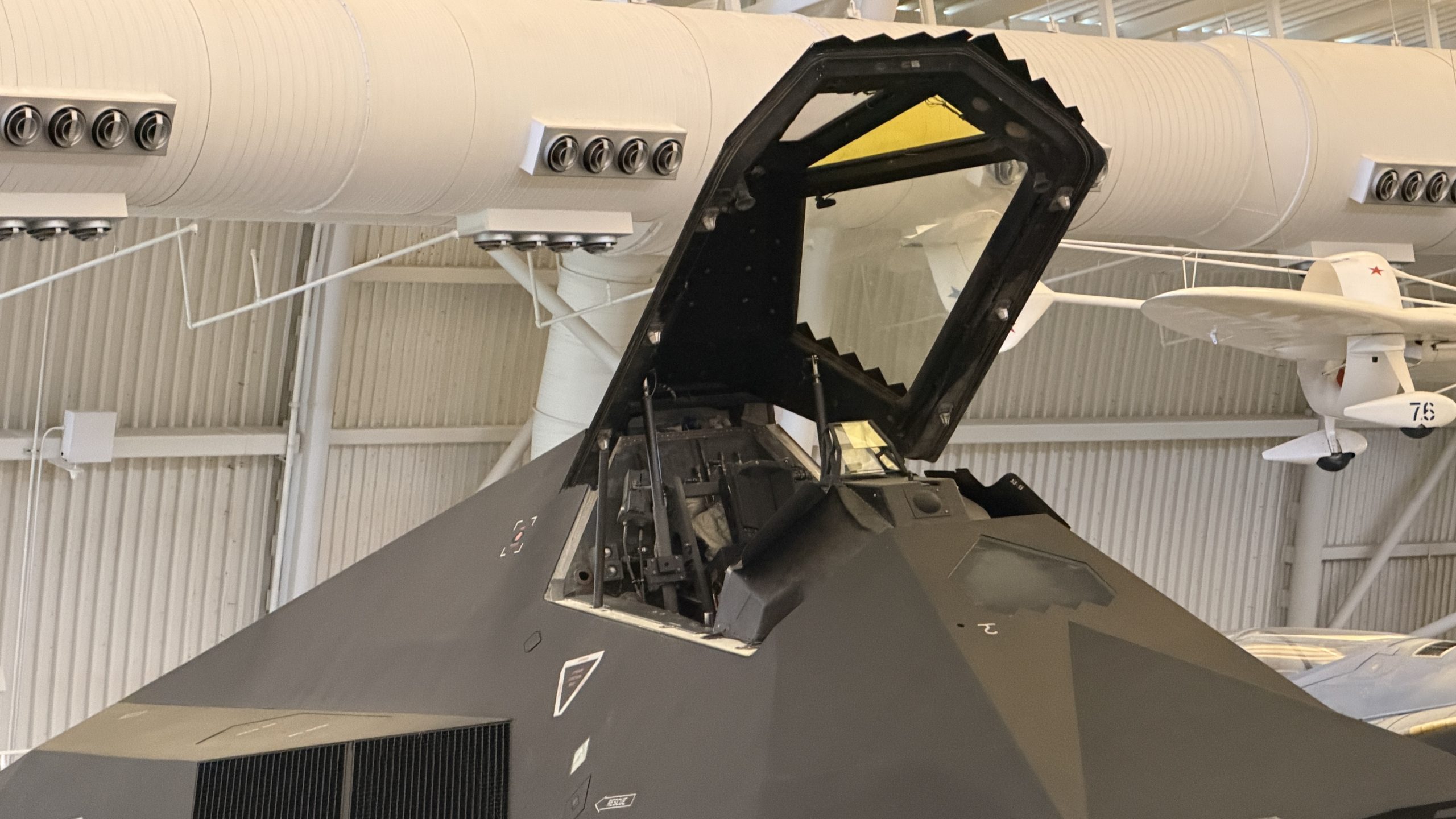
F-117 Nighthawk at the Smithsonian. 19FortyFive Original Image by Christian D. Orr.
The F-117 Nighthawk is one of the most memorable warplanes ever made.
It was America’s first flirtation with and embrace of stealth technology as a viable basis for a new warplane.
Developed as far back as the 1970s, taking wing in the 1980s, and participating in conflicts from Operation Just Cause in Panama through the Global War on Terror (GWOT), the F-117 earned a strong reputation.
It conducted more than 1,200 sorties in Desert Storm alone.
In fact, its only major combat loss was in the cloudy skies over Serbia during the 1999 NATO air war there.
A triangular, all-black plane with unique angular features designed to enhance its stealth capabilities, the F-117 was America’s doorway into the future.
But on January 27, 1982, something strange happened to Lockheed test pilot Tom Morgenfield while he flew one of the F-117’s earliest prototypes.
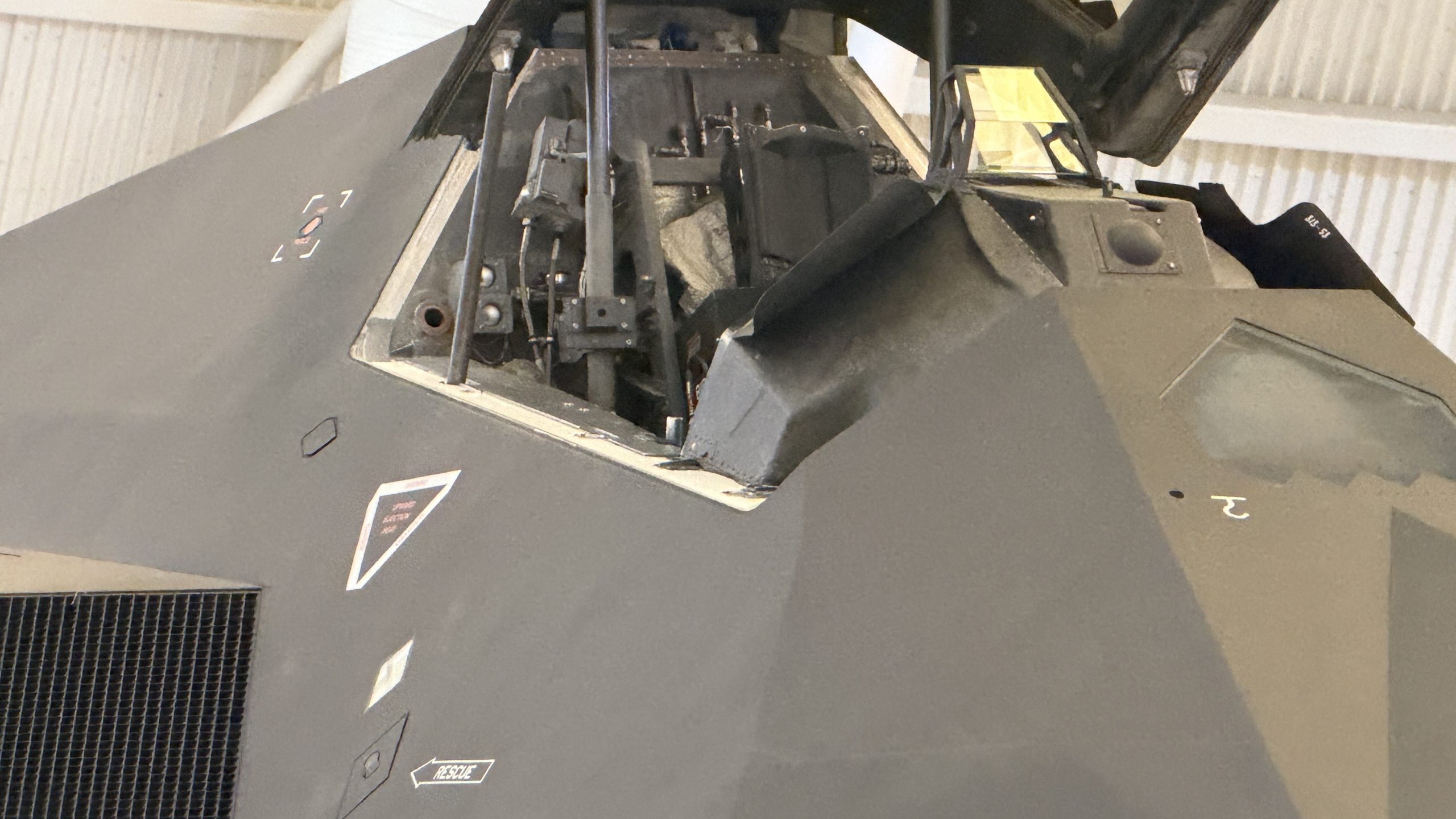
F-117 Nighthawk at the Smithsonian. 19FortyFive Original Image by Christian D. Orr.
An Impressive Bit of Flying (and Landing)
Per Aviation Geek Club, an online trade publication, shortly after takeoff from the worst-kept secret base in America, Area 51, the nose wheel on Morgenfield’s F-117 detached from its landing gear and bounced down the runway.
Ever the professional, Morgenfield continued his scheduled test flight.
He ultimately landed without the nose wheel.
Morgenfield served as a naval aviator before becoming a Lockheed test pilot at the company’s legendary Skunk Works facility.
He graduated from the United States Naval Academy in 1965 with a bachelor’s degree in aeronautical engineering.
He then earned a master’s degree in aeronautical engineering from the Naval Postgraduate School in 1973.
During the Vietnam War, Morgenfield flew 90 combat missions and completed more than 500 landings on an aircraft carrier.
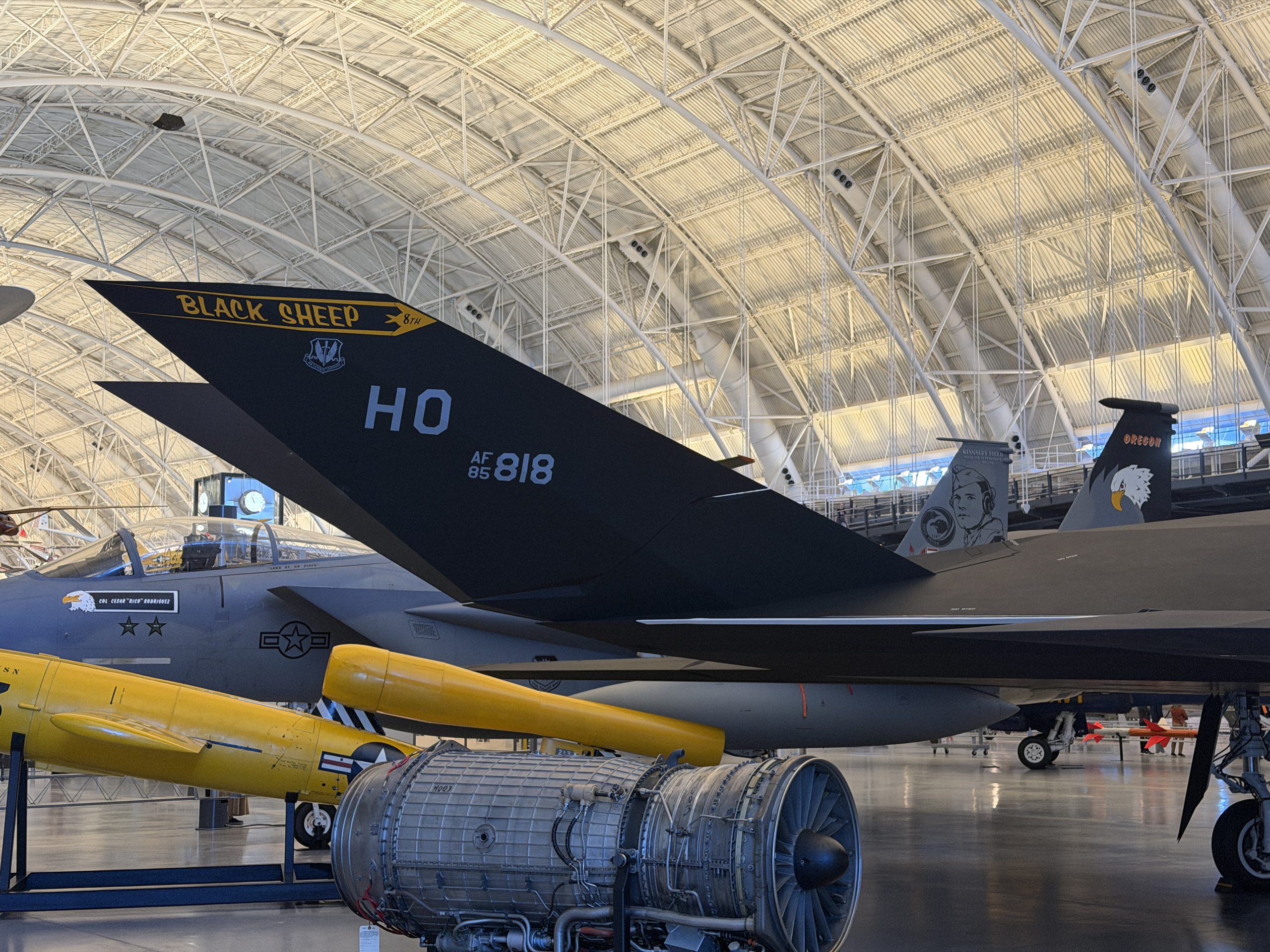
F-117 Nighthawk at the Smithsonian. 19FortyFive Original Image by Christian D. Orr.
Morgenfield wasn’t done flying, though.
When he jumped to Lockheed, they put him on some of their hardest cases.
Morgenfield even flew classified missions involving Soviet-designed MiG fighters. That was all preparation for his time with the F-117s.
On that January day in 1982 when Morgenfield took off in his F-117 experimental prototype, he was supposed to evaluate improvements to the F-117’s cockpit avionics and displays.
When the front wheel separated from the F-117 on takeoff, Morgenfield faced a series of complications he needed to work through.
The exposed landing-gear strut would hit the runway the moment Morgenfield attempted to land his broken plane. That could have been catastrophic for the F-117.
If the landing strut collapsed on contact with the concrete runway, the aircraft would pitch forward violently and essentially destroy the experimental stealth plane.
Ground control operators gamed out if Morgenfield needed to land in a nearby dry lakebed.
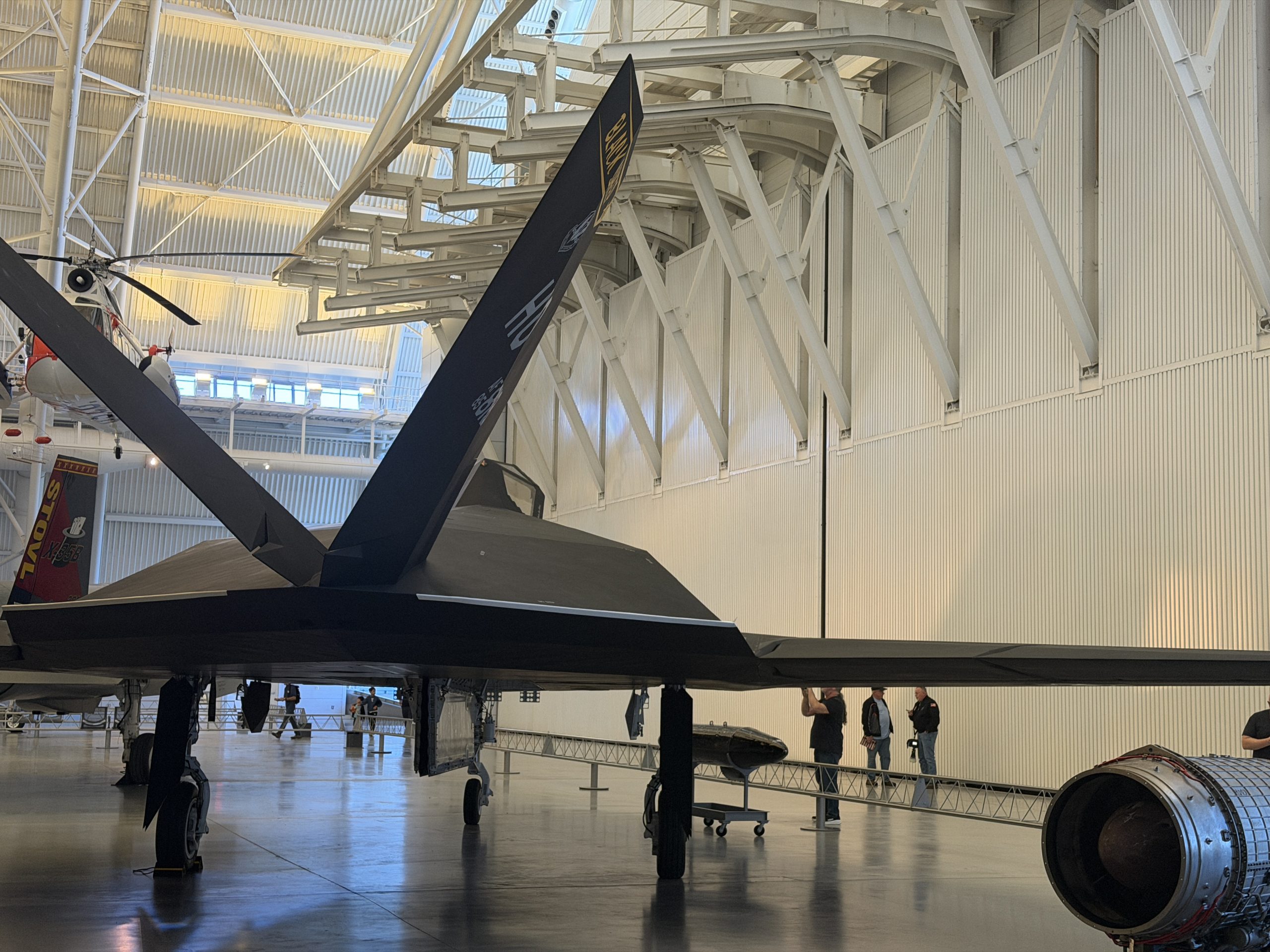
F-117 Nighthawk at the Smithsonian. 19FortyFive Original Image by Christian D. Orr.
But that would come with its own problems.
Morgenfield kept the plane flying.
He also kept the landing gear down and ran the avionics tests he was initially ordered to conduct.
Despite the missing wheel, which would be a problem if the aircraft needed to land again, Morgenfield determined the aircraft was still airworthy, so he kept the bird airborne to run essential tests on this experimental stealth plane.
As Morgenfield conducted his tests, the ground crew had time to determine the best way to get him safely back on the ground.
They decided Morgenfield would fly to a safe spot and then eject. Ground controllers worried the plane would flip over the moment it touched down, either on the runway or in the nearby dry lakebed.
Morgenfield declined to take their suggestion.
Indeed, it just so happened that Morgenfield’s previous work for the Navy flying F-8 Crusaders had given the painful opportunity to experience–and learn from–landings where the gear failed on contact with the deck.
Morgenfield assessed that the F-117 could safely land.
Plus, Morgenfield decided that deploying the plane’s rear parachute during landing would help slow the aircraft, generating a slight nose-up pitching effect that would reduce some of the force the exposed front landing strut would experience on contact with the runway.
Morgenfield told the test conductor he would also burn the additional fuel before landing. After one hour of flight time, Morgenfield approached Area 51.
Never Crossing the Centerline
Emergency crews prepared the runway by covering the concrete with fire-retardant foam.
The foam was supposed to reduce the hazards of the exposed metal landing-gear strut streaking across the runway after the plane landed.
Sparks did fly from the damaged forward wheel strut on contact with the runway.
The F-117’s white drag parachute worked as Morgenfield intended.
Even without a front wheel, Morgenfield’s preparations to compensate for the missing wheel kept the F-117 from straying from the runway’s centerline. The only reported damage was the landing gear strut itself.
A Practical Joke
When news of Morgenfield’s impressive emergency landing reached Lockheed’s Burbank headquarters, legendary Skunk Works chief Ben Rich summoned Him to his office.
Lockheed’s great engineer, Kelly Johnson, waited along with Rich for Morgenfield’s arrival in Burbank. They pranked Morgenfield by pretending to be angry about the plane.
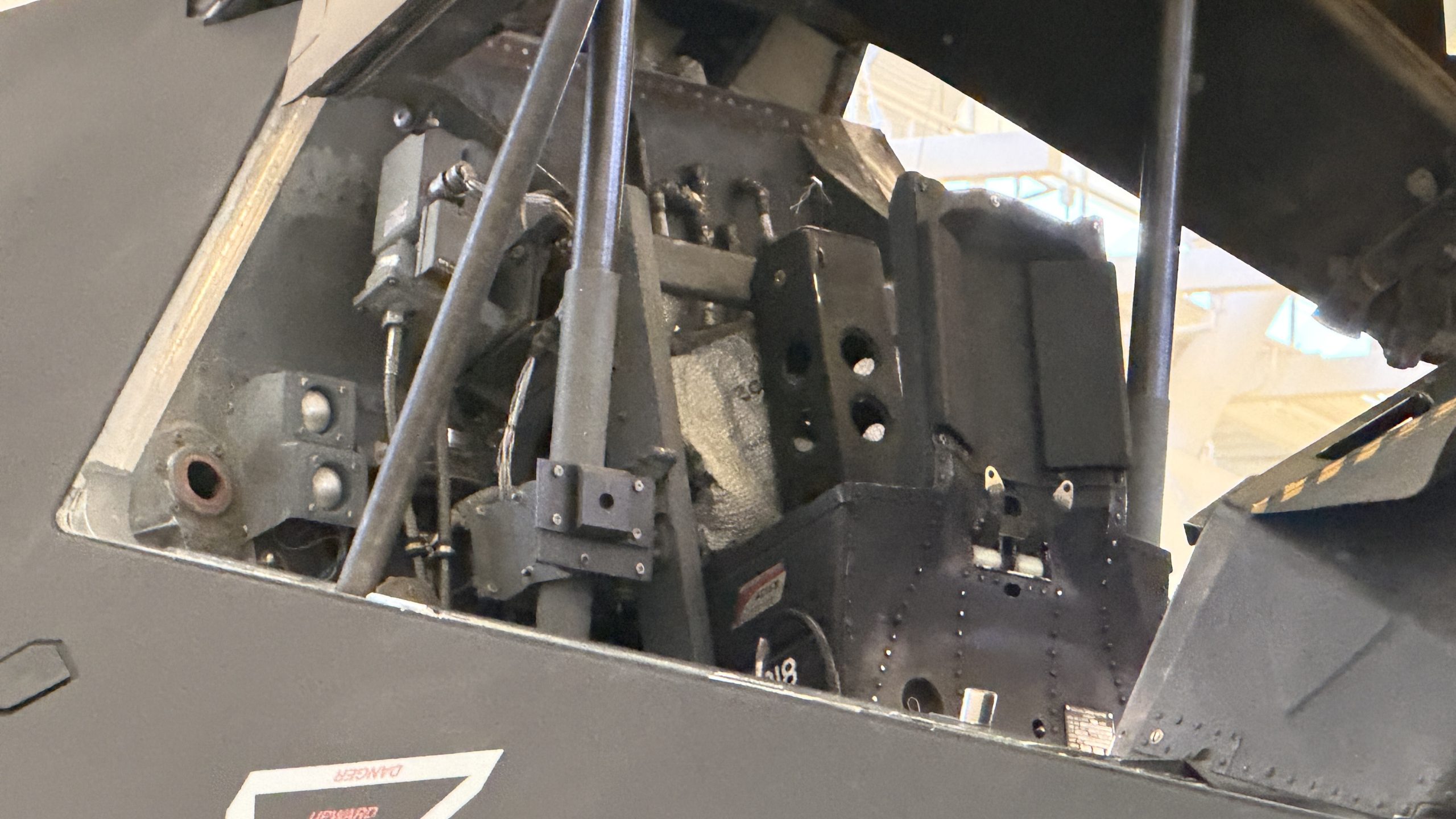
F-117 Nighthawk at the Smithsonian. 19FortyFive Original Image by Christian D. Orr.
Once Morgenfield believed he was summoned for disciplinary action, Rich and Johnson let him in on the joke.
Just one year later, in 1983, the F-117 entered operational (albeit classified) service.
The United States government ultimately acknowledged its existence in 1988.
But Morgenfield’s experience highlights the dangers that test pilots in these classified programs face and how innovative they must be when presented with unique problems, such as losing a front wheel on takeoff.
About the Author: Brandon J. Weichert
Brandon J. Weichert is the Senior National Security Editor at 19FortyFive.com. He also manages The Weichert Brief on Substack. Weichert is the co-host for The Mario Nawfal Show on Twitter/X. He is the author of four bestselling national security books, most recently A Disaster of Our Own Making: How the West Lost Ukraine (Encounter Books). His next book, Fortress Americas: A New Monroe Doctrine (Tucker Carlson Books), is due out December 8. Follow him via Twitter/X @WeTheBrandon.