

In June, it was announced that all five of the UK’s active Astute-class submarines were out of service and undergoing maintenance.
Only the HMS Agamemnon (S124), the most recent addition to the UK’s submarine force, remains seaworthy, and she is still undergoing sea trials.
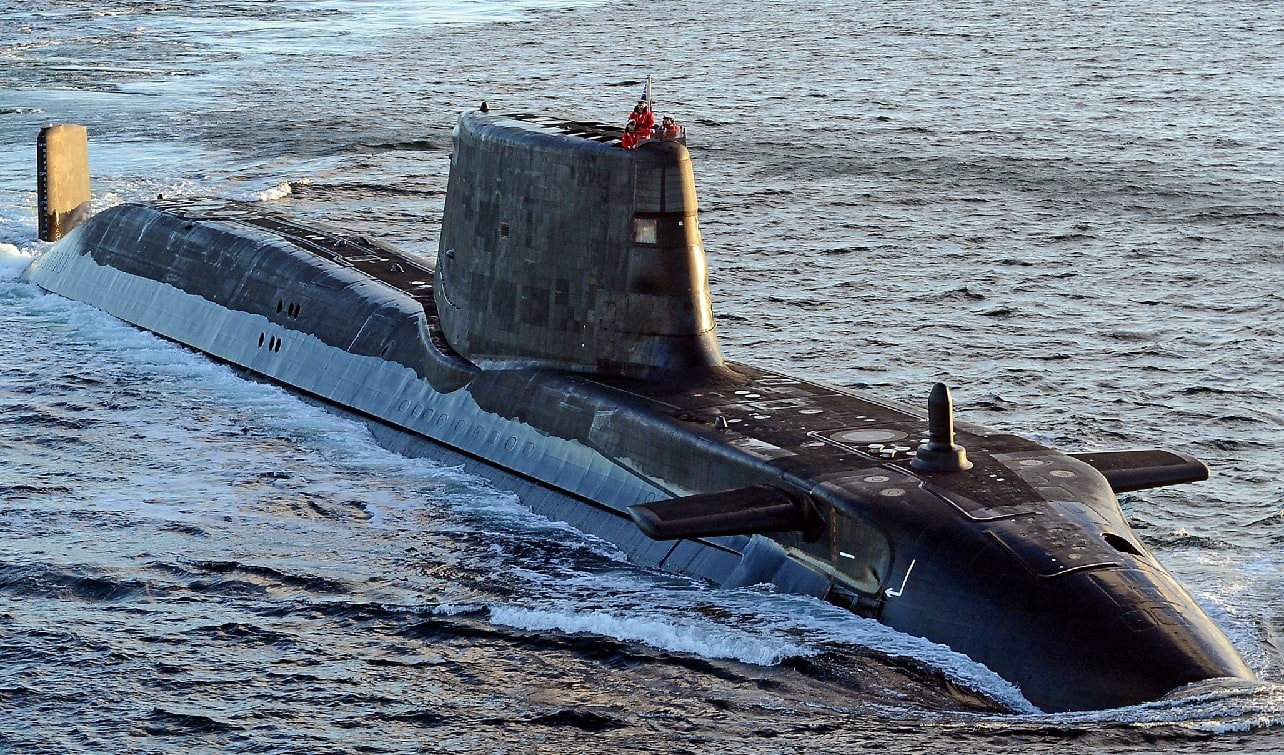
Astute class submarine HMS Ambush is pictured during sea trials near Scotland. Ambush, second of the nuclear powered attack submarines, was named in Barrow on 16 December 2010 and launched on 5 January 2011.
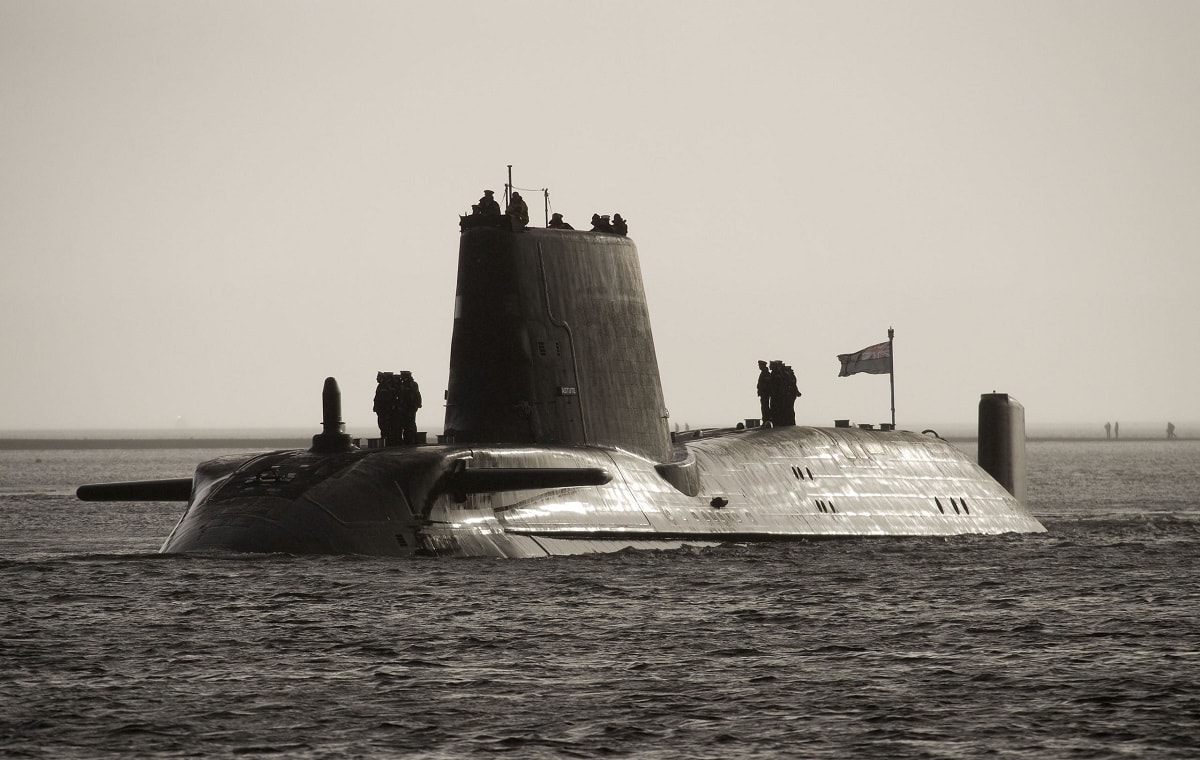
Image of Astute-class Submarine. Image Credit: Creative Commons.
The Astute-class submarines are some of the most capable attack submarines in the world and are a vital component of the UK’s naval strategy.
They are supposed to protect London’s nuclear ballistic missile submarines and conduct anti-submarine warfare. In recent years, the UK has grown more concerned over the increasing activity of Russian submarines and warships near British waters.
At the same time, the UK MoD has allowed its submarines to fall into disrepair and has failed to improve maintenance infrastructure, thereby reducing readiness.
Manpower Shortages and Outdated Infrastructure
The current state of the RN’s submarine fleet should come as a surprise to no one. Multiple officials and commentators have been sounding the alarm for quite a while now, yet the UK is either unable or unwilling to change course.
There are two immediate needs that are currently crippling the Navy’s maintenance efforts: manpower and infrastructure. Manpower issues have been a known issue in the UK for years.
In 2023, the First Sea Lord, Admiral Sir Ben Key, expressed concern about the shortage of personnel in both the Navy and the private sector. “For the first time since the end of the Second World War, we have got to get bigger.
And that is not in our DNA; we have had 80 years of effectively getting smaller.” With the RN constantly losing personnel, the UK has been forced to deactivate several warships in recent years as it struggles to keep its Navy manned.
Infrastructure has been another key issue at the forefront.
Many reports in the past have highlighted the outdated infrastructure at the UK’s naval ports, particularly at its submarine maintenance facilities.
Multiple docks have fallen into disrepair, and the industrial base is suffering from a lack of funding across the board.
The outdated infrastructure has been compounded by the aforementioned manpower shortages, leaving naval contractors without the skilled personnel needed to carry out maintenance in a timely manner.
In fairness, the UK is at least aware of the issue and is currently implementing several programs to address it.
These programs include the Submarine Waterfront Infrastructure Future (SWIF) project, the Submarine Maintenance Recovery Plan (SMRP), and EUSTON.
These programs seek to expand current dock space and modernize the equipment across the UK’s shipyards.
A Crisis That Everyone Saw Coming
The problem, of course, runs much deeper than a lack of infrastructure or personnel.
The problem stems from a set of assumptions made many years ago by senior British leadership. “The presumptions way back when, when they decided that a solely nuclear fleet of only seven attack submarines and four ballistic missile submarines was going to be sufficient to keep us as a world-leading anti-submarine warfare player, were probably the wrong assumptions,” said Commander Ryan Ramsey, a retired submarine captain.
Throughout the mid-to-late Cold War, the UK maintained around 30 submarines, comprising both nuclear- and conventionally powered submarines.
After the fall of the USSR, the MoD decided to transition into a smaller, solely nuclear submarine force. While they had their reasons at the time, this decision proved to be incredibly short-sighted.
Compounding these problems are shortsighted and ultimately unwise decisions by the UK’s political and military leadership. “This problem has been hidden for decades.
Everyone knew this was coming, but it got kicked down to the next person in charge,” Cdr Ramsey said. Many of the problems the UK is currently facing could be alleviated, or at least helped with appropriate funding. However, increasing funding has been a source of continuous and heated debates in the UK.
In June, the UK’s Defense Minister, John Healey, resigned from his post after disagreements with former Prime Minister Keir Starmer over defense funding. “I would not be able to accept a Dip (Defense Investment Plan) settlement that does not give our forces the resources they need.
I am now left with no other option than to submit my resignation as your Defense Secretary,” Healt wrote in a public resignation letter.
Sharks Smell Blood in the Water
The UK has been concerned about Russian naval activity for years now, yet it apparently hasn’t stirred the government to take any major action.
For the past several months, the Russian Navy has maintained a constant presence in the English Channel not far from British waters.
Currently, the Neustrashimy, lead ship of the Neustrashimy-class frigates, is making victory laps near British territory after arriving in mid-July, after taking over patrol duties from the Admiral Gorshkov.
In June, Sir Richard Knighton, the Chief of the Defense Staff, claimed that Moscow was probing the UK’s defenses and weighing the possibility of crossing a line.
If recent events have shown anything, it’s that the Royal Navy is nearly powerless to stop the Russians from doing whatever they want.
About the Author: Isaac Seitz
Isaac Seitz, a Defense Columnist, graduated from Patrick Henry College’s Strategic Intelligence and National Security program. He has also studied Russian at Middlebury Language Schools and has worked as an intelligence Analyst in the private sector.