
India Accelerates Naval Expansion, Industry Insiders Warn: Domestic Warships Have Shortcomings, Talent Pool Clearly Insufficient
[Global Times Special Correspondent Chen Yang] Multiple Indian media outlets reported on June 21 that the Indian Navy simultaneously commissioned three different types of vessels on the same day, all of which were built in India, reflecting the Indian Navy's ambition to significantly expand its military capabilities relying on domestically produced ships. However, insiders from the Indian Navy and shipbuilding industry also warned that Indian-made vessels still have shortcomings in many advanced technology areas, and there is a clear lack of talent, which limits the Indian Navy's ability to operate in distant waters.
"A Milestone in India's Maritime Security"
According to a report from India’s NDTV on June 21, Indian Prime Minister Modi presided over the joint commissioning ceremony of three new domestically produced warships at the Shyama Prasad Mukherjee Port in Kolkata, describing it as "a milestone in India's maritime security."
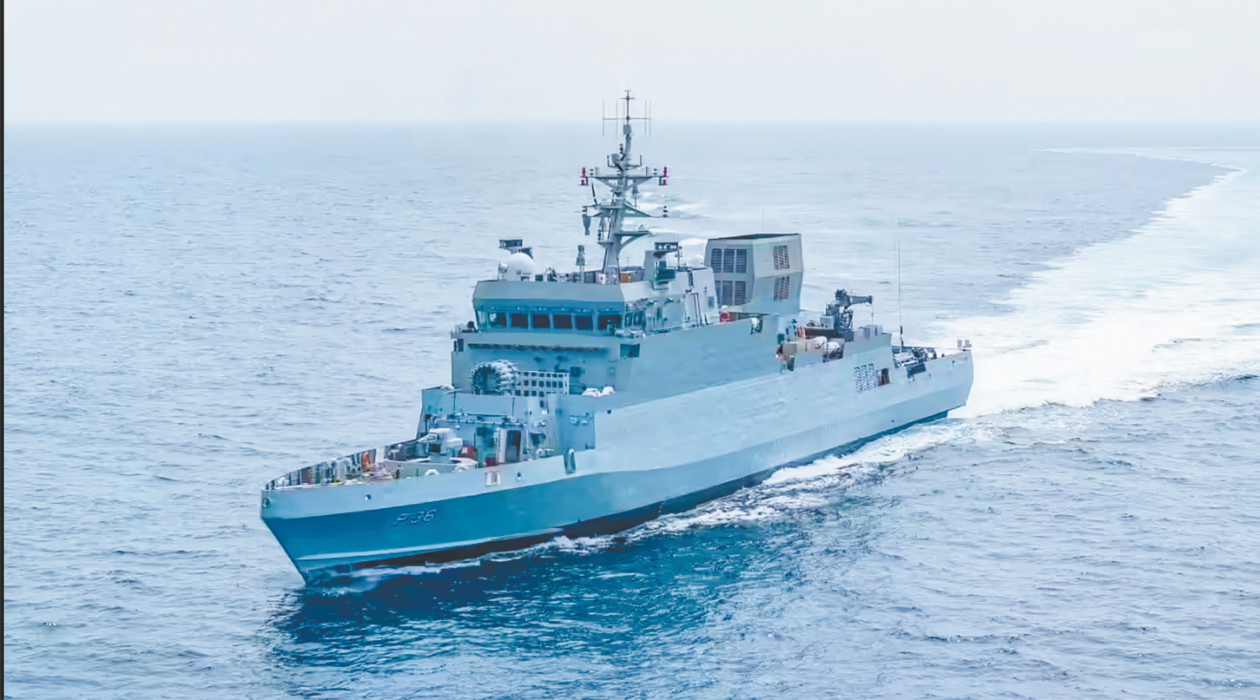
The report stated that the three domestically produced warships commissioned that day—the stealth frigate INS Dunagiri, the large survey vessel INS Sandhayak, and the anti-submarine shallow-water combat vessel INS Agra—represent key operational capabilities for India in maritime combat, hydrographic surveying, and anti-submarine warfare. This move highlights India's growing maritime strength and determination to promote self-reliance in defense, as these vessels will enhance India's capabilities in combat, surveying, and anti-submarine operations.
Modi also emphasized India's determination for self-reliance in the defense sector in his speech. He stated that India can no longer merely act as a buyer in the international arms market. He stressed that the newly commissioned domestic vessels symbolize India's growing strength and capabilities: "These three ships also symbolize three important determinations of India. They are built in India, designed in India. They are the result of India's industrial talent, the skills of Indian engineers, and the hard work of Indian workers, which is India's greatest advantage. Our strength is not defined by being the market of the world. Our strength is defined by self-reliance."
India's Forum newspaper stated that the three newly commissioned domestic vessels demonstrate the increasingly mature local shipbuilding ecosystem, with a localization rate exceeding 75%. The Indian industrial sector, including over 200 small and medium-sized enterprises, widely participated in the construction process, creating a large number of direct and indirect job opportunities. In recent years, more than 40 warships and submarines designed and manufactured in India have joined the Navy, and currently, 45 domestically produced naval vessels are under construction.
Representing Three Different Fields
According to a press release from the Indian Ministry of Defense, these three vessels were designed and built by the Indian Navy's Warship Design Bureau and Garden Reach Shipbuilders & Engineers Ltd. (GRSE) in Kolkata. They collectively embody the Indian Navy's balanced approach to capability development, which aims to strengthen blue-water operations, enhance maritime domain awareness, and protect coastal waters to address evolving threats.
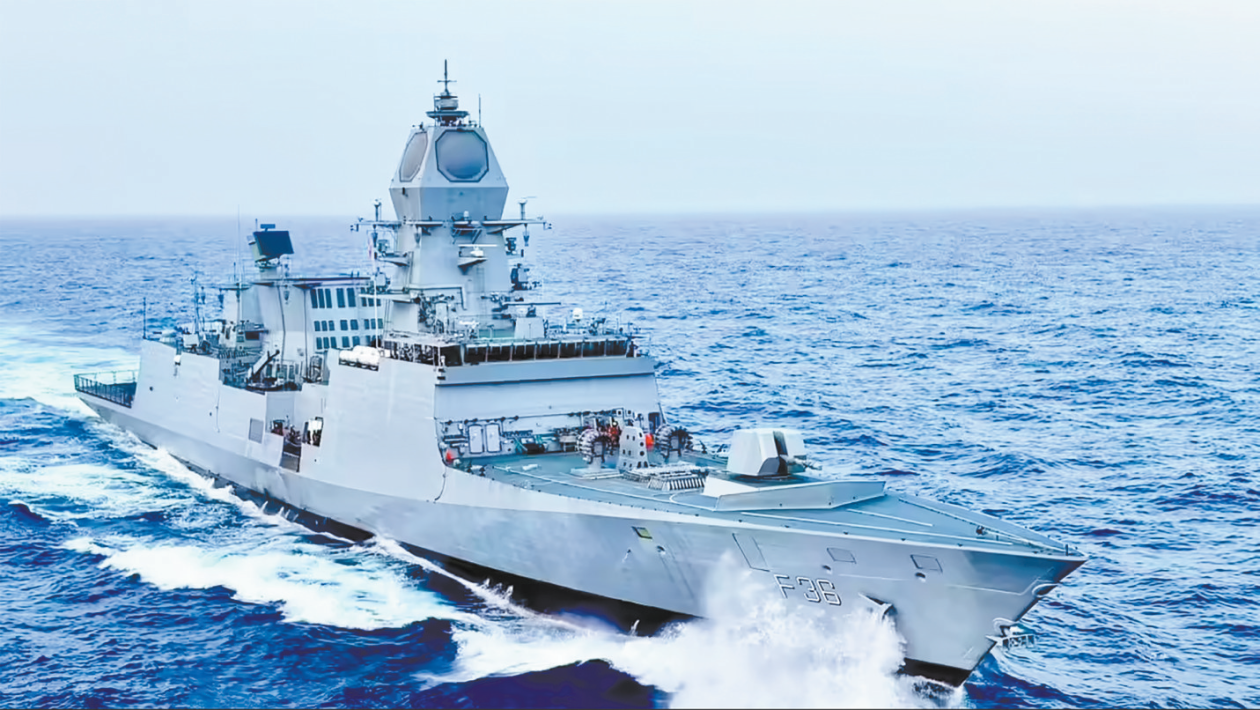
Among them, INS Dunagiri is a key focus of the Indian Navy's recent development of the P17A class stealth frigates. The press release stated that this frigate is equipped with materials that can absorb radar signals, has a hull with low radar cross-section characteristics, and advanced systems that can reduce radar, thermal radiation, and acoustic visibility. It has a displacement of approximately 6,600 tons and uses a combined diesel and gas propulsion system, capable of performing long-term and multi-domain missions. The ship is armed with BrahMos supersonic anti-ship missiles and medium-range air defense missiles, as well as various sensors including multifunctional surveillance, tracking and guidance radar, sonar, electronic warfare systems, and anti-submarine weapons, meeting the standards of major European naval frigates. An active Indian Navy officer stated, "From a strategic perspective, these multi-role frigates can operate in 'blue water' environments (i.e., waters far from the coast) to address both conventional and unconventional threats."
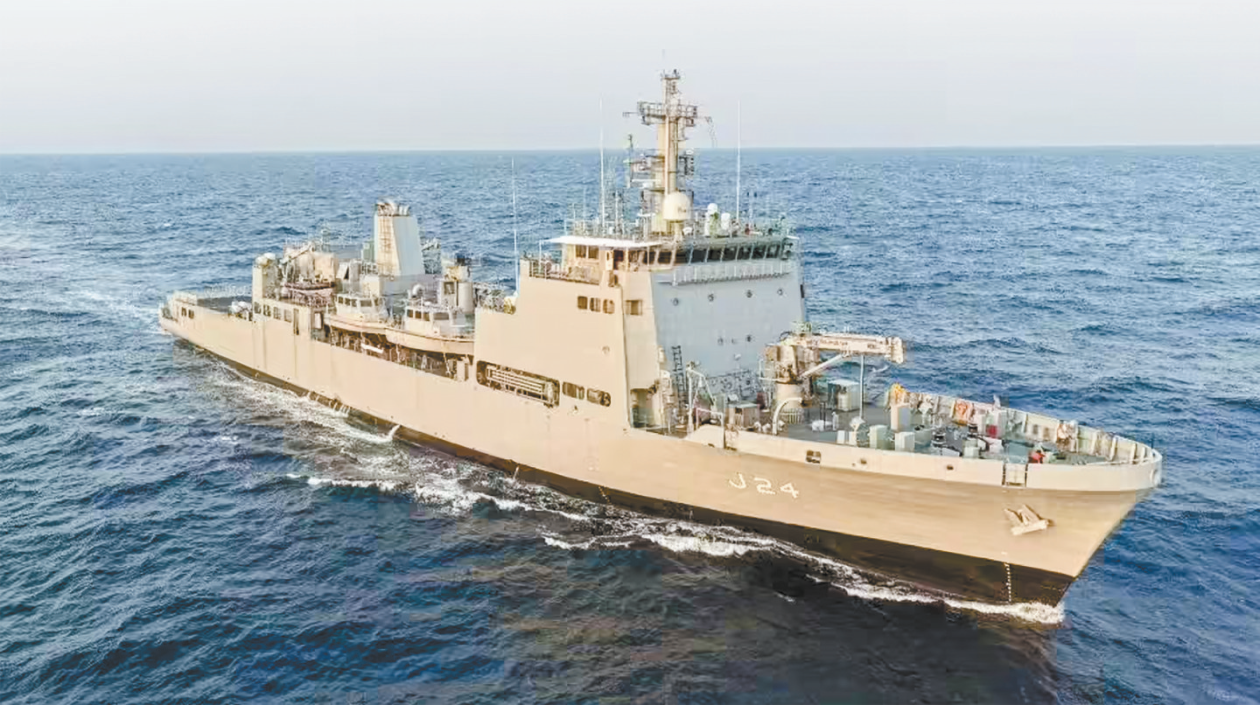
INS Sandhayak is the fourth large survey vessel of the Indian Navy, specifically designed for coastal and deep-water hydrographic surveys and for collecting oceanographic and geophysical data for defense and civilian purposes. It is equipped with advanced surveying systems, including autonomous underwater vehicles and remotely operated vehicles. With a displacement of approximately 3,400 tons, it can also be modified to perform special tasks in emergencies.
INS Agra is the fourth vessel of the Alnair class anti-submarine shallow-water combat vessels, built specifically for detecting and attacking submarines in shallow waters near coasts, ports, naval bases, and important maritime passages. It is equipped with lightweight torpedoes, domestically produced rocket launchers, and shallow-water sonar systems for detecting and striking underwater threats in nearshore waters. An Indian Navy officer stated that modern submarines can disrupt maritime supply lines, threaten aircraft carrier battle groups, and impose significant strategic costs without revealing their positions. "Recent incidents involving submarine operations in the broader Indian Ocean region have repeatedly indicated that underwater threats are rapidly changing the maritime security environment."
In recent years, India has accelerated its naval construction pace. The Times of India reported that the Indian Navy has now commissioned three major warships in a single day for the second time this year. On January 15, the Indian Navy also commissioned three vessels simultaneously, including the P15B class stealth destroyer INS Surat, the P17A class stealth frigate INS Nilgiri, and the conventional submarine INS Vagsheer. The report stated that the Indian Navy plans to commission 19 warships by 2026, which will be the largest expansion in a single year since 14 warships were commissioned in 2025.
To address the maritime situation and build a strong blue-water navy, India has vigorously promoted the self-reliance of warship construction in recent years. Currently, the navy has approximately 140 vessels and is steadily moving towards a goal of 155 to 160 vessels by 2030, with plans to expand the total number of vessels and submarines to 200 by 2035.
Vice Chief of Naval Staff Vice Admiral Sanjay Vatsayan recently revealed that India has about 45 ships under construction, which will be delivered in the next three to four years, "and another 69 vessels, 6 submarines, and 120 fast interceptor boats have been approved for project initiation."
Challenges Facing the Expansion of the Indian Navy
Although the Indian Navy has established a complete design and construction capability for aircraft carriers, destroyers, stealth frigates, survey vessels, and anti-submarine combat vessels, and has outlined ambitious large-scale expansion plans, some Indian experts have pointed out that the overall performance of the Indian Navy still has significant shortcomings. While the variety of vessels is complete, the quality does not fully match its envisioned blue-water navy mission. For example, the Indian-made aircraft carrier INS Vikrant has not only faced severe delays in construction but also exhibited "pitching" during trials, revealing inherent design flaws in the hull. The Indian Navy's most advanced P15B class stealth destroyer, although with a displacement exceeding 8,000 tons, has radar and weapon systems that are significantly behind those of mainstream air defense destroyers worldwide, particularly the Barak-8 air defense missile, which has a maximum speed of only Mach 2 and struggles to intercept highly maneuverable targets, lacking missile defense capabilities. Several of India's active nuclear submarines have only addressed the question of whether there is sea-based nuclear deterrence, and both their underwater noise levels and the performance of their submarine-launched ballistic missiles are far behind the times.
At the same time, the core weapons of the Indian Navy's main vessels still rely heavily on imported equipment. For example, the Indian Navy's primary medium-range air defense capability is based on Israel's Barak-8 air defense missile, and the main guns are generally Italian Oto Melara 76mm naval guns, while the core technology of BrahMos anti-ship missiles relies on Russia. Therefore, although the platforms of the main vessels have achieved localization, the core equipment still depends on imports. This model not only poses significant challenges in pursuing "self-reliance," but also creates major compatibility and integration issues between weapon systems from different sources.
Moreover, the large-scale increase in the number of Indian Navy vessels has also led to a shortage of talent. Modern navies are high-tech military branches, and the training of relevant personnel takes a long time. According to a report previously released by the Indian Navy, it faces a shortfall of about 10,900 personnel, accounting for 12.3% of its total authorized strength. Among them, the officer shortfall is about 21%, and the sailor shortfall is about 18%. More troubling is that the Indian Navy's recruitment model differs from that of the army; only when a new warship or submarine is added will the recruitment quota increase accordingly. This recruitment model, in the context of the Indian Navy's large-scale expansion, further exacerbates its talent shortage dilemma.
The direct consequence of the Indian Navy's talent shortage is a frequent occurrence of accidents and a decline in readiness levels. In recent years, the Indian Navy has experienced several serious accidents. For example, on the night of November 21, 2024, a new conventional submarine of the "Kilo" class collided with a fishing boat near the coast of Goa, resulting in two deaths and exposing the inadequacy of the Indian submarine force's ability to handle new equipment.
On June 21, 2023, the Indian Navy commissioned three new domestically built vessels in Kolkata, including the Dunagiri stealth frigate, the Sankalp survey vessel, and the Agray anti-submarine warfare vessel. This event marks a significant step in India's efforts to enhance its naval capabilities and self-reliance in defense. The commissioning reflects India's ambition to strengthen its maritime power and address evolving security challenges in the region.
- India commissioned 3 domestically built naval vessels on June 21, 2023.
- The vessels include a stealth frigate, a survey vessel, and an anti-submarine warfare vessel.
- India aims to enhance its naval capabilities and self-reliance in defense.
- The Indian Navy plans to expand its fleet significantly by 2030.