
Indonesia Buys 12 M-346F Fighters and Adds Another Logistics Problem
 Marcus Chen
Indonesia Buys 12 M-346F Fighters and Adds Another Logistics Problem
Twelve M-346F Block 20 aircraft will not change the air balance over the Java Sea by themselves. They will, however, add one more supply chain, one more training pipeline, and one more software integration problem to an Indonesian combat fleet that already looks less like an order of battle than an aviation catalog.
Defense News reported on July 24 that Indonesia has ordered a dozen Leonardo M-346F light fighters, with first deliveries expected in 2030. Leonardo describes the package as including local support, maintenance, overhaul, training, and human-capital development. That matters, because the aircraft is not just another advanced jet trainer. The F version brings an active electronically scanned array radar, Link 16, seven weapons stations, aerial refueling, and electronic countermeasures.
On paper, that is a useful airplane for a country built around water. Indonesia needs aircraft that can patrol wide approaches, train pilots cheaply, carry precision weapons, and operate below the cost curve of high-end fighters. But procurement logic and operational logic are not the same thing.
The Airplane Is Not The Problem
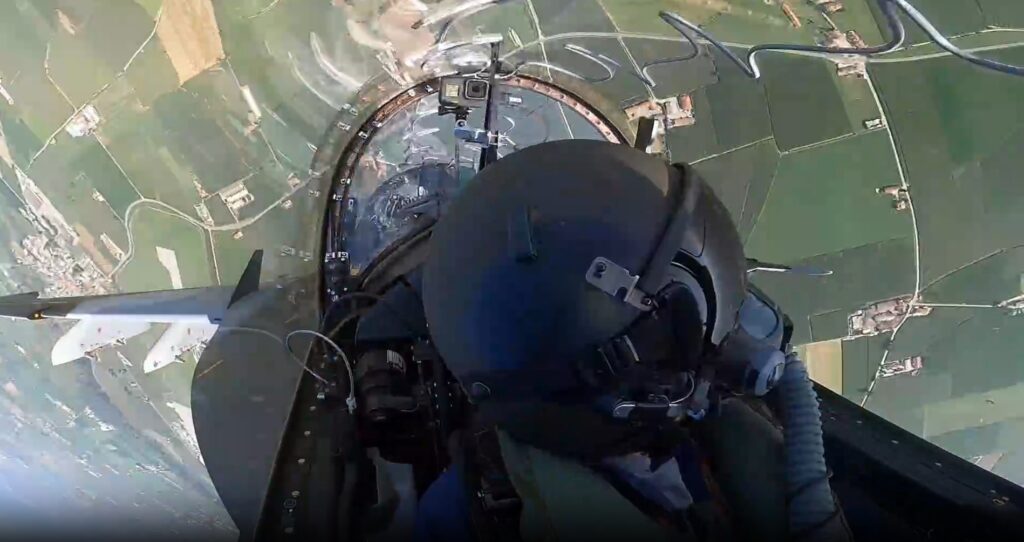
The M-346F fills a real niche. It can perform lead-in fighter training, limited air defense, maritime strike training, and close air support with a lower operating burden than a Rafale or a heavy Sukhoi. Leonardo says the M-346 family has accumulated more than 170,000 flight hours, which gives Indonesia a mature platform rather than a developmental promise.
That is the case for the purchase. Jakarta does not need every aircraft to be a long-range twin-engine fighter. A light fighter with modern sensors and a data link can make sense for alert missions, pilot conversion, and day-to-day presence across a country that spans roughly 5,100 kilometers from Aceh to Papua.
The problem is what the M-346F joins. Indonesia is inducting Dassault Rafales. It still operates American F-16s, Russian Su-27 and Su-30 fighters, and Korean T-50i aircraft. It previously invested in the KF-21 program, has shown interest in the Turkish Kaan, and Indonesian officials have also discussed the Chinese J-10. If all of that becomes real, the Indonesian Air Force will have several fighter families with different engines, radars, weapons, software baselines, pilot syllabi, and ground-support equipment.
Anyone who has served around flight operations knows the hidden weight is not the aircraft on the ramp. It is the spare parts bin, the mission planning system, the weapons certification paperwork, the simulators, the contractor field teams, and the maintenance chiefs trying to keep readiness above briefing-slide levels.
Diversification Has A Combat Cost
Indonesia has good reasons to diversify suppliers. It wants freedom from sanctions risk, political leverage over vendors, and access to technology transfer. For a non-aligned archipelagic power, that is not irrational. The country sits across the sea lanes linking the Indian Ocean, South China Sea, and western Pacific. It cannot afford to be a client force for one capital.
But a diversified inventory does not automatically produce diversified combat power. Defense News quoted Alban Sciascia of PT Semar Sentinel Indonesia warning that interoperability is already a problem for the Indonesian Armed Forces because equipment from many countries does not easily work together in joint operations. That is the operational bill coming due.
Link 16 on the M-346F helps only if the network, procedures, encryption, and command architecture are ready to use it. A fighter that can see a target but cannot pass usable data into a joint kill chain is just a better individual platform. Indonesia needs fleet-level effects: maritime patrol cueing fighters, fighters cueing coastal missiles, surface combatants sharing tracks, and command posts deciding quickly which shooter gets the shot.
That is especially important because Indonesia is not buying airpower for parade geography. The Natuna area sits near the southern edge of the South China Sea. The Makassar Strait and Lombok Strait matter to submarines and surface ships moving between oceans. The country needs persistent surveillance and fast response across enormous distances, not just impressive aircraft types at a few bases.
The Navy Helicopter Letter Is The More Interesting Signal
The same announcement included a July 21 letter of intent among Leonardo, PT ESystem Solutions, and Indonesia defense officials for possible AW149 medium helicopters for the Indonesian Navy. That detail is easier to miss, but it may say more about Indonesia actual problem set.
The navy reportedly operates eleven Airbus AS565 Panther helicopters. Eleven shipboard helicopters are not much for the world largest archipelagic state. Embarked aviation is how a navy extends radar horizon, searches for submarines, moves people and parts, and keeps ships useful when they are far from major bases. If Indonesia wants sea control in its own waters, rotary-wing capacity is not a luxury.
The AW149 is not a glamorous purchase compared with a fighter. It is also closer to the daily military math Indonesia faces. More helicopters mean more decks with useful reach. More maintainers and shore support mean more days at sea with sensors airborne. In peacetime grey-zone encounters, that may matter more than another supersonic aircraft sitting hundreds of nautical miles away.
The 2030 Delivery Date Leaves Time To Fix The Network
The first M-346Fs are expected in 2030. Four years is enough time to make the aircraft part of a coherent force, or to let it become another boutique fleet. The deciding factor will not be Leonardo performance. It will be whether Jakarta can standardize weapons choices, build common training pipelines, and impose a real joint command-and-control architecture across air, naval, and coastal defense units.
The hard question is not whether the M-346F is a good aircraft. It probably is. The hard question is whether Indonesia is buying combat mass or collecting options. In the western Pacific, options are useful in diplomacy. In a fight, they have to connect.
If Jakarta uses the M-346F as a low-cost node in an integrated archipelagic defense network, the deal makes sense. If it becomes just the next patch on an already crowded flight line, twelve aircraft will mostly buy complexity with Italian branding.
Indonesia ordered 12 M-346F Block 20 fighters to enhance its air capabilities, with deliveries expected in 2030. This acquisition adds complexity to the Indonesian Air Force's diverse fleet, which already includes various aircraft types. The M-346F features advanced technology, but logistical challenges are anticipated due to the integration of multiple systems and training pipelines.
- Indonesia ordered 12 M-346F fighters from Leonardo.
- First deliveries are expected in 2030.
- The M-346F includes advanced features like Link 16 and electronic countermeasures.
- Indonesia's air fleet is becoming increasingly diverse with multiple aircraft types.
- Logistical challenges are anticipated due to the variety of aircraft in service.