
Iran Is About to Win the War Trump Started
 Alexandra Reeves
Iran Is About to Win the War Trump Started
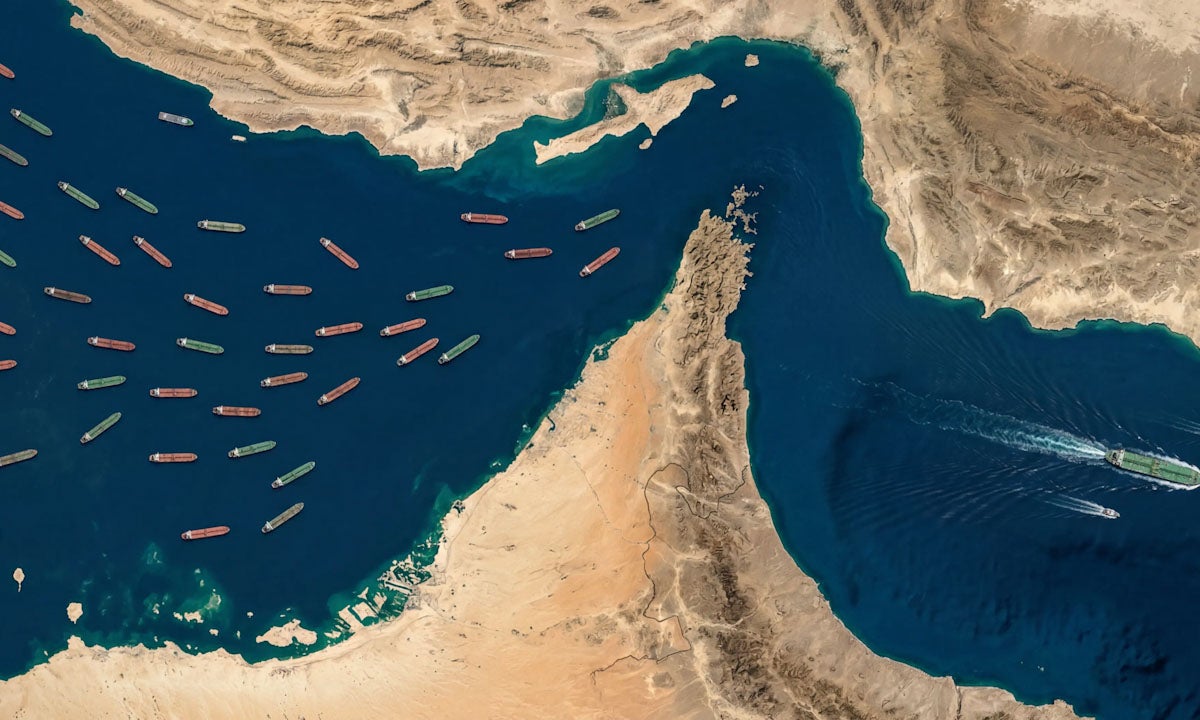
Five months ago, the United States and Israel launched a war to topple Iran's government and end its nuclear programme. Neither goal has been achieved. Instead, Iran is on the verge of getting something it never had before the war began: legal control over the Strait of Hormuz, through which a fifth of the world's traded oil and gas once flowed.
That is not hyperbole. It is the actual text of the draft agreement now sitting in Iran's parliament, according to Bloomberg and Reuters reporting on the Iran-Oman talks. The deal would give Tehran authority over ships entering the Gulf, bar US and Israeli-linked vessels from the waterway, and require "compensation" from hostile states before they can transit. Iranian Deputy Foreign Minister Kazem Gharibabadi confirmed that both inbound and outbound traffic would pass through Iranian territorial waters under the arrangement.
President Trump told reporters on August 6 that a deal "could be announced this week" and that the war "has got to end pretty soon." Treasury Secretary Scott Bessent had earlier floated Tuesday or Wednesday as the target. The President's optimism drove oil prices down and stocks to record highs. Markets are pricing in peace.
The Deal Is the Surrender
Let's be clear about what is being negotiated here. Before the war, the Strait of Hormuz was an open international waterway. Ships transited freely. No fees were paid. No state had veto power over which flags could pass.
The proposed deal changes all of that. Iran gets a formal role in deciding who enters the Gulf. It gets payment — Tehran is pushing for 5 to 7 percent of cargo value, while Oman prefers around 3 percent and Washington wants zero. It gets to exclude American and Israeli shipping. And crucially, it gets to frame all of this as a bilateral arrangement with Oman, not a concession extracted by American military pressure.
This is not a ceasefire that preserves the pre-war status quo. This is Iran locking in gains it could not have achieved through diplomacy alone. The war that was meant to break Tehran's grip on the region is about to codify it.
The Trump administration has previously ruled out any deal that would cement Iranian control over the strait. Secretary of State Marco Rubio said as recently as July that the US would "never" accept such terms. Yet here we are, with Treasury's Bessent telling CNBC a deal is hours away and Trump telling reporters the other side "can't go much longer" — even as Iran's parliament reviews a text that gives Tehran exactly what Rubio said Washington would never concede.
The Military Math
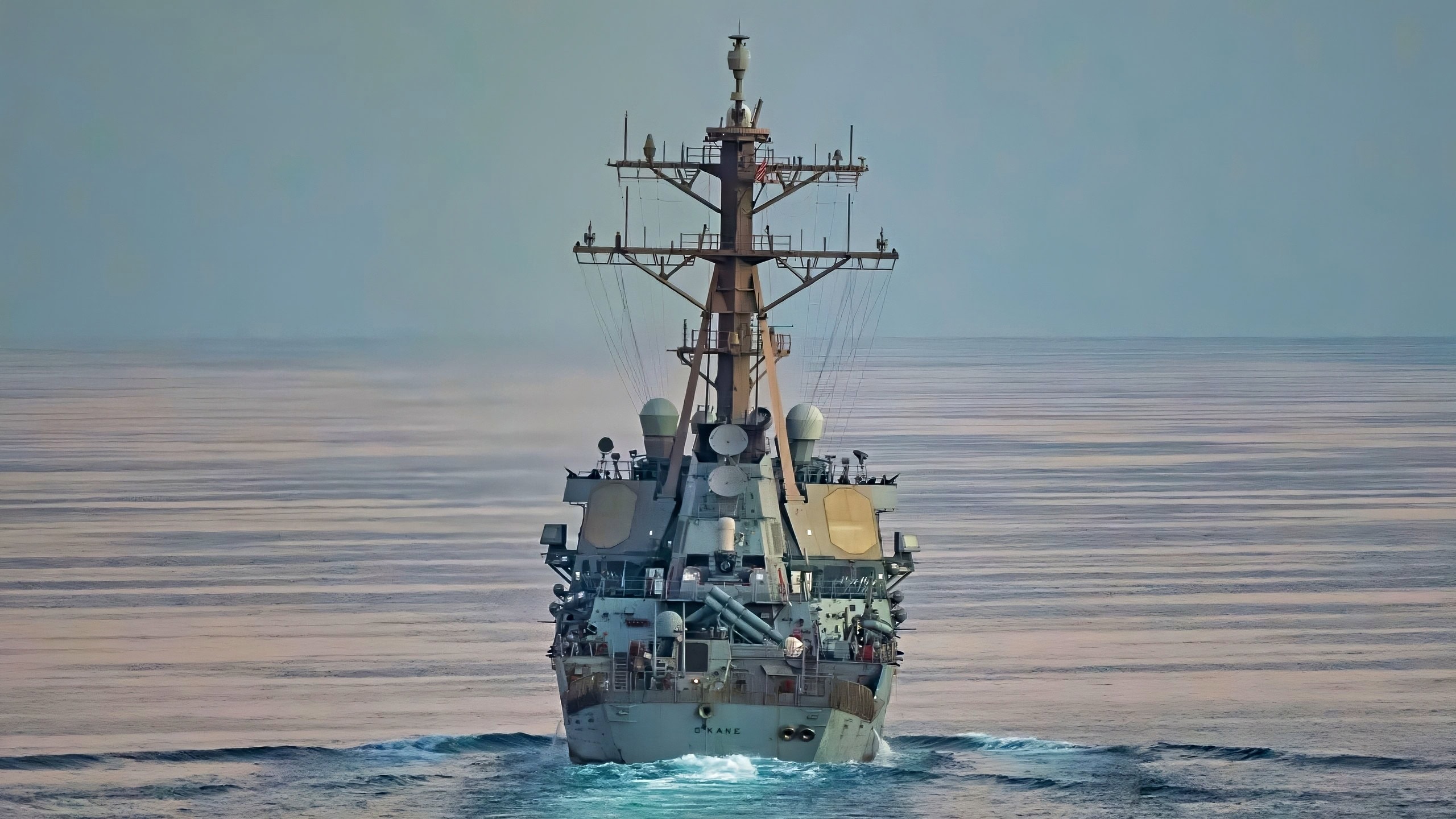
The strategic logic behind Washington's position is straightforward, if uncomfortable to articulate. The US military has shot its bolt.
Reuters reported on August 4 that the US Army has used "virtually all" of its long-range precision missiles — the Army Tactical Missile Systems and Precision Strike Missiles that were the backbone of the July bombing campaign against Iranian targets. CNN separately reported that nearly 80 percent of THAAD missile defence interceptors have been expended. The US has fired more than 300 strike sorties against Iranian sites since July 7, according to GlobalSecurity.org's war tracker, and Iran's ballistic missile capability — degraded but not destroyed — kept firing into August. The command's own assessment from March placed Iranian air defence degradation at roughly 90 percent; that still leaves 10 percent, and the remaining systems have proven lethal enough to keep US pilots honest.
Meanwhile, the dual demands of the Iran war and the ongoing Russia-Ukraine conflict have drained Western munitions stockpiles at an extraordinary clip. Lockheed Martin was awarded a record $58.6 billion Patriot missile contract in July. That is not a sign of strength. That is a fire sale to refill empty magazines.
The military reality is this: the United States can keep fighting, but it cannot escalate its way to better terms. The July surge of strikes did not force Iran to yield on control of the strait. If anything, it hardened Tehran's negotiating position — Iran warned Gulf states last week that any new American attack on its territory would trigger retaliation against critical energy infrastructure across the region. That is a threat with teeth, and Gulf capitals know it.
Khamenei's Invisible Hand
There is one more variable that should give anyone pause about declaring this deal done: Supreme Leader Mojtaba Khamenei has not been seen in public since the war's opening strikes in February. He is believed to have been wounded in those attacks. The draft agreement requires his final sign-off, according to regional officials who spoke to AP. As of August 7, that approval had not been confirmed.
This matters because Mojtaba Khamenei — who succeeded his father Ali in 2025 — has staked his legitimacy on confronting the United States. A deal that reopens the strait while formalising Iranian control is a win. A deal that looks like capitulation is not. The question is which box the Supreme Leader checks when the text lands on his desk. If he is genuinely incapacitated, the internal IRGC faction controlling decision-making — the one whose military adviser, Major General Mohsen Rezaei, declared on August 3 that Iran "will not allow the use of a second corridor in the strait under any circumstances" — is not exactly a moderate voice.
What Europe Should Be Asking
I spend most of my time writing about NATO and European security, so here is the question I cannot stop thinking about: what does a defeated America in the Gulf mean for deterrence in the Baltic?
If the United States launches a war with the stated aim of regime change, fights it for 161 days, loses 18 troops and a substantial fraction of its precision-guided munitions inventory, and then signs a deal that gives the target regime more control over strategic waterways than it had before — what signal does that send to Moscow? To Beijing?
The answer is not a comfortable one. Russia has been watching this play out from the cheap seats, noting that the same American administration that cannot sustain two simultaneous precision-strike campaigns is also the guarantor of NATO's eastern flank. The US has already burned through ATACMS and PrSM stocks that would be critical in any European contingency. Europe is supposed to be building its own defence capacity, and there are signs of life — but the timeline is measured in years, and the Hormuz crisis is happening now.
Eight of the world's largest shipping associations have already urged the United Nations to oppose any toll regime in the strait as a violation of international navigational norms. That is the right instinct. But norms are only as strong as the willingness to enforce them, and the enforcer just ran out of missiles.
The Bottom Line
There is a version of this story where the Hormuz deal is a genuine diplomatic breakthrough that saves lives, stabilises oil markets, and creates space for a broader regional settlement. That version exists. It may even be the one that plays out.
But there is another version, and it is the one the draft text points toward: a war launched to remove a regime ends by granting that regime something it has wanted since 1979 — formal sovereignty over the Strait of Hormuz. Iran's Foreign Ministry spokesman said on August 5 that the country will not return to the pre-war status of an open international waterway. He was not bluffing, and the deal on the table does not ask him to.
Trump wants this war over before November's midterm elections. Voters oppose it by two-to-one. The pressure to declare victory and come home is immense. But declaring victory and actually winning are not the same thing, and on Day 161 of a war the Pentagon said would end in weeks, the gap between them has never been wider.
Iran is negotiating for control over the Strait of Hormuz, which would allow it to regulate maritime traffic and exclude U.S. and Israeli vessels. The U.S. military has used most of its long-range precision missiles in the conflict, and Iran's missile capabilities remain operational. Supreme Leader Mojtaba Khamenei's approval is required for the agreement, which could formalize Iranian control over the strategic waterway.
- The U.S. and Israel launched a war against Iran five months ago.
- Iran is negotiating for control over the Strait of Hormuz.
- The U.S. military has expended most of its long-range precision missiles.
- Iran's ballistic missile capability remains intact despite U.S. strikes.
- Supreme Leader Mojtaba Khamenei's approval is needed for the draft agreement.