
Iran Partially Closes the Strait of Hormuz During Geneva Negotiations — 50 American Fighters in 24 Hours and a Real Threat to 31% of the World's Oil
 Ahmed Al-Rashid
Iran Partially Closes the Strait of Hormuz During Geneva Negotiations — 50 American Fighters in 24 Hours and a Real Threat to 31% of the World's Oil
On February 18, 2026, Iran temporarily closed part of the Strait of Hormuz. At the same time, its Foreign Minister Abbas Araghchi was sitting at the negotiating table in Geneva. This timing is not a coincidence, and from a military perspective, it is the only clear message Tehran has sent throughout weeks of diplomatic statements.
Exercise "Smart Control" — Beyond the Name
The Iranian Revolutionary Guard Corps (IRGC) announced a naval exercise called "Smart Control of the Strait of Hormuz." The name is deliberate. It is not just a defensive drill or a show of force—it is an official declaration that the Strait of Hormuz is a tool that can be turned on and off by political decision.
Practically, the partial closure that occurred yesterday during the negotiations caused only "minor disruptions and slight delays," according to Jacob Larson from Bimco, the international representative of shipowners. But this misses the point. The real measure is not what happened today—but what the IRGC can do if the talks collapse.
- About 13 million barrels per day of crude oil pass through the Strait of Hormuz
- This represents 31% of total global oil shipping
- Gulf countries—Saudi Arabia, the UAE, Kuwait, and Qatar—all export through this strait
When American officials talk about military pressure on Iran, they speak as if the main threat lies with Washington. In my view, this is a fundamentally flawed reading. The greater threat lies to the exports of the Gulf states themselves.
Fifty Fighters in Twenty-Four Hours
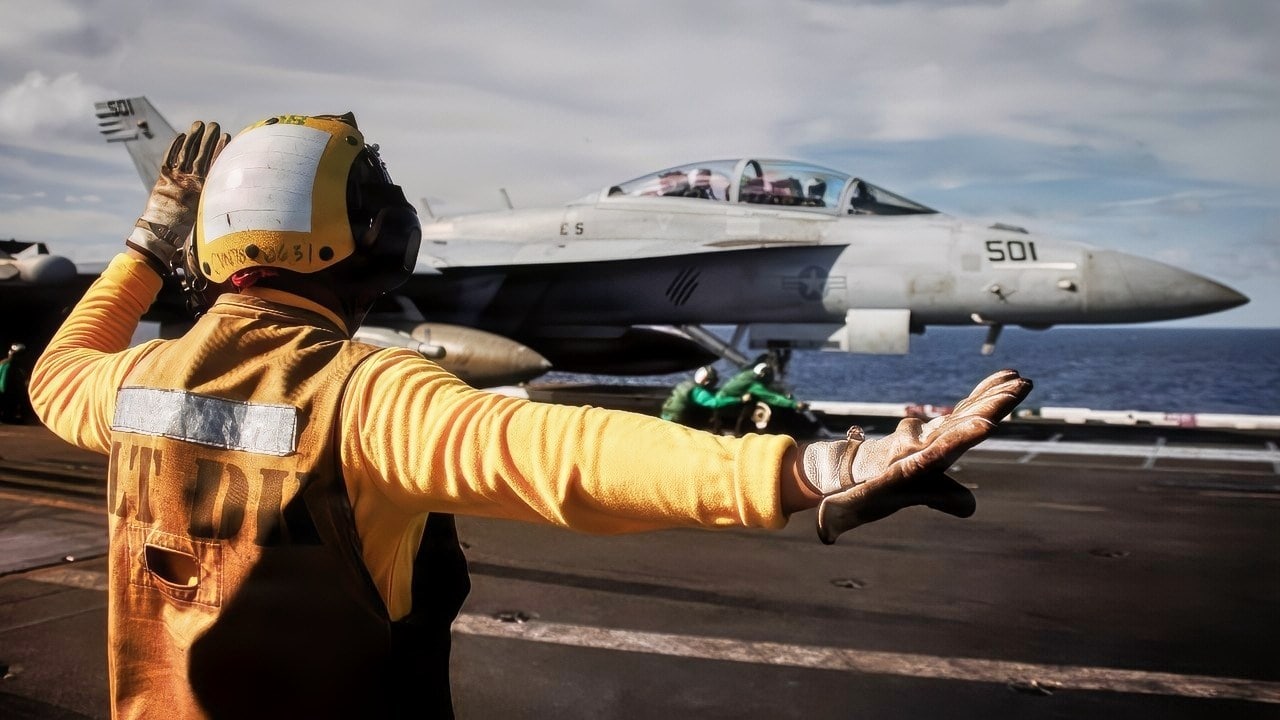
In contrast, the United States has moved more than 50 fighter jets to the Middle East over the past twenty-four hours, according to a U.S. official speaking to Axios. The aircraft included: F-22 Raptor, F-35 Lightning II, and F-16 Fighting Falcon, along with aerial refueling planes—an indication that these aircraft are prepared for prolonged operations, not just symbolic presence.
Simultaneously, the USS Gerald R. Ford aircraft carrier group is moving across the Atlantic toward the region, joining the Abraham Lincoln that preceded it. Two aircraft carriers in the region at the same time—this is a rare event and significant.
But let me pose a question that Western analysts often avoid: What can these carriers do against the IRGC, which is positioned along 55 kilometers of the narrowest point in the strait? The honest military answer is: a lot—but not without a heavy price paid by everyone, including the American side.
Geneva Talks — "Guidelines" Without Substance Yet
After the second round of talks, Araghchi announced that the two sides had reached a "mutual understanding on the guidelines." He then added that this does not mean they are close to an agreement and that "more work is needed."
“I am in Geneva with real ideas to reach a fair and just agreement. What is not on the table: surrendering to threats.” — Abbas Araghchi, Iranian Foreign Minister
In contrast, U.S. envoy Steve Wittekov and Jared Kushner stated that they are seeking a deal without rushing to announce results. From the American side, Trump made an unusual comment revealing underlying concern: “I hope they are more reasonable. I think they want an agreement. I don’t think they want the consequences.”
The term "consequences" refers to Trump's earlier hint of "sending B-2 stealth bombers to destroy the Iranian nuclear program." This threat completes the picture: diplomacy is taking place under the shadow of an explicit military threat.
The Strait as a Bargaining Chip — The Reading the West Misses
Any military personnel who has served in the region knows that Hormuz is not just a waterway—it is the pressure valve for the entire Gulf economy. Iran does not need to actually close it to achieve the desired effect; it is enough for it to prove that it can, and for the world to believe it.
The "Smart Control" exercise did exactly that. Oil prices fell after the temporary closure—not rose. This tells us that the market is betting on a settlement, not on war. But if the talks collapse and the exercise escalates to an actual and extended closure, then 13 million barrels per day are at risk—and that is a pressure that neither Riyadh nor Abu Dhabi can afford to bear.
Practically, the Gulf states are in a dual pressure equation:
- Pressure from Iran on one side, through the threat to the strait
- Pressure from America on the other side, through demands for support of the U.S. negotiating position
In the first round of talks (February 6 in Oman), the U.S. and Iran avoided each other in the Muscat Palace with different cars. Now in Geneva, the arrangements are clearer—but the essence is the same: dialogue through a mediator, not direct.
Conclusion — The Real Pressure Point is Not in the Atlantic
The West looks at American aircraft carriers and sees the main message in an American-Iranian crisis. From my vantage point, I see a different picture: the real pressure point in this equation does not sail in the Atlantic—it exercises control over 55 kilometers of water between Oman and Iran.
As long as Iran can name the exercise "Smart Control of the Strait of Hormuz" and implement a partial closure on the same day as the talks without military response, the message of Iranian deterrence has been sent. The question now is not whether America will strike—but what price the Gulf economies will pay if both paths fail: diplomatic and military.
This is the structural contradiction that the summits and talks have yet to find an answer to: America has military power but is distant from the geography, Iran has the geography but cannot afford war, and the Gulf states have the greatest interest in a settlement but sit outside the negotiating table.
Iran partially closed the Strait of Hormuz on February 18, 2026, coinciding with negotiations in Geneva. The U.S. deployed over 50 fighter jets, including F-22s and F-35s, to the region, signaling military readiness. The IRGC's naval exercise emphasized Iran's control over the strategic waterway, which is crucial for global oil transport.
- Iran temporarily closed part of the Strait of Hormuz on February 18, 2026.
- The U.S. deployed over 50 fighter jets to the Middle East in 24 hours.
- The IRGC conducted a naval exercise named 'Smart Control of the Strait of Hormuz'.
- 13 million barrels of oil per day pass through the Strait, representing 31% of global oil shipping.
- U.S. aircraft carriers are moving towards the region, indicating military readiness.