
Iran Purchases 400 Chinese QW-12 and FN-16 Systems to Fill Air Defense Gap in 2026
 Ahmed Al-Rashid
Iran Purchases 400 Chinese QW-12 and FN-16 MANPADS to Address Air Defense Gap in 2026
On July 30, three sources told Reuters that Iran expects the first shipment of a deal involving between 300 and 400 shoulder-fired air defense systems from China within weeks, valued at approximately $60 to $70 million. The number is not large compared to typical Gulf contracts, but it is militarily significant because it reveals where U.S. and Israeli strikes are currently hurting Tehran: in the short and low layer of air defense, not in grand rhetoric about deterrence.
A Small Deal Revealing a Big Gap
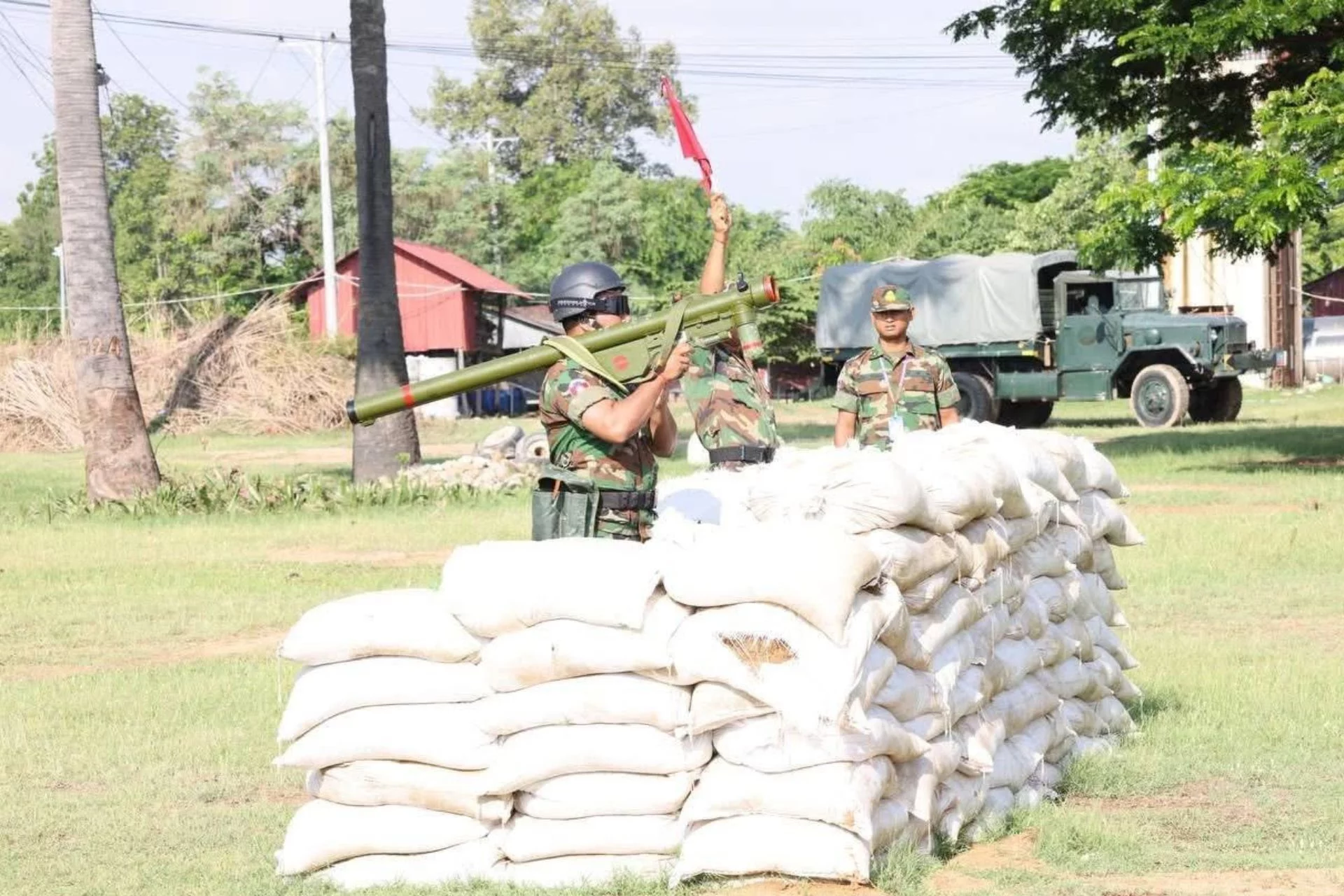
According to the report, the deal includes QW-12 and FN-16 missiles, which are infrared-guided systems against low-flying aircraft, helicopters, and some drones. The mentioned intermediary company is Zhongqing Baoshang International Investment in Hong Kong, while Beijing officially denied the report and described the narrative as baseless. Pakistan also denied any role in the arms transfer, following indications that shipments might pass through Urumqi in western China and then through Pakistani territory or airspace towards Iran.
From a military perspective, such denials are expected. Deals like this are not usually managed with shiny official statements, especially when war is ongoing, sanctions are active, and logistical routes are sensitive. Therefore, the details should be treated as not fully confirmed data, but their repetition across Western and Middle Eastern security sources makes them more than just a market rumor.
Why Tehran is Choosing MANPADS Now
Any military personnel who has served in the region knows that air defense is not just one radar and a long-range missile. It consists of layers, and if any layer breaks, it opens a passage for the adversary. Iran has built a network of missiles, radars, and drones over two decades, but it has faced a persistent problem in the current war: known sites, no matter how fortified, become repeated targets for long-range aircraft, precision munitions, and continuous intelligence.
Shoulder-fired systems do not solve the problem of downing an F-35 or intercepting a ballistic missile. However, they change the calculations for low-flying aircraft, drones, and close reconnaissance. A small team can deploy a platform, launch it, and then withdraw. This is not decisive firepower, but a means to make the adversary pay more time and risk for every close sortie near a facility, base, or energy node.
Notably, Iran is not purchasing a massive political image here. It is not announcing S-400s, long-range radars, or new fighter jets. It is looking for 300 to 400 relatively small pieces that can be distributed around many sites. This means that the Iranian leadership is practically acknowledging that the air war of attrition cannot be faced only with expensive systems, but with a widespread defensive density, even if it is less advanced.
QW-12 and FN-16: Between Value and Impact
The QW-12 and FN-16 are classified within the family of Chinese portable systems designed to intercept low-heat and low-altitude targets. The sources cited by Reuters also indicated Iranian interest in the QW-18 and QW-19 versions, which are relatively newer. If true, Iran is not just looking for a one-time shipment, but for a supply channel that can be expanded later.
The announced value of the deal, $60 to $70 million, provides an important indicator. In the Gulf market, this might be the price of a limited training or maintenance package, but for Iran, it is a purchase of quantity, not a purchase of symbolism. Compared to the cost of a single fighter jet or a medium-range air defense battery, this deal is cheap. However, it creates an operational problem that is not cheap for the other side, as every guard point around a missile factory, warehouse, or power station could turn into a threat to a drone, helicopter, or low reconnaissance platform.
Here, one should not exaggerate. MANPADS do not create a national umbrella, do not compensate for the loss of long-range radars, and do not stop cruise missile strikes if they come within a complex package of jamming and deception. However, they make penetrating the last layer less comfortable. In militaries, we say that a good weapon is sometimes not the one that wins the war, but the one that prevents the enemy from winning it at a low cost.
A Message to Washington and the Gulf
This news comes alongside an analysis published by CSIS and reported by Defense News about the depletion of U.S. stocks of Patriot and THAAD interceptors during the Iran war. The estimate discussed spending of about 65% of the Patriot stock before the war, with fewer than 1,000 interceptors remaining, and a reduction of THAAD stock by about 38% to between 234 and 278 interceptors. These figures are not officially confirmed by the Pentagon, but they explain why defensive munitions have become a political issue in Washington, not just a technical item.
For Gulf states, the message is dual and concerning. Iran is trying to patch its short defense with cheap and mobile weapons, while Gulf defense relies largely on expensive and limited U.S. systems. If the war drags on or expands its fronts, the question will not only be who has Patriot or THAAD, but who has enough missiles, and who can replenish stocks before the next round.
Here, the triad of capability that I always return to emerges: equipment, training, and institution. Iran may have hundreds of launchers, but their effectiveness will depend on team training, warning systems, communication, and discipline in not firing at phantom targets. The Gulf may have much higher systems, but it still needs American maintenance, American munitions, and American software. Weapons do not fight alone; they fight within a system.
China Enters Through the Practical Door
If the deal is confirmed, China will not have entered the Iranian war in the old Russian way, that is, by sending large systems that raise the political flag. Beijing is entering through the practical door: less visible, deniable equipment, and its value does not force it into a major diplomatic confrontation. This approach suits China more than a show of force. It is helping Iran to fill a gap, but it is trying not to become a publicly declared party in the war.
The potential logistical route through western China and Pakistan, if true, is as important as the weapon itself. Iran does not only need to purchase equipment, but to prove that the blockade does not close all routes. In my estimation, this is the message that Gulf capitals will read carefully: Tehran is still capable of finding alternative supply corridors, even under bombardment, surveillance, and sanctions.
Conclusion
The QW-12 and FN-16 deal, if completed, will not change the balance of the war alone. However, it reveals an Iranian shift from grand deterrence rhetoric to practical survival logic: distribute the weapons, hide the teams, and raise the cost of low attacks. Meanwhile, Washington and the Gulf face the opposite paradox: very advanced systems, but few, expensive, and slow to replenish. In the Middle East, as the old military saying goes, a high castle is not enough if its back door is unguarded.
Iran is purchasing 400 QW-12 and FN-16 shoulder-fired air defense systems from China to address air defense gaps by 2026. The deal, valued at approximately $60 to $70 million, aims to enhance Iran's short-range air defense capabilities. Despite China's denial of the report, the acquisition reflects a strategic shift in Iran's military approach, focusing on more mobile and cost-effective defense solutions.
- Iran is purchasing 400 QW-12 and FN-16 air defense systems from China.
- The deal is valued at approximately $60 to $70 million.
- The systems are intended to fill gaps in Iran's short-range air defense.
- China has officially denied the report, calling it baseless.
- The procurement indicates a shift in Iran's military strategy towards more mobile and cost-effective defense solutions.