
Iran's 80 Mines Keep Hormuz War Alive
 Alexandra Reeves
Iran's 80 Mines Keep Hormuz War Alive
The deal was supposed to reopen the Strait of Hormuz. The mines are saying something else.
According to The Guardian's 19 June reporting, the centre of the strait is still blocked by roughly 80 mines, leaving the standard traffic separation route too dangerous for normal commercial use. That matters more than the diplomatic language around the new US-Iran memorandum. In maritime warfare, a mine is a veto in metal. It does not need a press conference, and it does not care whether negotiators in Europe have found a paragraph everyone can tolerate.
The Channel Is Open Only on Paper
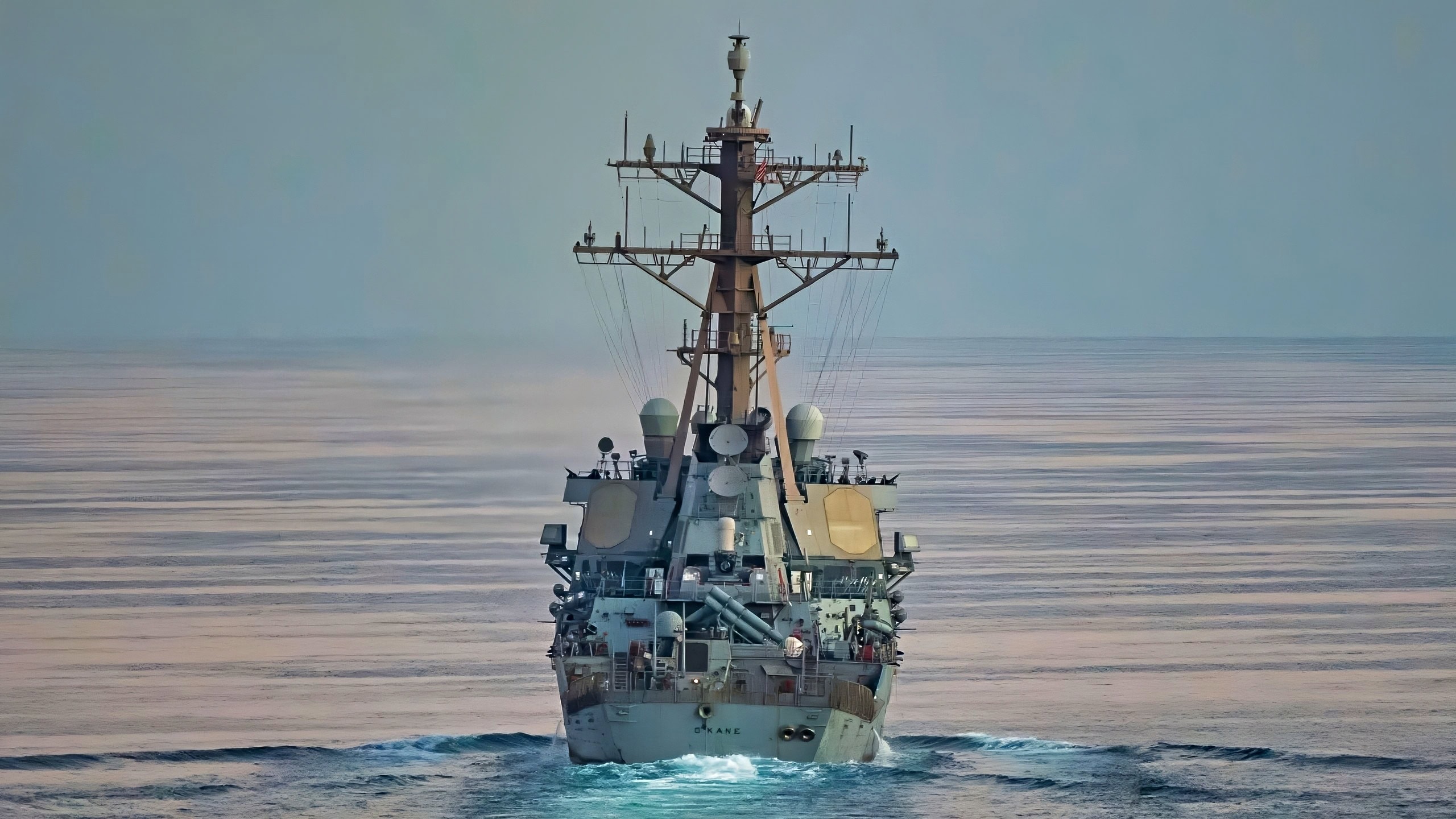
Several vessels reportedly began leaving the Gulf on Thursday after Washington and Tehran signed the memorandum. But the useful part of Hormuz is not simply a blue patch on a map. It is a managed, crowded, shallow, politically exposed shipping system between Iran and Oman. Before the war, about 130 ships a day used the route and roughly 20 percent of global oil moved through it, according to the same Guardian report. Al Jazeera has reported that about one-fifth of the world's oil and LNG supplies had moved through the strait before the conflict.
Now the middle route is blocked. Ships are being forced toward a narrow southern passage along the Omani coast, where the operational risks are obvious: grounding, collision, congestion, and navigation failure if electronic interference continues. The industry language sounds cautious because shipping executives are paid to sound cautious. The underlying point is harsher. A paper reopening is not a reopening if insurers, captains, and naval commanders still treat the waterway as a live threat area.
That is why the mine count matters. Eighty mines is not a symbolic obstacle. It is enough to keep the main channel shut, enough to preserve Iranian leverage, and enough to make every vessel operator ask whether a single transit is worth a hull, a crew, and a liability fight that could run for years.
Cheap Weapons, Expensive Consequences
Sea mines are ugly because they reverse the usual cost logic of modern war. A missile defence system costs a fortune and has to work instantly. A mine can be relatively cheap, quiet, and politically deniable until something hits it. Al Jazeera's April explainer, citing maritime analysts, described Iranian mine stocks as possibly numbering in the thousands, with categories ranging from old contact mines to bottom influence mines and more advanced rocket mines. Even if only a fraction are deployed, the uncertainty does most of the work.
A minefield does not have to be perfectly mapped to be effective. One confirmed mine in the wrong place can invalidate an insurance assumption. A suspected bottom mine can slow a convoy. A credible warning about rocket mines can force naval planners to treat the seabed, not the shoreline, as the front line.
This is where the US-Iran deal looks weakest. It assumes that political sequencing can tame an operational problem. First the ceasefire, then the reopening, then the wider nuclear and sanctions talks. But mine clearance does not move at diplomatic speed. It requires survey vessels, mine countermeasure platforms, unmanned systems, security cover, and a level of trust that the mined area will not be reseeded or targeted while the work is under way.
US Central Command had earlier said guided-missile destroyers would help establish a safe pathway, according to Al Jazeera's reporting on CENTCOM's April statement. Euronews reported on 18 June that Germany had dispatched two naval vessels for a possible mine clearance operation. That is useful. It is also a reminder that Europe is again being pulled into the hard part of a US-brokered Middle East bargain after the headline diplomacy is done.
Iran Still Owns the Clock
The uncomfortable part for Washington is that Iran does not need to close Hormuz completely to keep pressure on everyone else. It only needs to make reopening slow, conditional, and expensive.
The memorandum reportedly gives commercial vessels toll-free passage for 60 days and calls for full restoration of traffic within 30 days. Tehran has also floated post-grace-period fees for managing the waterway, according to The Guardian. Shipping companies are right to hate that idea. The Strait of Hormuz is not the Panama Canal. Charging for passage through international waters would create a precedent that every coastal power watching Malacca, Bab el-Mandeb, or the Taiwan Strait would understand immediately.
Here is the thing everyone in Washington tends to underplay: Iran's leverage is not only military. It is procedural. Safe routes, inspection rules, maritime notices, insurance confidence, convoy priority, demining access, and future fees all become bargaining chips. A country can lose aircraft, missile sites, and prestige, yet still shape the tempo of a crisis if it controls the choke point's risk environment.
The shipping industry sees this more clearly than many governments. gCaptain reported this week that maritime organisations welcomed the US-Iran agreement but warned that commercial traffic could not return to normal until safe routes, security assurances, and procedures were credible. The International Chamber of Shipping has framed the crisis around seafarer safety and urged operators to rely on verified information and serious risk assessments. That is not bureaucratic padding. It is the industry saying: we are not sending crews into a political theatre set unless the water is actually safe.
The Military Lesson Is Broader Than Hormuz
Hormuz is a Middle Eastern crisis, but the military lesson travels. NATO planners should be watching it closely. Europe spends much of its maritime-security debate on frigates, submarines, carrier escorts, and air defence. Those matter. But the cheaper weapon is often the one that changes the political timetable.
Russia understands this in the Black Sea. The Houthis learned a version of it in the Red Sea with missiles and drones. Iran is now demonstrating the mine warfare version in the Gulf. The common thread is not technological sophistication. It is denial. Make a route uncertain, force commercial actors to price in worst-case risk, and let governments discover that reopening a sea lane is much harder than declaring it open.
For Europe, the immediate operational question is whether its mine countermeasure forces are enough for a world where chokepoints become coercive tools again. Belgium, the Netherlands, France, Britain, Germany, and others have relevant capabilities, but capacity is thin and deployment cycles are unforgiving. If two German vessels are a meaningful contribution in Hormuz, that tells us something about how narrow the bench is.
What To Watch Next
Three indicators matter now. First, whether a verified mine-clearance corridor is announced with enough detail for insurers to price risk down. Second, whether Iran accepts foreign naval survey operations without turning each movement into a sovereignty dispute. Third, whether the promised 30-day restoration target quietly becomes a 90-day or year-end problem.
The key finding is simple: the ceasefire reduced the shooting, but the mines preserved the crisis. Hormuz will not be normal because presidents, ministers, or diplomats say it is normal. It will be normal when captains can sail the main channel in daylight with transponders on, insurers calm down, and Iran no longer gets paid politically for every hour of uncertainty.
Until then, the Strait of Hormuz is not reopened. It is being negotiated one nautical mile at a time.
Iran continues to block the Strait of Hormuz with approximately 80 mines, significantly impacting maritime traffic and insurance confidence. Despite a recent US-Iran memorandum aimed at reopening the strait, the presence of these mines creates operational risks for vessels. Shipping companies express concerns over potential fees for passage, while the complexity of mine clearance operations hinders the restoration of safe navigation.
- Approximately 80 mines are blocking the Strait of Hormuz.
- The mines are preventing normal commercial traffic and creating operational risks for vessels.
- Iran maintains leverage over maritime routes despite diplomatic agreements.
- Shipping companies are concerned about potential fees for passage through the strait.
- Mine clearance operations are complicated and slow, affecting the reopening of the waterway.