
Iran's Attacks on 18 American Targets Reveal Patriot and THAAD Gaps in the Gulf 2026
 Ahmed Al-Rashid
Iran's Attacks on 18 American Targets Reveal Gaps in Patriot and THAAD in the Gulf 2026
On the morning of June 11, 2026, the sirens in Bahrain and the closure of Kuwaiti airspace were not just a passing security detail. Within a few hours, Tehran announced that it had targeted 18 sites related to the American military presence in Kuwait and Bahrain, while the U.S. embassy in Amman warned of missiles, drones, or shells in Jordanian airspace. Militarily, this is not a story of whether a missile hit or missed. The real story is that the Gulf has entered a new practical test for the Patriot and THAAD systems and the American warning network, which is politically sold as a guarantee but operates in the field as a long and complex dependency chain.
What Happened in the Early Hours
The U.S. Central Command confirmed that its forces carried out additional strikes inside Iran on June 10 against military surveillance capabilities, communication systems, and air defense sites. The operation, according to the American statement, used precision munitions from Marine Corps, Air Force, and Navy assets, and was justified as a response to threats against American forces and commercial vessels in the territorial waters.
The Revolutionary Guard responded, according to cross-reported news, by announcing strikes on targets linked to American bases in the Gulf. The important names here are not headlines but operational maps: Ali Al Salem and Ahmed Al Jaber in Kuwait, and Sheikh Isa in Bahrain, with warnings in Jordan and the reopening of Kuwaiti airspace after precautionary measures. Whether all the details of the Iranian narrative are true or not, the mere necessity for these countries to activate layers of defense and warning reveals the extent of pressure on the regional deterrence system.
Patriot and THAAD Are Not a Political Umbrella
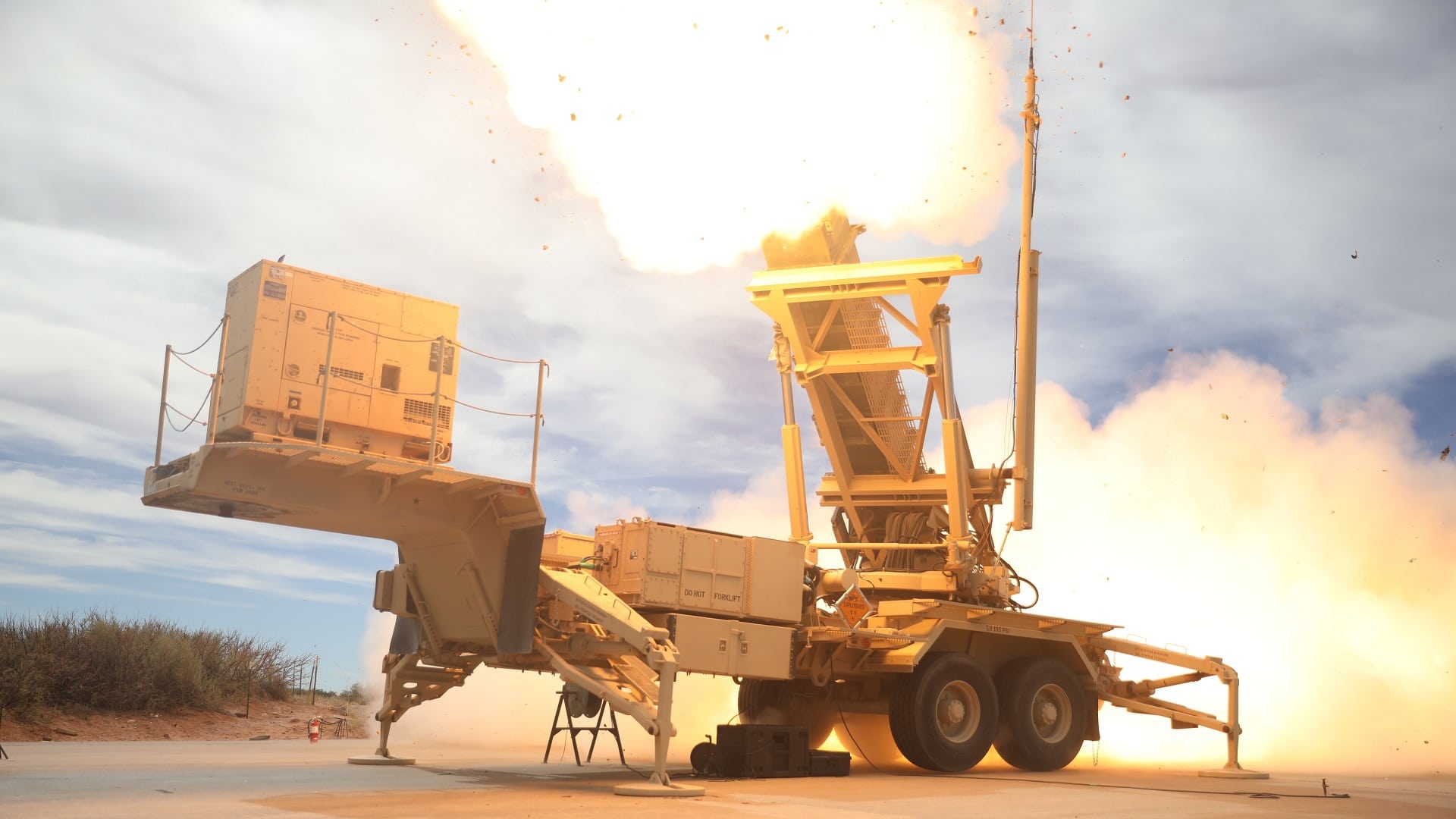
The problem with the Gulf discourse on air defense is that it sometimes treats the systems as if they were an insurance policy: premiums are paid, and protection comes automatically. This is a non-military understanding. The Patriot, especially the PAC-3, is excellent against specific threats from short- and medium-range ballistic missiles, aircraft, and drones, but it requires radars, command and control, sufficient interceptors, trained crews, and clear rules of engagement. THAAD provides a higher layer against ballistic missiles, but it is heavier, rarer, and more tied to American decision-making.
Last February, reports spoke of Washington moving additional THAAD and Patriot batteries to Jordan, Kuwait, Bahrain, Saudi Arabia, and Qatar. In January, the U.S. State Department approved a support and sustainment deal for the Kuwaiti Patriot program at an estimated cost of $800 million. These figures are important, but they say something concerning as much as they say something reassuring: Gulf air defense is not just about purchasing a platform, but about a contract for maintenance, operation, upgrades, training, and ongoing supply with Washington and its companies.
The Triangle of Capability as Seen in Kuwait and Bahrain
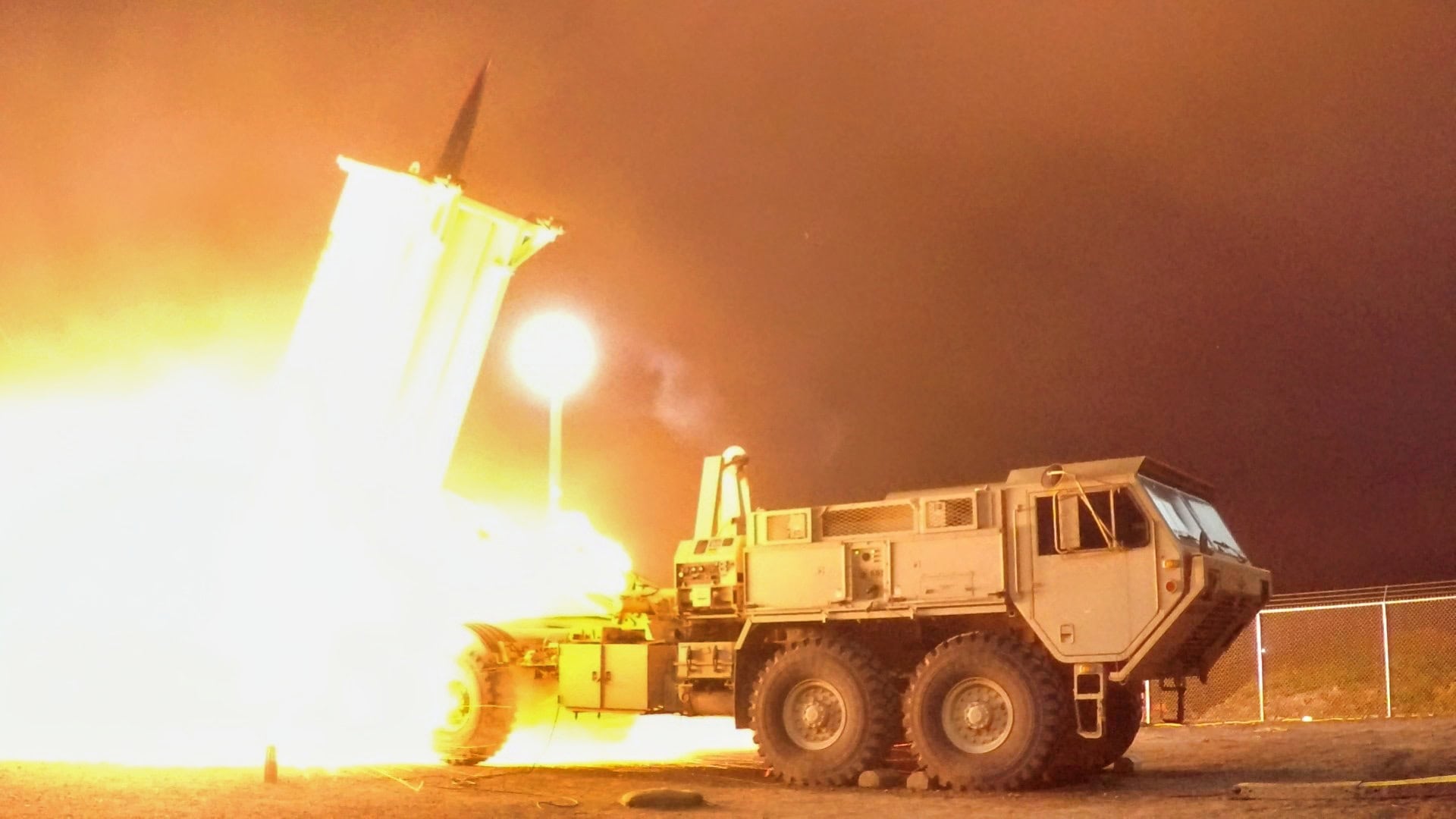
Any military personnel who has served in the region knows that capability is not measured by beautiful pictures of the battery at launch. Capability is a triangle: equipment, training, institution. On the first side, Gulf countries have expensive and advanced equipment; Patriot in Kuwait, Saudi Arabia, and the UAE, and THAAD in some countries, along with American, British, and French radars, and ships capable of intercepting aerial threats at sea. This side is relatively strong.
The second side, training, is better than it was ten years ago but still varies. Intercepting a mixed wave of ballistic missiles, drones, and cruise missiles is completely different from a pre-planned exercise. Radar crews, batteries, fighters, and civil and military command centers must operate simultaneously, under media and political pressure, and with the possibility of debris falling in cities. Here, the differences emerge between an army that has equipment and an army that has trained its institution to absorb shock.
The third side, the institution, is often the weakest. Who decides to launch an interception? Who coordinates between an American base inside a Gulf state and the national air defense? What are the limits of data sharing with a neighboring country that may be a political competitor? Is the battle managed as a defense of the state's territory or as a defense of the American deployment structure? These questions are not answered by Lockheed Martin or Raytheon. They are answered by mature national security institutions, and that is precisely what cannot be bought in a single contract.
Iran Strikes the Political Equation, Not Just the Bases
The choice of Kuwait, Bahrain, and Jordan in the Iranian narrative is not random. Kuwait represents a logistical depth for the U.S. close to Iraq and the Gulf, Bahrain hosts the American naval center of gravity in the region, and Jordan is an air and land gateway between the Levant, the Gulf, and Israel. Even when missiles do not achieve significant hits, they impose a difficult question on these governments before their people: why should the state bear the risk of an Iranian response if Washington is the one making the strike decision?
From Tehran's perspective, a limited attack on bases or facilities linked to Americans is more beneficial than directly striking a Gulf capital. It embarrasses the ally, raises the cost of hosting, and tests the stock of interceptors, but it leaves the door open for denial and negotiation. This is the gray area that Iran excels in: no full-scale war, no real peace, but a political and military drain on the edge of the red line.
The Gulf Dilemma After the Sirens
The Gulf states will demand more interceptors after this round, and perhaps more radars and counter-drone systems. This makes sense. But purchasing more interceptors will not solve the problem if the operational decision, the maintenance chain, the stockpile of munitions, and the integration of early warning remain under a single American roof. Practically, every additional Patriot battery may mean more protection, but it also means deeper dependency if a national institution capable of independent leadership is not built around it.
Here lies the paradox that officials do not like to hear. The Gulf wants the United States to remain to deter Iran, but at the same time, it does not want its presence to become a magnet for Iranian missiles. It wants defensive independence, but it buys systems that do not operate at full efficiency except within an American network. And as we say in the Levant, he who borrows the umbrella does not decide when it rains. The sirens in Bahrain and Kuwait reminded us that air defense in the Gulf is still closer to a borrowed umbrella than to a closed national sky.
Sources
- RFE/RL Live Coverage of the U.S.-Iran Escalation on June 11, 2026
- U.S. Central Command Statement on Additional U.S. Strikes Inside Iran
- DSCA $800 Million Support and Sustainment Deal for the Kuwaiti Patriot Program
- Anadolu Agency Deployment of Additional THAAD and Patriot in the Middle East Before Escalation
Iran launched attacks on 18 U.S. military-related sites in Kuwait and Bahrain on June 11, 2026, following U.S. strikes against Iranian military capabilities. The incidents exposed vulnerabilities in the Patriot and THAAD air defense systems. The Iranian Revolutionary Guard Corps executed these operations, prompting concerns among Gulf states regarding their air defense readiness and reliance on U.S. support.
- Iran targeted 18 U.S. military-related sites in Kuwait and Bahrain.
- U.S. Central Command confirmed additional strikes against Iranian military capabilities on June 10, 2026.
- The attacks revealed gaps in the effectiveness of Patriot and THAAD systems in the Gulf region.
- Iran's actions are seen as a political and military challenge to U.S. presence in the region.
- The Gulf states are under pressure to enhance their air defense capabilities.