
Iraq activates the $2.8 billion KM-SAM deal with South Korea and 8 batteries before the coalition's exit in 2026
 Ahmed Al-Rashid
Iraq Activates the $2.8 Billion KM-SAM Deal with 8 Batteries Before Coalition Withdrawal in 2026
On August 26, the Iraqi air defense file returned to the forefront, not from the perspective of display but from the perspective of funding, as Iraqi and Korean officials discussed the financial aspects of the deal that is supposed to introduce the KM-SAM Block II system into Iraqi service. Just one day later, local reports emerged discussing a government acceleration of the air defense program before the post-coalition phase. Militarily, this is the real news: Baghdad is no longer acting as if breaches of its airspace are mere incidents, but rather as a costly sovereign vacuum that must be covered quickly.
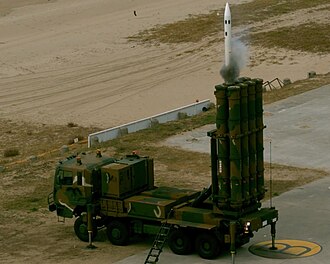
Iraq is not buying a new toy. The Korean deal, previously estimated at around $2.8 billion and including 8 batteries along with training and support infrastructure, represents the largest leap in its air defense since 2003. The Korean system is designed to intercept aircraft, missiles, and some ballistic threats at ranges of up to 50 kilometers and altitudes of up to 20 kilometers, with a radar capable of tracking around 40 targets within a radius of approximately 100 kilometers. These are respectable numbers on paper, but they remain only half the story.
Why Funding Has Returned Now
The timing is not a mere administrative detail. For months, Iraqi airspace has been subjected to continuous tests from multiple directions: drones, missiles, Turkish air operations in the north, and regional pressure that sometimes makes Baghdad appear as a no-state corridor. Therefore, discussing the completion of funding now means that the Iraqi leadership has finally understood that air defense cannot be postponed until after the internal political balances are completed.
There is also a psychological and political factor. Iraq has long lived under the notion that the presence of the American partner deters major threats and compensates for the fragility of the national network. However, any military personnel who have served in the region know that relying on an external umbrella does not create a national air defense institution. It only postpones the moment of acknowledging the deficiency. As the post-coalition phase approaches, Baghdad must build a medium-range interception layer that can at least reduce daily humiliation, if not eliminate it entirely.
What KM-SAM Actually Adds
The significance of KM-SAM is that it is not just a short-range system for point defense, nor is it a politically costly heavy system like the American Patriot or the Russian S-400. It is an attractive compromise for a country that wants reasonable interception against aircraft, missiles, and some ballistic targets without paying the full political price of dependency on Washington or Moscow. For this reason, the system attracted Gulf markets first, and then reached Iraq.
In practical terms, the system provides Iraq with three direct benefits. First, it expands the engagement range compared to its current point systems like Avenger and Pantsir-S1. Second, it adds a more rational interception layer against medium threats, especially if linked to existing or anticipated warning radars. Third, it opens the door for Baghdad to diversify suppliers away from the chronic Russian problem of maintenance and spare parts since the Ukraine war.
However, one should not exaggerate. A single battery may include 4 to 6 launchers, with each launcher carrying 8 missiles. This looks good in presentations, but it is not an inexhaustible supply in a war of attrition or against complex salvos. And while the Korean missiles are cheaper than the American PAC-3, the equation does not automatically solve itself: the cheaper option is still more expensive than the cheap suicide drones that have become the new language of the region.
The Iraqi Knot Is Not in Purchasing but in Operating
Here emerges the triangle that capitals in the region often overlook: equipment, training, institution. Iraq has made an important step in the first leg, but it is still lagging in the other two. Operating a modern air defense network does not rely solely on owning the batteries, but on crews, discipline in command and control, radar integration, decision-making speed, and a maintenance chain that operates under pressure, not just in formal displays.
The problem is that Baghdad's record since 2003 does not inspire complete confidence. Even in less complex files than air defense, Iraqi forces have faced difficulties in sustainability and reliance on foreign contractors. If KM-SAM remains just a technological island separate from the Iraqi command structure, it will turn into a beautiful political symbol rather than an effective deterrent tool. Owning the radar does not mean owning the air picture, and owning the missile does not mean having the authority to fire at the right moment.
The Regional Message Goes Beyond Baghdad and Seoul
This deal says something else about the Middle East itself. The regional market is no longer exclusive to the United States, nor is it confident in Russia, and it has become more willing to import Korean, Turkish, and Israeli solutions based on threat, budget, and political sensitivity. Iraq, although late to the game, is now entering this path. This does not make it an independent player yet, but it proves that a state that has long suffered from an airspace vacuum is no longer willing to remain without a protective middle layer.
However, the Iraqi paradox remains harsh. Baghdad wants greater air sovereignty at a moment when armed actors multiply within and around its borders, and it wants to reduce reliance on external sources through a contract that, in its early years, requires intense external training and support. This is not a fleeting contradiction but a structural dilemma. Iraq is finally buying what it needs, but it is doing so in an environment that makes full utilization of it harder than the decision to purchase itself.
For this reason, the completion of funding for the deal should be read as the beginning of a correction, not the end of a crisis. If Baghdad succeeds in transforming KM-SAM into an actual network with radars, early warning, and a counter-drone layer, it will have regained part of the meaning of statehood. However, if the deal remains confined to equipment, schedules, and press releases, Iraq will still have a modern air defense in name only, while its skies remain practically open to those who dare more.
Iraq activated a $2.8 billion deal for 8 KM-SAM air defense batteries on August 26, 2023, as part of an accelerated air defense program ahead of the coalition's withdrawal in 2026. The KM-SAM system enhances Iraq's capability to intercept aerial threats and represents a significant upgrade in its defense posture since 2003. This move reflects Iraq's shift towards self-reliance in defense amid ongoing regional threats.
- Iraq is activating a $2.8 billion deal for 8 KM-SAM batteries.
- The KM-SAM system is designed to intercept aircraft and missiles up to 50 km away.
- Iraq is accelerating its air defense program ahead of the coalition withdrawal in 2026.
- The deal represents the largest leap in Iraq's air defense since 2003.
- The KM-SAM system allows Iraq to diversify its defense suppliers.