
IS-Sahel claims 19 deaths in Nigeria — Sokoto and Kebbi become the new front of 2026
 Marie Dubois
IS-Sahel claims 19 dead in Nigeria — Sokoto and Kebbi become the new front of 2026
In Runji, in the Illela area, the Niger-Nigerian border is not a clear line on the ground. It is a succession of paths, markets, hamlets, and crossings that regular forces only intermittently control. It is there that the Islamic State in the Sahel, or Islamic State Sahel Province (ISSP), claims to have ambushed a Nigerian army patrol on May 15. According to claims published by Al-Naba and reported by Premium Times, seven soldiers were reportedly killed near Runji, followed by eleven soldiers and one police officer in a second ambush near Giro Masa, in Kebbi State.
The total claimed toll is therefore nineteen security force members. It has not been independently confirmed. This is a significant caveat. But the event deserves attention because the claim itself changes the mental map of the Sahelian war. For the first time, ISSP officially presents northwestern Nigeria as part of its operational theater.
A claim more important than its toll
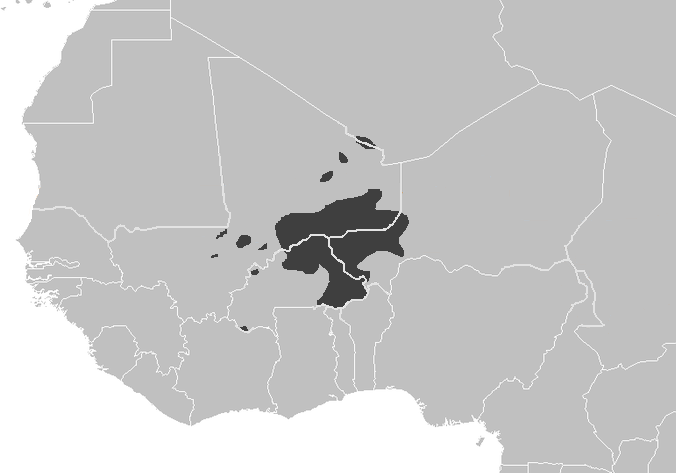
The attacks in Sokoto and Kebbi did not emerge from a vacuum. Similar violence had already been reported in the Illela Local Government Area and in the Shanga area. They had then been attributed to Lakurawa, a local armed group that Nigerian observers describe sometimes as a transnational criminal structure, sometimes as a more ideologized jihadist actor. The new point is therefore not the existence of armed violence in this area. The new point is the brand under which this violence is sold.
The Jamestown Foundation notes that the ISSP operates primarily in Mali, Niger, and Burkina Faso, using methods known for years in the Liptako-Gourma — mobile ambushes, intimidation of villages, improvised explosive devices, control of secondary roads. By claiming attacks in Nigeria, the group is not just moving a logo. It is attempting to connect northwestern Nigeria to a war economy already established further north.
On the ground, this distinction matters. A group of bandits can pillage a village, negotiate ransoms, and return to the bush. A jihadist franchise seeks more: local taxation, movement corridors, recruitment, and then ideological discipline. In practice, the two models often mix. It is precisely this mix that makes northwestern Nigeria dangerous.
Sokoto and Kebbi are transit zones, not margins
From Niamey, the road to Sokoto looks short on a map. From Gao or Ménaka, however, it belongs to a different operational logic: crossing borders with few checkpoints, using community relays, avoiding overly visible routes, and taking advantage of the gaps between national military deployments. The states of Sokoto and Kebbi touch areas where Niger, Benin, and Nigeria each have their priorities, but rarely a common picture of the threat.
It is this void that interests the ISSP. An organization does not need to occupy a city to integrate it into its strategy. It only needs to prove that it can strike there, find accomplices, circulate a claim, and survive long enough to start again. From experience, this is often how a new front is born: not through a spectacular offensive, but through a series of incidents that are initially classified as banditry, rural crime, or local conflict.
The Nigerian response shows that the problem goes beyond Abuja. Defense Minister Mohammed Badaru Abubakar stated, according to Vanguard, that Nigeria is seeking to strengthen anti-jihadist cooperation with Benin and Niger. This wording is significant. It implicitly acknowledges that northwestern Nigeria can no longer be treated as a purely Nigerian internal affair. The paths that feed armed groups do not respect borders. Isolated national responses always arrive with a delay.
The JNIM-ISSP rivalry arrives in Nigeria
The other decisive element is the competition between the ISSP and Jama’at Nusrat al-Islam wal-Muslimin (JNIM), affiliated with al-Qaeda. Since 2019, the two organizations have been vying for territory, recruits, taxes, and prestige in the central Sahel. This rivalry has already cost civilians dearly in eastern Burkina Faso and western Niger. It is now crossing a threshold in Nigeria.
Jamestown reminds us that a month before the ISSP claims, the JNIM had released a video purportedly showing the capture of an ISSP member in Nigeria. Again, the propaganda images must be treated with caution. But their military value is not limited to their factual accuracy. They signal a competition to say: we are present here, we have enemies here, we are capable of punishing here.
For Nigerian forces, this rivalry is a trap. When two jihadist organizations compete for an area, the state may be tempted to see it as an advantage, as if the groups would exhaust themselves against each other. On the ground, it is rarely that simple. Competition often leads to escalation: more visible attacks, exemplary executions, accelerated recruitment, harsher taxation. Villages become proof of loyalty or warnings.
Washington cannot replace local control
The American context adds a layer of propaganda. The American strikes mentioned in Nigeria and Washington's rhetoric against jihadists have provided the Islamic State with a useful argument: to present northwestern Nigeria as a new segment of its global war. The actual military effect of American involvement remains uncertain. The narrative effect, however, is already exploitable.
It would be wrong to reduce the matter to a communication maneuver. If the ISSP can claim actions in Sokoto and Kebbi, it is because a local ecosystem exists: smuggling routes, networks of informants, available weapons, community grievances, and a weak administrative presence. An airstrike can break up a camp. It does not repair a road held by fear, nor a market where everyone knows which armed group collects taxes.
France learned this in the Sahel, sometimes too late. Barkhane could neutralize leaders, escort convoys, support partners. It could not alone produce a credible local authority. The Americans, if they engage more in Nigeria, will encounter the same limit. The tactical map does not replace the social map.
The next weak point lies between Illela and Kamba
The immediate risk is not a spectacular territorial takeover by the ISSP. The risk is slower: a normalization of Sahelian claims in Nigeria. If every attack by Lakurawa can be rebranded as an operation of the Islamic State, then the group wins without necessarily sending large columns from Mali or Niger. It gains a presence through affiliation, opportunism, and narrative.
The areas to watch are the corridors connecting Illela, Gwadabawa, Shanga, Kamba, and the border spaces of Niger. These are less known names than Maiduguri or Baga, but they could become the hinges of a new front. Nigerian forces will need to do what Sahelian armies have often failed to do: hold secondary roads, protect markets, and prevent armed groups from becoming local arbiters.
For now, the information remains incomplete. The ISSP claims should not be taken as staff communiqués. But it would be even more dangerous to ignore them. In the Sahel, maps change first through paths. And the paths of Sokoto and Kebbi have just entered the propaganda war of the Islamic State.
Islamic State Sahel Province (ISSP) claimed responsibility for ambushes on Nigerian military patrols on May 15, 2026, resulting in 19 deaths, including 7 soldiers and 1 police officer. The attacks occurred near Runji and Giro Masa in Kebbi and Sokoto states, marking a significant expansion of ISSP's operational area into northwestern Nigeria. The Nigerian government is responding by seeking increased anti-jihadist cooperation with Benin and Niger.
- IS-Sahel claims 19 deaths among Nigerian security forces due to ambushes.
- The ambushes occurred on May 15, 2026, in Sokoto and Kebbi states.
- The ISSP is expanding its operational area into northwestern Nigeria.
- The Nigerian government is seeking to enhance anti-jihadist cooperation with neighboring countries.
- There is a rivalry between ISSP and JNIM in the region.