
Israel Holds Lebanon Syria Gaza Security Zones After Iran Deal and Tests 2026 Regional Deterrence
 Ahmed Al-Rashid
Israel Clings to Security Zones in Lebanon, Syria, and Gaza After the Iran 2026 Agreement and Tests Regional Deterrence
On June 15, 2026, the most significant military news in the region was not just the text of the U.S.-Iran agreement, but the swift Israeli response: Defense Minister Israel Katz stated that the Israeli army would remain in the security zones in Lebanon, Syria, and Gaza indefinitely. This short sentence is enough to explain why wars in the Middle East do not end with the signing of memorandums. Paper may stop the fighting between two states, but it does not remove tanks from the ground or return displaced persons to border villages.
From a Maritime Agreement to a Land Dilemma
The agreement brokered by Pakistan between Washington and Tehran, announced just before an anticipated signing in Geneva on Friday, focuses on halting military operations and gradually opening the Strait of Hormuz, while keeping nuclear and missile issues within a negotiation period of about sixty days. However, Lebanon entered the political text through the back door. Iran linked its respect for the agreement to halting Israeli attacks on Hezbollah, and the Lebanese government hopes that the memorandum will lead to the end of the war on its territory. Israel, on the other hand, asserts that its border security is not managed from Geneva.
From a military perspective, this dispute is not a diplomatic detail. Controlling a security strip in southern Lebanon or points in southern Syria or areas within Gaza means a continuous network of reconnaissance, logistical routes, fire points, engineering units, and armored patrols. This is not an airstrike that can be halted by a political decision in the evening. It is a structure of a mini military occupation that requires daily supply and continuous protection and produces constant friction with the local population and fighters.
Why Katz Insists on Staying
The Israeli logic is clear, even if dangerous: after the October 7, 2023 attack, Tel Aviv no longer accepts the idea that deterrence alone is sufficient if armed groups can approach the border. Therefore, the concept of a “security zone” has become an alternative to trusting agreements, monitoring forces, or promises from weak governments. In Lebanon, this means pushing Hezbollah away from northern Israeli villages. In Syria, it means preventing Iranian or local networks from establishing points of approach. In Gaza, it means maintaining a maneuvering space that prevents organizations from returning to the old contact lines.
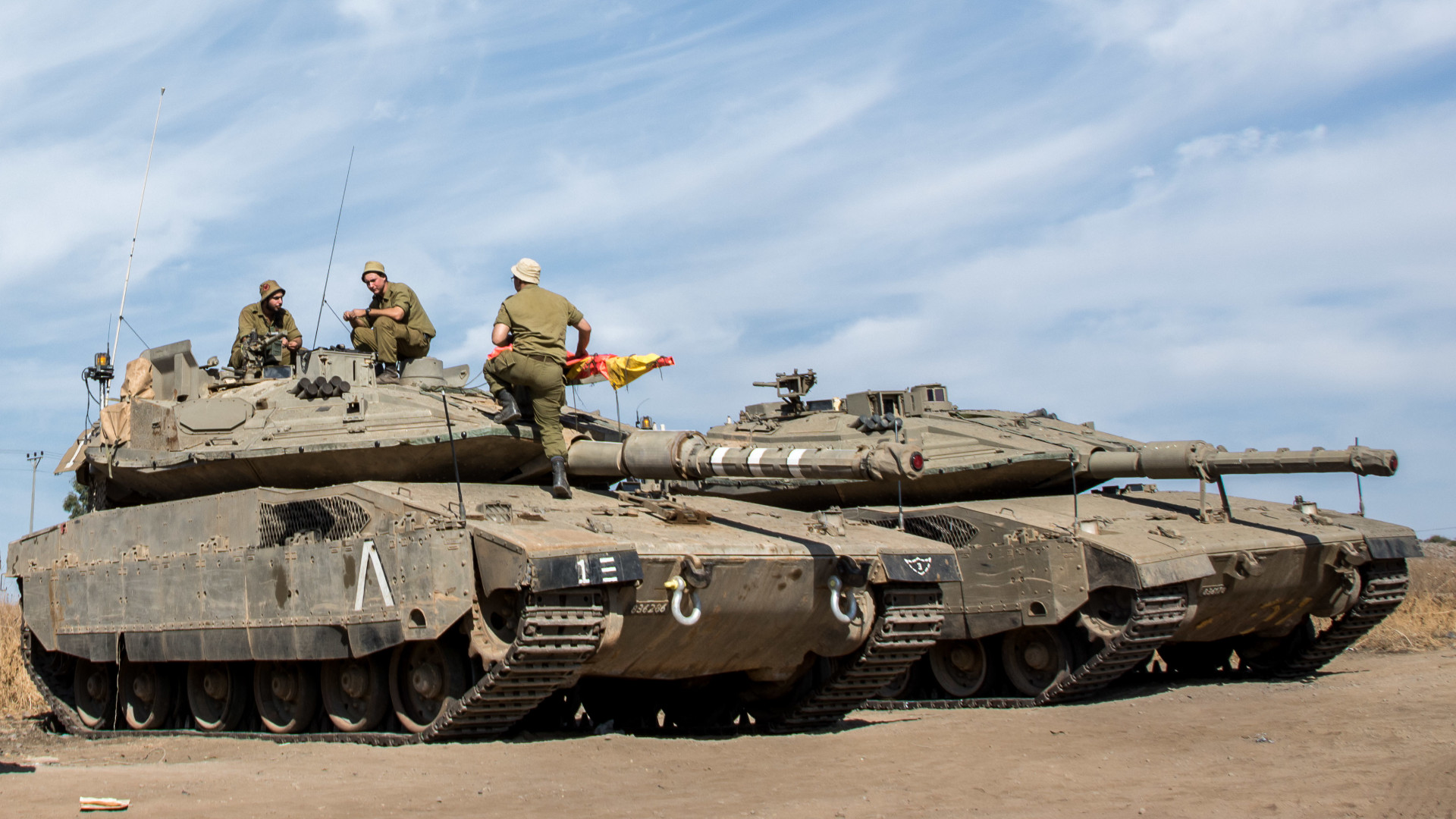
But every military personnel who has served in the region knows that the security zone is not a silent wall. It is a space that invites small attacks. An explosive device on a supply route, an FPV drone against a tank, a guided missile against a observation point, or a sniper bullet against a patrol. Israel possesses Merkava tanks, F-35I aircraft, reconnaissance drones, precision artillery, and interception systems like Iron Dome, David’s Sling, and Arrow. These are powerful tools, but they do not negate an old rule: whoever controls the ground becomes a daily target.
Hezbollah's Problem After the Ceasefire
Ironically, Hezbollah, according to reports today from a movement official, has not carried out operations since the announcement of the U.S.-Iran framework, but it has linked its position to Israel's commitment. This is not an acceptance of disarmament nor an acknowledgment of political loss, but a calculated wait. If Israel continues to move freely within Lebanon, the party will find justification to resume low-intensity operations without declaring the agreement's collapse. Here, the war becomes less noisy but more draining.
The Lebanese figures make the issue more sensitive. Field reports have mentioned thousands of casualties since the war began in March, widespread destruction in the south, and warnings from the Lebanese army to displaced persons not to return quickly to villages due to the risks of attacks and unexploded ordnance. When border villages turn into an open buffer zone, the Lebanese state loses its sovereignty twice: once to Hezbollah's weaponry and once to the Israeli tank.
Indirect Gulf Test
This may seem like an Israeli-Lebanese file, but it directly concerns the Gulf. The agreement with Iran sends a dual message to Riyadh, Abu Dhabi, and Doha. On one hand, Washington is still capable of imposing a negotiating path that opens Hormuz and lowers energy prices. On the other hand, its Israeli ally can reject part of the political environment of the agreement if it sees its border security threatened. For Gulf states, these are not distant details; they are a reminder that regional security is not owned by a single state nor regulated by a single system.
Here, the “Triangle of Capability” that I often use returns: weaponry, training, and institution. The Gulf is purchasing Patriot and THAAD systems and advanced aircraft, but it still lacks a regional institution capable of managing an extended crisis between sea and land. If the Lebanon clause of the agreement collapses, the problem will not just be a lack of intercepting missiles, but a lack of unified command, common rules of engagement, and an Arab decision-making center capable of addressing Washington, Tehran, and Tel Aviv simultaneously.
Exhaustion Instead of Resolution
Practically, the Israeli decision to stay may grant Tel Aviv short-term tactical depth, but it opens the door to long-term exhaustion. The tank in the security zone prevents the infiltration of an armed group today, but it creates a political and military target tomorrow. The stealth aircraft strikes a missile depot, but it cannot guard every dirt road. And the Arrow system intercepts a long-range missile, but it is not very useful against a fighter emerging from a nearby valley with a guided launcher.
Israel bets that Iran, emerging from a costly war, will pressure Hezbollah to exercise restraint during the negotiation phase. Iran bets that Lebanon will remain a pressure card preventing Washington from turning the agreement into just a maritime and nuclear deal. Hezbollah bets that partial occupation will rebuild its legitimacy after significant losses. Meanwhile, the official Lebanon bets, as usual, that others will leave it something of the state after they finish negotiating over its head.
What to Watch For
- Will Israeli airstrikes actually stop in southern Lebanon and Beirut before the Geneva signing?
- Will Hezbollah maintain calm if Israeli forces remain within the security strip?
- Will Washington pressure Israel or allow it freedom of action in exchange for the U.S.-Iran commitment in Hormuz?
- Will Gulf states use the sixty-day period to build a common security stance, or will they settle for purchasing more air defenses?
Conclusion
The 2026 agreement may open the Strait of Hormuz, but it does not automatically open the road between Bint Jbeil and Kiryat Shmona, nor between Quneitra and the Golan, nor within the edges of Gaza. This is the paradox that diplomats do not like: the sea can be arranged with fees, corridors, and monitoring, while the land needs someone to withdraw and someone to fill the void. Israel says it will not withdraw now. Iran says Lebanon is part of the agreement. Hezbollah is waiting. And the Gulf is watching, knowing deep down that buying weapons is much easier than building a regional system that prevents others from igniting a fire at its borders.
Sources
Israel maintains its military presence in security zones in Lebanon, Syria, and Gaza as of June 15, 2026, following the Iran deal. The Israeli Defense Minister emphasized the need for ongoing military operations to ensure border security. Hezbollah has refrained from operations but is monitoring Israel's actions, while the humanitarian situation in Lebanon remains critical with thousands of casualties reported since March.
- Israel will remain in security zones indefinitely after the Iran deal.
- The Israeli Defense Minister stated that military presence is necessary for border security.
- Hezbollah has not conducted operations since the US-Iran framework announcement but is waiting for Israel's actions.
- Thousands of casualties have been reported in Lebanon since the war began in March.
- The situation in southern Lebanon remains tense with risks for displaced persons.