
Israel integrates Iron Beam with Iron Dome in 2026 test and changes air defense cost calculations
 Ahmed Al-Rashid
Israel Integrates Iron Beam with Iron Dome in 2026 Test and Changes Air Defense Cost Calculations
On July 1, 2026, the Israeli Ministry of Defense announced, according to Defense News, the success of a series of tests for an upgraded version of the Iron Dome system that operates from the same fire control center as the Iron Beam laser system. The statement sounds technical and calm, but militarily it is not a small detail. Israel is not just testing a new missile; it is testing a different way to manage the skies when drones, short-range missiles, and mortars come in numbers that do not allow the commander to think about each target individually.
The test came after weeks of a short U.S.-Iranian war and a ceasefire that left the region in high tension, with Hezbollah continuing to pressure with drones from Lebanon. This is the real context of the experiment. When the skies become crowded, the question is no longer just whether we can intercept the target, but with what ammunition, at what cost, and how much will remain in stock after the first wave.
What Israel Actually Tested
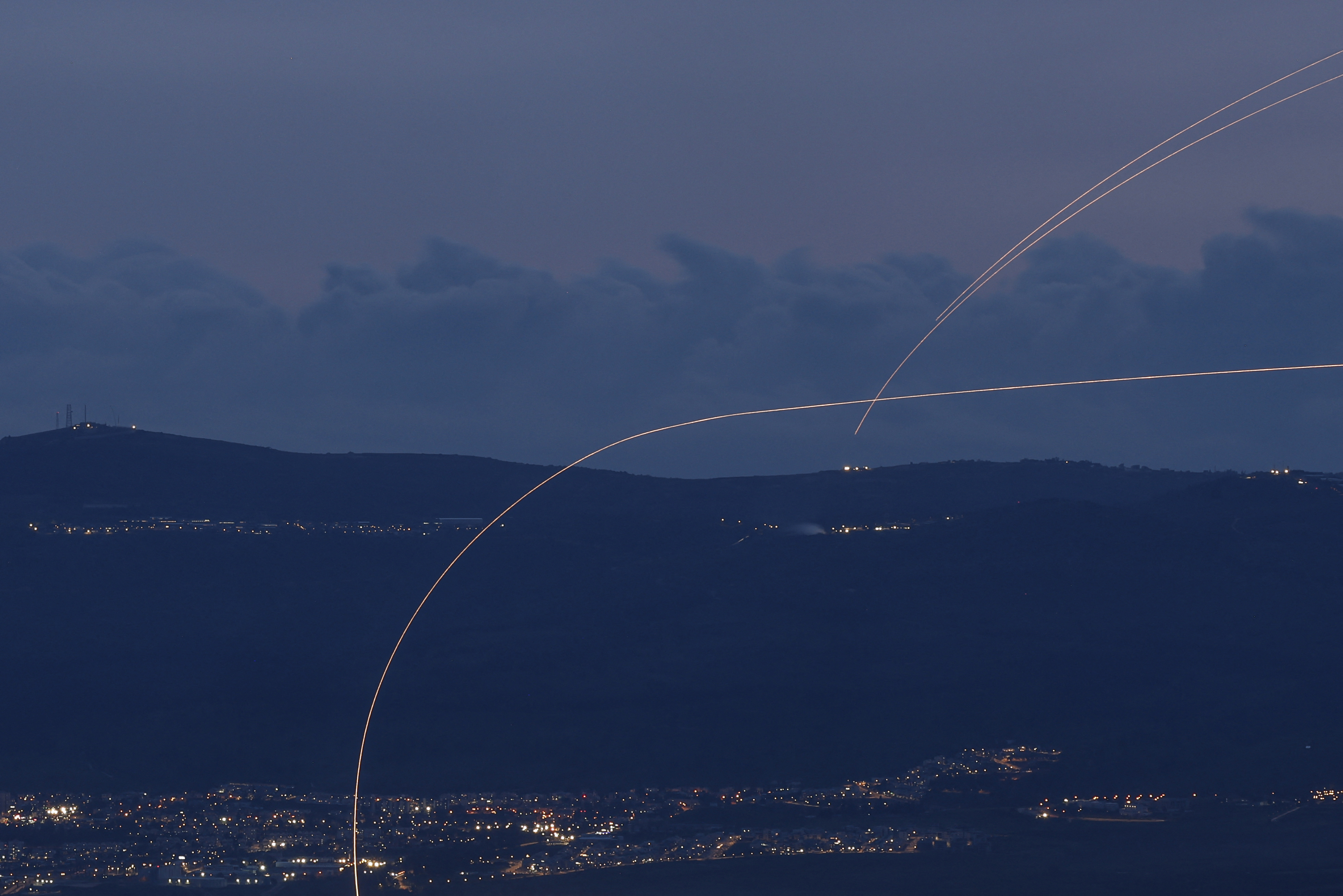
The Israeli statement did not provide complete technical details about the modifications, which is understandable. However, the available information points to three important points. First, the upgraded version of the Iron Dome is designed to handle higher launch rates and concentrated strikes. Second, joint scenarios between Iron Dome and Iron Beam were managed directly from the Iron Dome's battle management center. Third, the future goal is to enable the commander to dynamically choose between missile interception and laser interception based on the type of threat, the state of the systems, and economic feasibility.
Any military personnel who has served in the region knows that this last point is the crux of the matter. Air defense systems are not always defeated because they are inaccurate. Sometimes they are exhausted because they are too accurate, using expensive ammunition against a cheap target. The Tamir missile in the Iron Dome is typically estimated to cost around $50,000, while reports from Rafael suggest that a shot from Iron Beam could be in the range of a few dollars if energy, tracking, and suitable weather are available. The difference is not just financial accounting, but the ability to endure.
From Intercepting Missiles to Managing Combat Economics
The Iron Dome has been operational since 2011 against short-range threats, with a battery typically consisting of a radar, a command center, and launchers carrying about 20 interceptors. The range of threats covered by the system is estimated to be between 4 and 70 kilometers. These figures have built Israel's defensive reputation, but they do not alone solve the problem of saturation. When an adversary launches dozens or hundreds of small targets, a tactical victory can turn into an economic loss if the defender is forced to expend expensive missiles on every cheap drone.
This is where Iron Beam comes in. The laser system is designed to intercept short-range missiles, mortar shells, drones, and small munitions, and published data from Rafael's family indicates a laser capability of up to 100 kilowatts in the basic version, with lighter versions like Lite Beam and naval and mobile systems. Practically, the laser is not a magic wand. It is affected by weather, line of sight, dust, and the duration of fixation on the target. However, if it is placed within the Iron Dome command center rather than outside, it becomes an economic layer within an existing system, not a separate showcase at a defense exhibition.
- The Iron Dome remains the most reliable tool against faster, farther, or more dangerous targets.
- Iron Beam provides Israel with a less costly option against drones and small munitions when conditions allow.
- Integrating the two systems in one command center reduces decision time and prevents fire duplication.
- The real value is evident in dense attacks, not in individual interceptions portrayed for the media.
Iran and Hezbollah as the Unofficial Testing Ground
This test cannot be read apart from Iran and its proxies. In recent years, the region has shifted from the rare ballistic missile threat to a mixed environment of suicide drones, cruise missiles, short-range artillery, and locally manufactured munitions. Hezbollah in Lebanon, the Houthis in Yemen, and various Iraqi groups have learned from the war in Ukraine as much as they have from the Revolutionary Guard. Cost and quantity have become part of the doctrine.
Thus, the test of Iron Beam with Iron Dome carries a dual message. To Tehran and its allies, the message is that Israel is trying to break the logic of cheap attrition. To Washington and the Gulf capitals, the message is that Israeli air defense is no longer just a national product, but a model that can be integrated into a broader regional network. A report from the Times of Israel noted this week that Israel sent a version of Iron Beam to the UAE during the recent fighting with Iran, along with an advanced surveillance system, while other reports mentioned sending an Iron Dome battery and dozens of soldiers to operate it. Even if some details remain unconfirmed, the political direction is clear.
The irony is that the Arab countries that once viewed Israel's air superiority as a threat now see part of their air defense as a common interest against Iranian missiles.
The Gulf Angle That Should Not Be Ignored
From an Arab perspective, this is not just an internal Israeli story. The UAE, Saudi Arabia, Qatar, and Bahrain have money and advanced Western systems, from Patriot to THAAD, but they suffer from issues of integration, interoperability, and sustainability. In every crisis with Iran, the same gap appears. The equipment is there, but the question is who sees the target first, who decides to intercept, who pays for the missile, and who bears the cost of running out of ammunition if the engagement drags on.
If Israel succeeds in operating Iron Beam as a layer within Iron Dome, the Gulf discussion will shift from purchasing a new battery to building a joint decision-making architecture. This is a politically sensitive point. No Gulf capital wants to appear dependent on Israel for protecting its skies. But no Gulf capital also wants to stand alone against waves of cheap Iranian drones. Here, politics shows itself as it is, not as it is written in official statements.
In my view, the most important aspect of the test is not the announced figure for the laser range or the cost per shot, but Israel's transition from air defense as separate systems to air defense as combat economics. Whoever has the ability to distinguish between a cheap target and a dangerous one in seconds, and allocates an appropriate interception method for each, has a longer time in war. And time in air defense equals ammunition, and ammunition means less compelled political decision-making.
The Limits of the Laser Promise
However, caution is needed to avoid exaggeration. The laser does not eliminate intercepting missiles, nor does it turn Israel's skies into an impenetrable dome. If the adversary attacks in bad weather, from multiple angles, or combines heavy missiles with small drones, the traditional layers of David's Sling, Arrow, and Iron Dome will remain essential. Additionally, energy, cooling, field protection, and continuous training will be critical factors. In Arab armies, we sometimes say that a weapon that the crew does not train on under pressure becomes an expensive piece of furniture. This applies to lasers just as it does to missiles.
But the Israeli experience sets a new standard for the region. Iran will monitor and seek ways to saturate, blind, and distract. Hezbollah will test the limits from Lebanon. Gulf countries will quietly ask how they can purchase part of this capability without paying a large public political price. The United States will see this integration as a model of what it wants from its allies, namely a more efficient local defense that reduces pressure on American stockpiles.
In summary, Iron Beam does not make Israel independent of intercepting missiles, but it may reduce the burden of using them. This is a significant difference. The next war in the Middle East will not be decided solely by who has the farthest missile, but by who can pay less to stay standing longer. Here lies the old knot for the entire region: everyone wants defensive independence, but most build this independence from components for which they do not fully hold the keys.
Israel successfully integrated Iron Beam with Iron Dome on July 1, 2026, enhancing its air defense capabilities against drones and short-range missiles. This integration allows for dynamic decision-making in intercepting threats, potentially reducing costs associated with missile usage. The development follows heightened tensions in the region, particularly with Iran and Hezbollah, indicating a strategic shift in Israel's defense approach.
- Israel announced the successful integration of Iron Beam with Iron Dome on July 1, 2026.
- The new system aims to improve air defense against drones and short-range missiles.
- Iron Beam is designed to provide a cost-effective solution for intercepting cheaper threats.
- The integration allows for dynamic decision-making in intercepting threats based on type and cost.