
Israel invests $190 million in training SIGMA and PULS to offset the cost of the War of Attrition.
 Ahmed Al-Rashid
Israel Invests $190 Million in SIGMA and PULS Training to Offset the Cost of Attrition Warfare
On November 2, 2026, the Israeli Ministry of Defense signed a contract with Elbit Systems worth approximately 600 million shekels, or more than $190 million, to establish and operate an advanced training center for the Israeli artillery corps. While this news may seem like just another technical contract, it actually reveals what Israel has learned from years of combat: possessing precision artillery is not enough; an army that does not train its crews quickly and maintain its equipment will pay the price for every shell twice.
A Long Contract for Operating Capability, Not for Purchasing a Platform
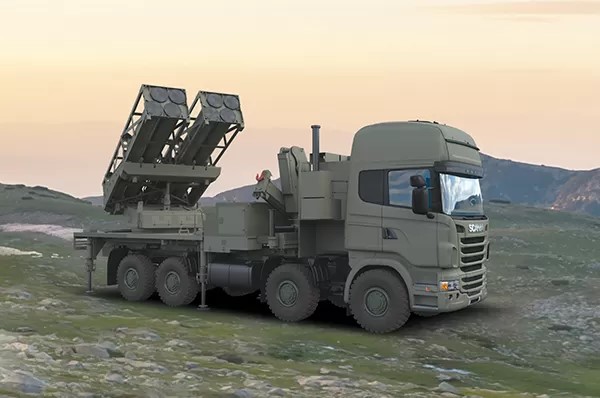
The agreement extends for 15 years and includes training infrastructure, mission and command simulators, educational halls, as well as training, maintenance, and technical support. These details are more important than the financial figure itself. The center will not be a traditional firing range but a link connecting the crew with the system, ammunition, and command network. According to the published data, the program aims to reduce the time required to qualify personnel, enhance their efficiency, and decrease the consumption of operational equipment and its operating costs.
From a military perspective, this represents a shift from the logic of purchasing weapons to the logic of owning the weapon's life cycle. This is a lesson that Arab armies know well, even if they often ignore it when signing large contracts. A modern platform does not become a force until it transforms into a repeated action that can be executed under pressure, day and night, with alternate crews.
SIGMA and PULS Transforming Israeli Fires
The center supports the integration of the SIGMA system, known in Israel as Ro’em, and PULS, known as LAHAV. SIGMA is a 155 mm self-propelled howitzer equipped with an automated loading and aiming mechanism, mounted on a wheeled chassis that provides it with faster tactical mobility than older tracked artillery. It is expected to gradually replace the M109 howitzers, with a range of approximately 40 kilometers depending on the type of ammunition.
PULS, on the other hand, is a modular rocket launcher system capable of using different pods for guided and unguided missiles, with some of its munitions reaching a range of nearly 300 kilometers. The difference here is not just in range, but in the army's ability to choose the appropriate tool between close artillery fire and longer-range missile strikes. However, this diversity increases the training burden and makes mistakes in distinguishing between munitions, safety procedures, and network connectivity more dangerous.
Why the Investment Comes Now
The prolonged war has depleted ammunition stocks, strained artillery, and expanded the need for crews capable of operating quickly in an environment crowded with drones and electronic warfare. In this environment, it is not enough for the shell to reach the target; the decision chain must reach from the sensor to the fire control center and then to the gun or launcher with minimal delay, with the ability to change position before enemy fire returns.
Therefore, the Israeli simulation center addresses three loops simultaneously: equipment, training, and institution. This is the capability triangle that many countries have neglected while focusing on the image of weapons at exhibitions. The simulator does not stop the drone or intercept the missile, but it increases the number of training sessions and reduces the army's reliance on live ammunition. Most importantly, it allows for measuring the performance of the crew, the officer, and the command network, rather than just counting the number of platforms registered in the inventory.
A Message to the Gulf More Than Just an Israeli Deal
Saudi Arabia, the UAE, and Qatar are observing this model from a practical perspective. Gulf armies possess advanced missiles, artillery, and command systems, but they face the same question: who will operate them after the foreign advisors' cycle ends, who will maintain them after years of use, and can different units train on a single network? Purchasing PULS or any similar system adds range, but it does not automatically build a common fire doctrine.
Moreover, a 15-year contract clarifies that independence does not come with the delivery of the platform. Israel itself, despite its defense industry and combat experience, ties the new capability to long service and continuous training from the manufacturer. This is not a weakness, but a clear acknowledgment that readiness is an institution, not a piece of metal. Those who buy weapons and then cut the training and maintenance budget are purchasing an appearance of deterrence, not a stable capability.
Conclusion
The $190 million is not just the price of a training center; it is an investment in reducing the gap between technology and combat use. SIGMA and PULS will provide Israel with greater capability to rotate crews, protect equipment, and accelerate fires, but they will not eliminate the cost of war or the need for cohesive stockpiles and command. The ongoing contradiction is that Israel is trying to build local fire independence while part of its broader security remains tied to American support. In the Middle East, as any military personnel who has served in the region knows, buying weapons is always easier than building an army that knows when to use them and when to refrain.
Sources
Israel signed a contract with Elbit Systems on November 2, 2026, investing $190 million to establish a training center for SIGMA and PULS artillery systems. This initiative aims to enhance the efficiency of artillery operations and reduce costs associated with military training and equipment maintenance. The SIGMA system is set to replace older artillery, while PULS offers modular rocket capabilities.
- Israel signed a contract worth approximately $190 million for artillery training.
- The contract is with Elbit Systems for a 15-year period.
- The SIGMA system is a 155mm self-propelled howitzer designed to replace older artillery.
- The PULS system is a modular rocket artillery system with a range of up to 300 kilometers.
- The investment aims to improve training efficiency and operational readiness.