
Israeli drone maker ramps up production for global expansion
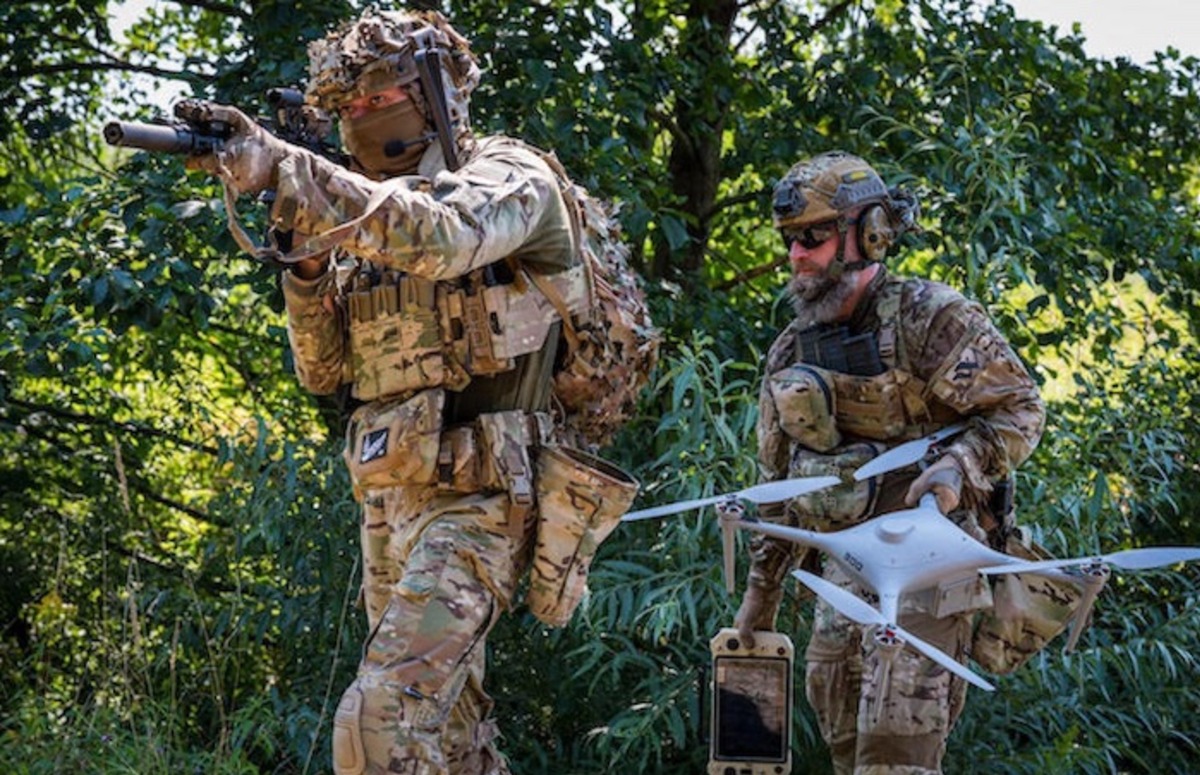
An Israeli drone maker best known for building some of the quietest tactical aircraft in the sky is now pouring fresh money into scaling up how many of them it can actually build, ramping up serial production at home while pushing into new markets across Europe and Asia, Israel Defense reported in an article by Eyal Boguslavsky.
Aero Sentinel, the company behind that expansion, has spent the past year building a reputation among Israeli and international defense buyers for tactical unmanned aerial systems engineered around a single defining trait, an unusually low acoustic signature that lets the aircraft fly close to a target without giving away its presence, a feature that has made the platform popular for covert surveillance and special operations work.
According to the report, Aero Sentinel is accelerating preparations to meet growing customer demand through several concrete steps: buying hundreds of cameras and electro-optical sensors, the imaging systems that give a drone its ability to see and record in both visible light and infrared, well ahead of need, building up larger inventories of components, and adjusting how it manufactures and assembles finished systems. The goal behind all of it, the company says, is straightforward, shortening how long it takes to deliver a finished drone to a customer, keeping existing systems reliably available, and holding prices competitive, all while keeping the actual manufacturing work inside Israel rather than shifting it overseas the way many defense contractors eventually do once demand outpaces domestic capacity.
That domestic focus matters given how quickly Aero Sentinel’s customer base has expanded over the past year. The company has pushed into international markets well beyond its home turf, signing an exclusive distribution agreement earlier this year with the German firm 2LNK GmbH to supply its G2 and G3 drone systems into Kazakhstan’s security and defense sector, part of what Aero Sentinel described as a broader strategy of building long-term distribution networks in regions where it expects steady demand, according to prior reporting from The Defence Blog.
Beyond simply building more drones faster, Israel Defense reports that Aero Sentinel is working on a fundamentally upgraded version of its technology, adding visual navigation and positioning capabilities, meaning the aircraft can determine its location and course using onboard cameras rather than relying solely on GPS, a satellite-based system that adversaries can jam or spoof in contested environments. The company is also building what it describes as a more open architecture, technical language for a system designed to plug into other companies’ software and hardware rather than functioning only within its own closed ecosystem.
Combined with what Aero Sentinel calls enhanced software, these changes are meant to push the platform beyond its original role as a standalone intelligence, surveillance and reconnaissance system, the military term for aircraft whose job is simply to watch and report back, and turn it into something that can feed directly into a customer’s broader command-and-control network, the communications and decision-making infrastructure that connects sensors on the battlefield to the commanders deciding what to do with that information.
The company says these upgraded capabilities are meant to support missions ranging from straightforward intelligence gathering to security operations, force protection and faster operational decision-making, though Aero Sentinel has not disclosed specific technical performance figures, unit costs or a firm production timeline for the new architecture beyond confirming that a new system will debut publicly at UVID Dronetech 2026, an international unmanned systems conference and exhibition scheduled for November 10 to 15 in Tel Aviv. Now in its 14th year, UVID has grown into one of the largest events of its kind globally, drawing more than 33,000 participants across its history and bringing together drone manufacturers, government defense officials and investors from across the civil, security and defense sectors to showcase new unmanned technology.
Israel’s tactical drone sector has grown increasingly crowded and competitive in recent years, driven in large part by lessons drawn from ongoing conflicts across the Middle East where small, low-observable unmanned aircraft have proven their value for both intelligence gathering and direct operational support. Companies operating in that space face constant pressure to shorten development cycles and scale manufacturing quickly, since defense customers increasingly expect suppliers to move from prototype to fielded system in months rather than years, a dynamic that has pushed firms like Aero Sentinel to invest heavily in production capacity even before formal large-scale orders arrive.
Content preview only. Full article available at source. View Full Article
Aero Sentinel is ramping up production of tactical drones and expanding into international markets, including Kazakhstan. The company is investing in new technology to enhance its drones, including visual navigation capabilities. A new system will be publicly debuted at UVID Dronetech 2026, reflecting the company's commitment to meeting growing customer demand while maintaining domestic manufacturing.
- Aero Sentinel is increasing drone production capacity.
- The company is expanding into international markets, including Kazakhstan.
- Aero Sentinel is developing upgraded drone technology with visual navigation capabilities.
- The new system will be showcased at UVID Dronetech 2026.
- The company aims to keep manufacturing within Israel.