
Israeli military buys Aero Sentinel G3 surveillance drones
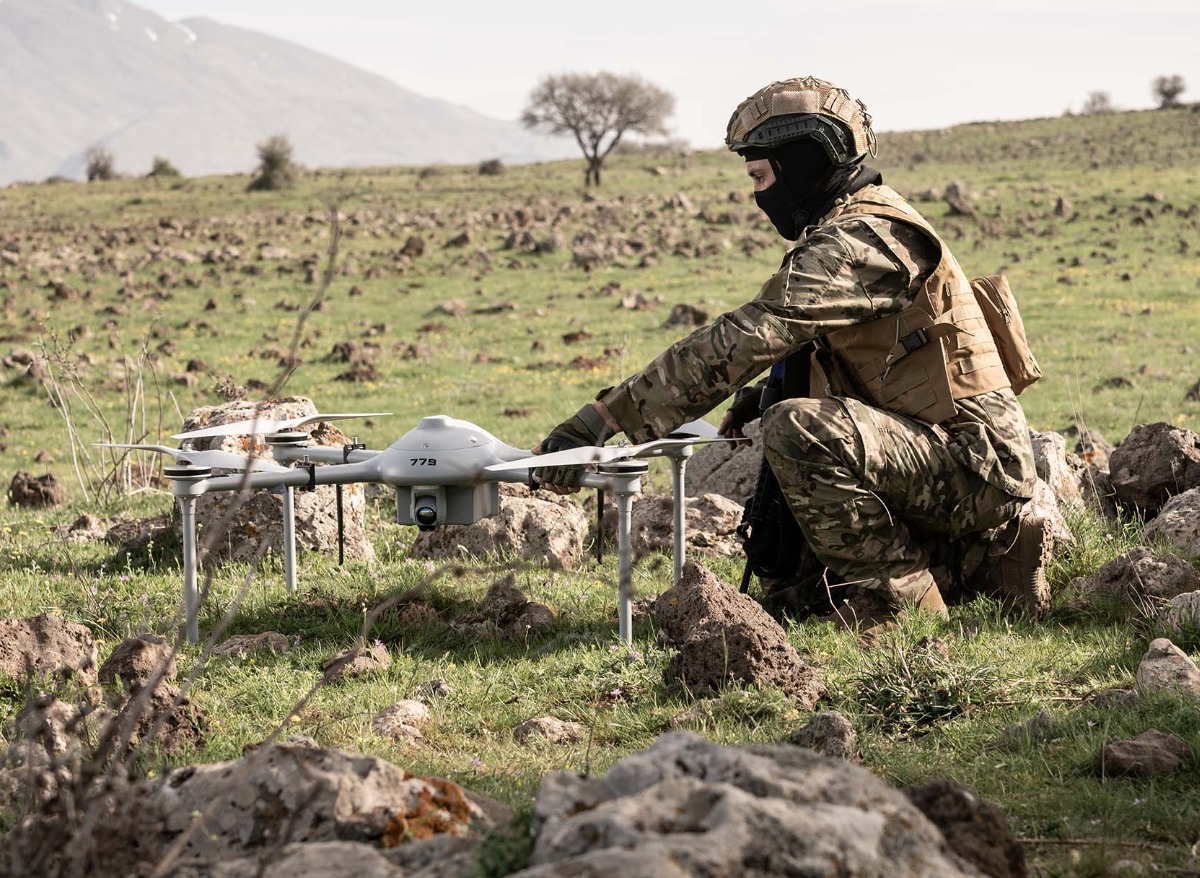
An Israeli drone company has secured a new contract with Israel’s own defense establishment, winning an order for its G3 surveillance drone system from an organization within the Israeli Ministry of Defense following a competitive evaluation process that tested the platform against demanding operational requirements.
Aero Sentinel, an Israeli unmanned systems manufacturer specializing in tactical intelligence, surveillance, and reconnaissance drones, announced the order, valued at approximately 1.3 million Israeli shekels, equivalent to roughly $439,000, covering several G3 systems along with advanced camera payloads, complementary equipment, operator training, and ongoing maintenance services. The contracting organization is described as a leading organization within the Israeli Ministry of Defense, without further identification, a standard practice in Israeli defense procurement announcements where the specific end-user unit is not publicly disclosed for operational security reasons.
The G3 is Aero Sentinel’s tactical surveillance drone, a platform designed to provide intelligence, surveillance, and reconnaissance capabilities, the military term for the persistent observation and data collection missions that small unmanned aircraft have taken over from manned aircraft and ground patrols across virtually every modern military operation. The system is built around a low acoustic signature, meaning it is engineered to generate minimal noise during flight, a characteristic that has become one of the most operationally significant attributes a tactical drone can possess in environments where the sound of an approaching aircraft alerts an adversary and negates the element of surprise. Aero Sentinel describes the G3 as maintaining operational flexibility and mission effectiveness across a wide range of environments, language that points toward a platform designed for deployment across the varied terrain and operational conditions that Israeli security forces routinely encounter.
The contract followed what Aero Sentinel describes as extensive operational demonstrations and capability assessments conducted in demanding scenarios, a selection process that Israeli defense organizations are known to conduct rigorously before committing to procurement of any unmanned system, particularly given Israel’s operational tempo and the diversity of environments in which its security forces operate. Passing that evaluation process carries genuine credibility in the global defense market, because Israeli military users test systems under conditions that approximate real operational use rather than controlled demonstration environments, and platforms that fail to perform under those conditions do not advance to contract.
Israel occupies a unique position in the global unmanned systems market, simultaneously operating as one of the world’s most active users of military drones across its own security operations and as one of the largest exporters of drone technology to foreign militaries. Israeli drone manufacturers including Elbit Systems, Rafael Advanced Defense Systems, and IAI have supplied unmanned systems to dozens of countries across Europe, Asia, and Latin America, and the Israeli defense industry’s reputation for producing operationally proven systems rather than theoretical concepts gives Israeli-made drones a commercial advantage that companies from other countries struggle to match. For a smaller Israeli drone firm like Aero Sentinel, securing a contract with the Israeli Ministry of Defense serves a dual purpose: it generates revenue and provides the operational validation that potential export customers treat as the most credible possible product endorsement.
The intelligence, surveillance, and reconnaissance mission that the G3 is designed to support has become the foundational use case for small tactical drones across virtually every military that operates them, driven by the lesson that persistent aerial observation fundamentally changes how ground forces operate by giving commanders visibility over terrain, targets, and threats that was previously available only through manned aircraft or satellite imagery, both of which are far more expensive and far less responsive to the immediate needs of small unit operations. A battalion commander who can send up a quiet drone to observe a building, a road junction, or a tree line before committing troops to move through it operates with a decision advantage that translates directly into reduced casualties and improved operational outcomes, which is why demand for tactical ISR platforms has grown continuously across every military that has access to them.
The inclusion of operator training and ongoing maintenance services in the Aero Sentinel contract reflects a procurement model that has become standard in the unmanned systems market, where the platform itself is increasingly understood as only one component of an operational capability that also requires trained human operators, maintained hardware, and sustained logistics support to function reliably in the field. Bundling those services into the initial contract rather than treating them as separate follow-on procurements reduces the gap between delivery and operational readiness that has historically delayed the fielding of new drone systems in military organizations that lacked internal expertise to train operators and maintain unfamiliar hardware independently.
Israel’s security environment in 2026 continues to generate persistent demand for every category of tactical unmanned capability, and the organizations within the Ministry of Defense responsible for meeting that demand are actively procuring systems that can be fielded and operated quickly by units with real missions. An Israeli drone company winning a contract from that customer base is not a ceremonial milestone. It is a signal that the platform works well enough for operators with no margin for error to trust their lives and their missions to it.
Content preview only. Full article available at source. View Full Article
Aero Sentinel secured a contract with the Israeli Ministry of Defense for several G3 surveillance drones in 2026, valued at approximately 1.3 million shekels. The G3 drones are designed for intelligence, surveillance, and reconnaissance missions, featuring low acoustic signatures for stealth. The contract includes advanced camera payloads, operator training, and maintenance services, reflecting Israel's ongoing demand for tactical unmanned capabilities.
- Aero Sentinel won a contract for G3 surveillance drones from the Israeli Ministry of Defense.
- The contract is valued at approximately 1.3 million Israeli shekels ($439,000).
- The G3 drone is designed for intelligence, surveillance, and reconnaissance missions.
- The contract includes operator training and maintenance services.
- Israel is a leading user and exporter of military drones.