
ISWAP loses 3 propagandists in Cross Kauwa and reveals its weakness in Borno
 Marie Dubois
ISWAP Loses 3 Propagandists in Cross Kauwa and Reveals Its Weakness in Borno
On July 12, in Cross Kauwa, in northern Borno State, a detail turned a repelled attack into useful intelligence. Among the dead left by the Islamic State West Africa Province (ISWAP), the Nigerian army claims to have identified Abu Salim al-Barnawi, a former commander turned propaganda officer, along with two members of his mobile media team, Abu Umar Khattab and Abu Khalid Usman. The death of a propagandist does not carry the immediate weight of that of a katiba leader. But in this theater, it says something more specific: ISWAP needs to produce the image of victory at the very moment its assaults on bases become more costly.
Cross Kauwa Was Not Just an Attack
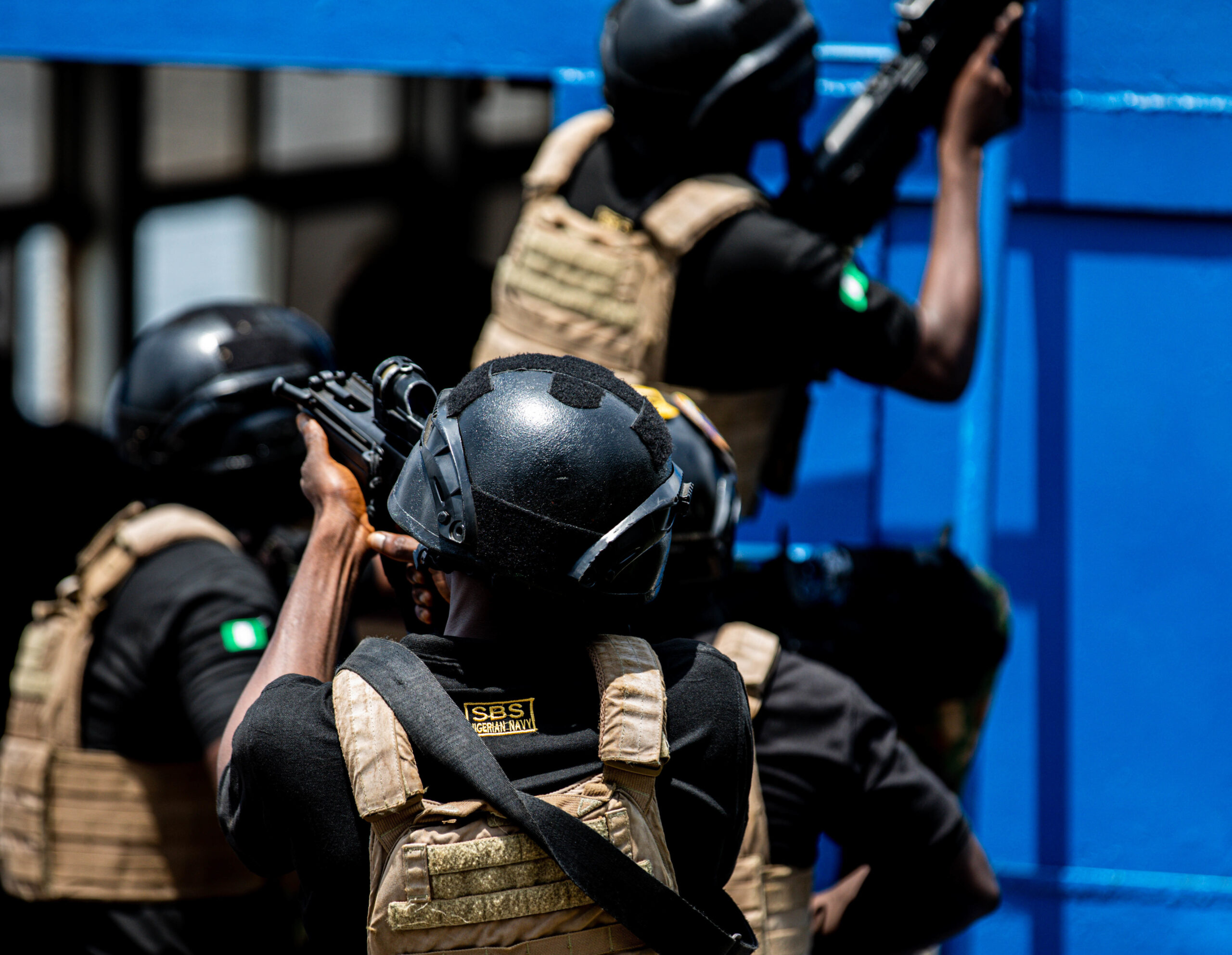
According to Operation Hadin Kai, Abu Salim al-Barnawi was killed during an infiltration attempt against a military position in Cross Kauwa. Video equipment was reportedly recovered on site, an important detail as it directly links the killed team to the production of operational content. The Sun Nigeria reports that the officer had previously led cross-border attacks into Cameroon before being reassigned to ISWAP's media apparatus. This information should be read as a Nigerian military statement; it is not an independent investigation. But the fact that ISWAP would have published a death notice gives this loss additional plausibility.
Cross Kauwa is not an abstract point on the map. The sector lies in the maneuver space between the shores of Lake Chad, Baga, Kukawa, and the routes leading to Cameroon. It is an area where sandy tracks, seasonal waterways, and scattered villages allow small motorized groups to appear quickly, film quickly, and then disappear before reinforcements arrive. On the ground, this geography favors raids, shocks, and video evidence over sustainable conquest.
The Camera Has Become a Tactical Tool
The presence of a media team in the assault is not decorative. ISWAP does not film just to recruit afterward; it films to command attention, intimidate nearby garrisons, and convince local logisticians that the group maintains the initiative. In the Lake Chad basin, a video of a breached base, burned vehicles, or captured weapons can have an effect almost as useful as a limited territorial gain. It circulates faster than a convoy.
This point is often misunderstood from the capitals. Propaganda is discussed as if it comes after the battle. For ISWAP, it accompanies the battle. A unit that brings a camera, an experienced operator, and men capable of crafting a visual narrative indicates that the objective includes capturing the scene. If the assault fails and the media team is destroyed, the cost is not only human. The group loses technicians who know the commanders, the routes, the staging codes, and the communication priorities.
Logomani Shows Pressure on Forward Bases
The Cross Kauwa incident fits into a larger sequence. Vanguard reports that during the same period, Operation Hadin Kai troops repelled a coordinated ISWAP attack against the Logomani forward operational base in the Ngala area. One Nigerian soldier was killed, two gun trucks and combat assets were damaged. The army claims that the attackers briefly exploited part of the defensive perimeter before being expelled by a counterattack.
This kind of phrasing matters. When a perimeter is exploited, even briefly, it means the enemy has found a weak point: blind spot, sentinel fatigue, poorly maintained obstacle, insufficient supporting fire, or simple saturation. In an isolated FOB, five minutes can be enough to burn a vehicle, take a collective weapon, or produce the sought-after images. Reinforcements resolve the crisis; they do not always repair the vulnerability that allowed it.
Logomani is located near the Ngala-Gamboru axis, at the Cameroonian border. This road is not just military. It carries trade, refugees, trafficking, informants, and families navigating between multiple authorities. To hold such an area, it is not enough to kill fighters in the bush. It is necessary to control fuel suppliers, motorcycle tires, medicines, phones, and local relays. Operation Hadin Kai understands this well: the same statements mention the arrest of logistical suppliers, the seizure of money and medical supplies, as well as surrenders from the enclaves of Guduf Bubayagwa and Chikide in the Mandara Mountains.
The Unconfirmed Issue of 104 Soldiers
Another figure weighs on this sequence: 104. Pulse Nigeria, citing SaharaReporters, reports that an internal military document allegedly stated that 104 soldiers from the 162nd amphibious battalion were absent after the June 5 attack on Mandaragirau, on the Mandara-Buratai road. The Nigerian army has confirmed the attack and the death of five soldiers, but has not publicly confirmed the list of the 104 men allegedly absent with their service rifles. Caution is therefore warranted.
But even unconfirmed, this file indicates the moral fragility of the setup. In a war of forward bases, cohesion sometimes matters as much as light armored vehicles. If a garrison believes it will be isolated, that rotations are delayed, and that the enemy can film every weakness, it fights with a particular fatigue. From experience, a troop that doubts its relief listens more intently to rumors than to orders. ISWAP knows this and exploits this weariness.
A Nigerian Victory to Exploit Quickly
The death of Abu Salim al-Barnawi is therefore a real but narrow victory. It weakens ISWAP's media apparatus and gives Nigerian services an opportunity to trace contacts, devices, perhaps movement habits. If the recovered equipment is exploited quickly, it may be worth more than the propagandist's body itself. Metadata, memory cards, and communication routines often reveal what prisoners keep silent.
The risk is to turn this victory into a self-satisfied communiqué. ISWAP does not lack young recruits capable of holding a camera; what is rarer are men capable of combining combat experience, access to commanders, and a sense of narrative. Abuja must therefore strike the media apparatus as a military infrastructure: relays, editors, phone collectors, messengers, broadcasting accounts, energy suppliers. In northern Borno, the image war is not virtual. It begins on the track, behind the first pickup.
Sources
- The Sun Nigeria, 2026, reporting the death of Abu Salim al-Barnawi, Abu Umar Khattab, and Abu Khalid Usman in Cross Kauwa.
- Vanguard Nigeria, July 2026, on the repelled attack against the Logomani FOB, search operations, and arrests of logistical suppliers.
- Pulse Nigeria and SaharaReporters, June-July 2026, on the unconfirmed file of the 104 soldiers reported absent after Mandaragirau.
ISWAP lost three propagandists, including Abu Salim al-Barnawi, during an attack in Cross Kauwa on July 12. The Nigerian military identified the casualties and recovered video equipment, highlighting ISWAP's reliance on media for propaganda. Concurrently, a coordinated attack by ISWAP was repelled at Logomani, resulting in one Nigerian soldier's death. Unconfirmed reports suggest 104 soldiers may be missing following a prior engagement.
- ISWAP lost 3 propagandists, including Abu Salim al-Barnawi, during an attack in Cross Kauwa.
- The Nigerian military identified the propagandists and recovered video equipment at the scene.
- The loss of these propagandists indicates ISWAP's need for media presence amidst costly assaults.
- A coordinated attack by ISWAP was repelled at Logomani, resulting in one Nigerian soldier killed.
- There are unconfirmed reports of 104 soldiers missing after a previous attack.