
ISWAP Nigeria 2026 the death of Abdussamad Ohida reveals the battle for intelligence
 Marie Dubois
ISWAP Nigeria 2026 the death of Abdussamad Ohida reveals the battle for intelligence
In northern Nigeria, the disappearance of a leader never means the end of a cell. It rather indicates who managed to see first. On October 6, Nigerian media reported that a joint operation by the army, the Department of State Services (DSS), and Amotekun had killed Abdussamad Ohida, presented as another official of the Islamic State in West Africa (ISWAP). The exact location and tactical circumstances of the action have not been publicly detailed.
An announcement that focuses on intelligence before focusing on the toll
The important point is therefore not just the name of the target. It is the combination of actors. The army provides the strike force and the ability to hold the ground; the DSS provides domestic intelligence, human sources, and the exploitation of arrests; Amotekun adds local knowledge rarely available to federal units. This architecture is not an additional brigade. It is an attempt to connect the sensors before launching the assault.
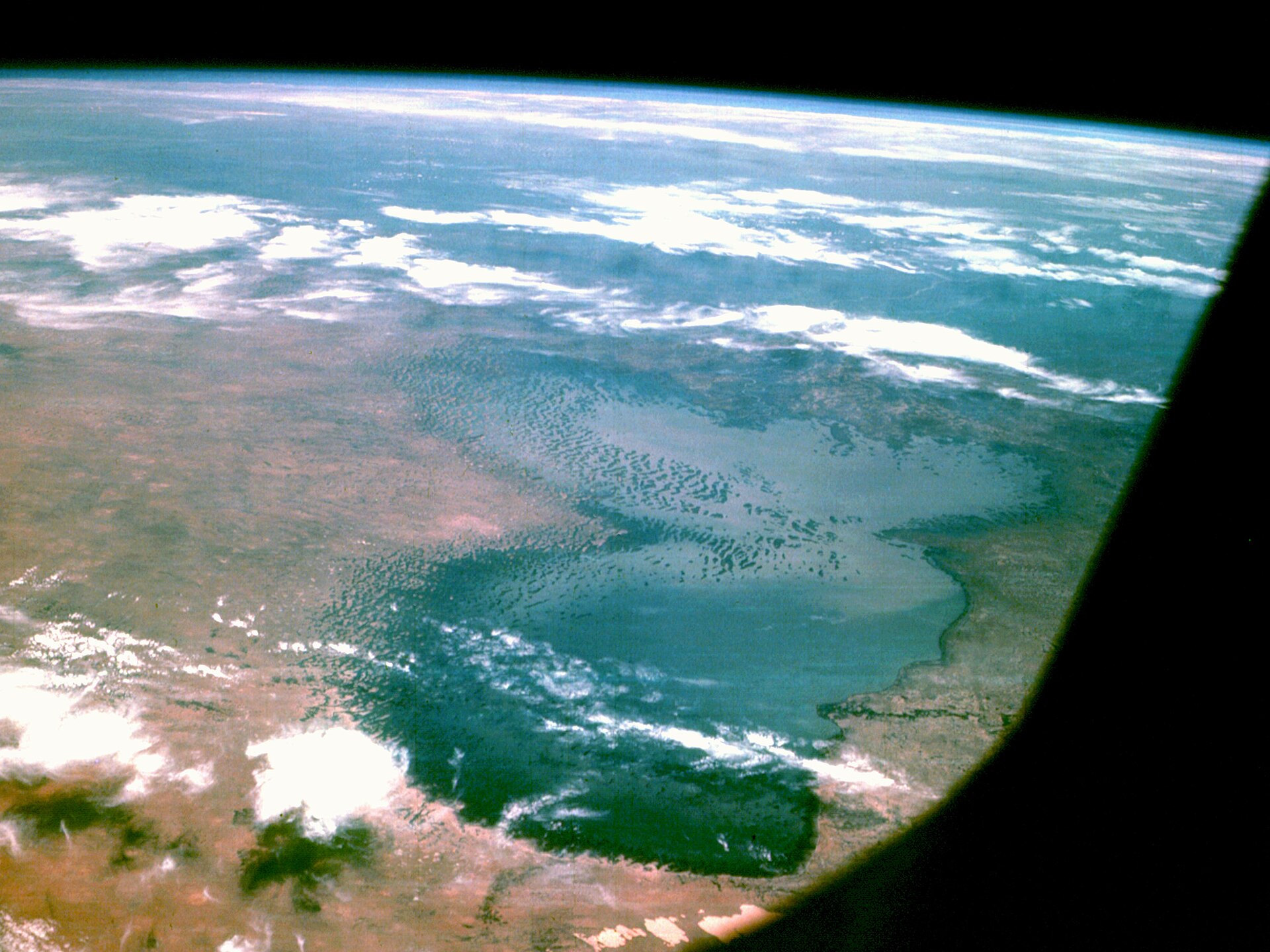
In the Lake Chad theater, this chain is decisive. Armed groups do not move like a regular army between two visible positions. They use islands, seasonal channels, markets, families, and cattle tracks. Information that is forty-eight hours old can lead a column to an empty camp. Information that is a few hours old can, on the contrary, enable a strike against a moving leader.
Why the loss of Ohida does not automatically disorganize ISWAP
ISWAP has learned to limit its dependence on its commanders. The local cell can retain its weapons, tax collectors, and logistical relays after the death of an executive. In some areas, the organization draws from fishing, livestock, transport, and displaced communities. This revenue system is harder to decapitate than a classic hierarchical chain.
The operational question is therefore as follows: Did Ohida hold a field function, a funding function, or a liaison function? Authorities have not yet provided enough information to answer. If he coordinated the attacks, his replacement may create a window of disorganization. If he mainly supervised collection, ISWAP will likely seek to protect its circuits rather than immediately launch a spectacular offensive.
This is the difference between killing a leader and breaking a capability. On the ground, the latter measure is the only one that matters.
Lake Chad remains the lock, not just a periphery
Clashes between Boko Haram and ISWAP have already shown that inter-jihadist violence can be as significant as attacks against Nigerian forces. Critical Threats analyses have described since 2025 a cycle of retaliation between the two factions. For Abuja, this rivalry sometimes offers an opportunity to strike a weakened adversary; it can also produce a more aggressive organization, rid of its most vulnerable competitors.
Geography complicates every success. The basin extends over Nigeria, Niger, Chad, and Cameroon. Pressure applied on the Nigerian shore can shift fighters to the islands or to the border, without removing their access to resources. Withdrawals or uneven cooperation from neighboring states create intervals in which groups reappear.
The announced death of Ohida must therefore be read on the scale of the basin. It may temporarily reduce the operational freedom of a unit, but it does not close either the maritime corridor of the lake or the land routes connecting Borno to border areas.
The real test begins after the operation
In the coming days, three indicators will be more useful than victory statements. The first will be the ability of Nigerian forces to exploit phones, documents, and prisoners that may be seized. The second will be the emergence of a new chain of command in villages and islands already under pressure from ISWAP. The third will be Boko Haram's reaction: a retaliatory attack would signal that the disappearance of Ohida has created a vacuum that both factions want to fill.
It will also be necessary to verify the toll. The available information comes from an announcement relayed by the press, without geolocated images or independent accounts of the engagement. The death is reported, but its exact rank, location, and the number of other victims remain to be confirmed. In this theater, caution is not a journalist's formula: it is a survival method.
A tactical victory that demands immediate exploitation
Nigeria has a concrete opportunity here. An inter-agency operation that results in the neutralization of an executive must be followed by a presence, an investigation, and protection of informants. Without this, the same units will return to the same paths a few weeks later, with another name at their head.
The lesson for foreign partners is equally simple. Drones and strikes can find a camp; they do not replace the human networks that allow knowing when a leader leaves that camp. In Lake Chad, the advantage does not go to the one with the largest apparatus, but to the one who retains the information one hour longer than their adversary.
The next ISWAP attack will tell if the death of Ohida has removed an operational node or merely accelerated its replacement.
Sources
- Channels Television, announcement of October 6, 2026, on the joint operation against Abdussamad Ohida.
- Critical Threats Project, tracking operational areas and the Boko Haram–ISWAP rivalry.
On October 6, 2026, a joint operation by the Nigerian Army, Department of State Services, and Amotekun resulted in the death of Abdussamad Ohida, a leader of ISWAP, in Nigeria. The operation's details remain unclear, and the implications of Ohida's death on ISWAP's operational capabilities are still being assessed. The ongoing conflict dynamics in the Lake Chad region complicate the situation.
- Abdussamad Ohida, an ISWAP leader, was killed in a joint operation on October 6, 2026.
- The operation involved the Nigerian Army, DSS, and Amotekun.
- The exact location and circumstances of the operation were not detailed publicly.
- ISWAP has shown resilience and adaptability despite leadership losses.
- The operational impact of Ohida's death on ISWAP remains uncertain.