
ISWAP Overwhelms Two Bases in Gwoza — 14 Nigerian Soldiers Killed, Ngoshe in the Hands of Boko Haram
 Marie Dubois
ISWAP Overwhelms Two Bases in Gwoza — 14 Nigerian Soldiers Killed, Ngoshe in Boko Haram's Hands
On the night of Tuesday, August 11, in Ngoshe, within the Gwoza local government area, suspected fighters of the Islamic State West Africa Province (ISWAP) overwhelmed a Nigerian army post. Nine soldiers and a village imam were killed. The position was overrun, the troops forced to retreat, and the assailants left with the weapons and ammunition from the post.
Almost simultaneously, in the same district, a second base fell in Pulka. Five soldiers, including the post commander, a major, lost their lives there.
Three military sources confirmed to Reuters a toll of fourteen soldiers killed. Five days later, residents cited by Daily Trust claimed that Ngoshe is still in Boko Haram's hands. This is new.
Gwoza, Gateway to the Sanctuary
Gwoza is not an insignificant area. Nestled against the Mandara Mountains, about thirty kilometers from the Cameroonian border and over a hundred kilometers southeast of Maiduguri, the capital of Borno, this area commands the routes leading north to the Sambisa Forest, the historical sanctuary of Boko Haram. In 2014, Gwoza briefly served as the "capital" of the self-proclaimed caliphate of Abubakar Shekau. The Nigerian army only regained control after long campaigns, never fully completed.
What the attack on August 11 indicates is that ISWAP has regained the capacity to strike two fixed posts within the same timeframe, to overwhelm them, and to loot them. From experience, a "dislodged" post — the term used by Senator Ali Ndume, elected from Southern Borno — does not mean a simple skirmish. It means that the troops have abandoned the ground, and the enemy has rearmed with the stock of the defeated. The cycle is well-known: each lost base finances the next assault.
A UN Report That Reshuffles the Cards
This sequence fits into a context that intelligence can no longer ignore. In its 23rd strategic report on ISIS/Daesh, submitted to the Security Council on August 5 (document S/2026/638), the United Nations Secretary-General designates Africa as the global epicenter of Islamic State activity, and ISWAP as its most active affiliate on the planet.
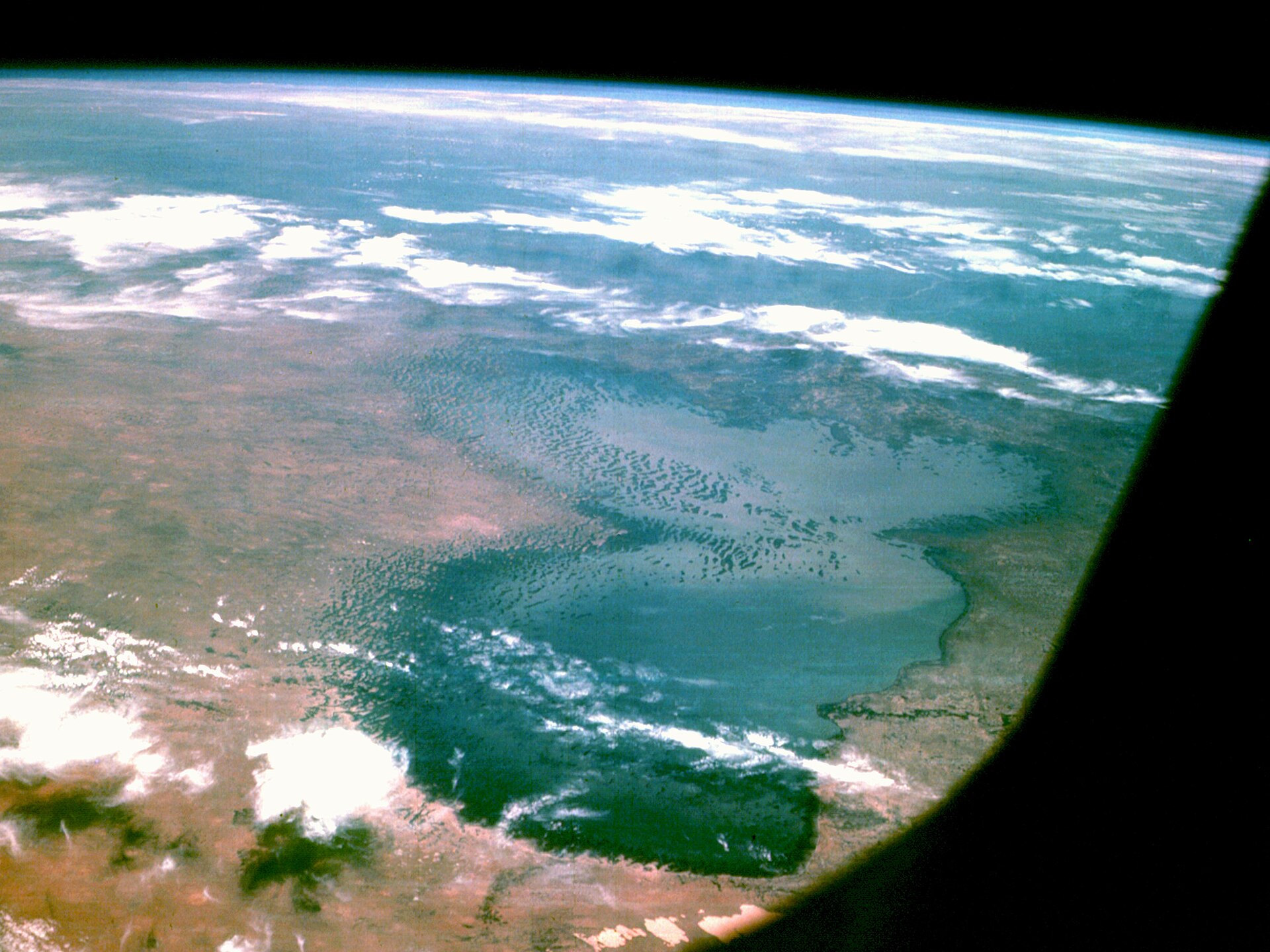
The figures put forward by UN observers are heavy: between 8,000 and 12,000 fighters for ISWAP alone, a capacity to finance itself through taxation and ransom, and — a detail that would have seemed unthinkable five years ago — the acquisition of commercial drones. Lake Chad, whose southern shore serves as a theater for these operations, is no longer a periphery of the Sahelian war: it is now one of its centers of gravity.
It must be said bluntly: Western military staffs have largely disengaged from the Nigerian front. France has been expelled from Mali, Burkina Faso, and Niger; Washington has lost its base in Agadez; the Russian African Corps is settling in Bamako and Niamey. Meanwhile, the Borno insurgency — seventeen years of war, more than two million displaced — continues to kill soldiers and officers without anyone seeming willing to pay the political price.
The Human Toll
The cost is not measured only in the bodies of soldiers. The list of senior officers fallen on this front grows month by month: Brigadier General Oseni Braimah, commander of the 29th brigade, killed in Benisheikh; Brigadier General Musa Uba, commander of the 25th intervention brigade; Colonels Dahiru Chiroma Bako and Muhammad Abu Ali, Lieutenant Colonel Ibrahim Sakaba. The death of a major in Pulka adds to a hemorrhage of personnel that the army struggles to replace.
Behind the posts, there are civilians. In Pulka and Ngoshe, the displaced persons camps are caught between the terror of ambushes outside the perimeter and hunger inside. Farmers no longer dare to cultivate their fields, which armed groups effectively control. Residents interviewed by TruthNigeria describe families that no longer go out to sow, merchants extorted, women abducted. The strategy is old, and it is effective: starve the population to make them dependent on those who protect them.
What Lies Ahead
I do not have official confirmation from the Nigerian military, which has remained silent on the two attacks, and the attribution to ISWAP relies on anonymous security sources. Therefore, caution is warranted regarding the details. But the trend, however, leaves little room for doubt.
The operational alert point is located along the Gwoza–Pulka–Ngoshe axis, along the Cameroonian border. If ISWAP holds Ngoshe five days after the assault, it is no longer a lightning raid, but an attempt at territorial re-establishment — a return to the configuration of 2014. The next fragile link is the villages in the Gwoza valley and the supply routes to Maiduguri. The army has announced retaliatory airstrikes; President Bola Tinubu has ordered to "intensify efforts." But one does not reclaim a sanctuary with press releases.
ISWAP attacked and overran two Nigerian army bases in Gwoza on August 11, resulting in the deaths of 14 soldiers. The assault on Ngoshe and Pulka led to the capture of weapons and ammunition, with reports indicating that Ngoshe remains under Boko Haram control. This incident highlights ISWAP's renewed operational capabilities and the ongoing security challenges in the region.
- ISWAP attacked two Nigerian army bases in Gwoza on August 11, 2023.
- 14 Nigerian soldiers were killed in the attacks.
- Ngoshe is reportedly under Boko Haram control after the attack.
- The attacks indicate ISWAP's capability to conduct coordinated assaults.
- The situation reflects a deteriorating security environment in Borno.