
ISWAP strikes Pulka in Nigeria — Gwoza's defense reveals the base war in 2026
 S.W
S.WISWAP Strikes Pulka in Nigeria — Gwoza Defense Reveals Base War in 2026
In Pulka, within the Gwoza local government area, Borno State, Nigerian soldiers held their position on September 7 against a coordinated attack attributed to the Islamic State West Africa Province (ISWAP). The news, made public on September 22 by the Hadin Kai operation headquarters, does not describe a spectacular victory. It describes something more useful to measure: the ability of an isolated garrison to survive when connected to aerial intelligence, fire support, and local informants.
According to the spokesperson for the joint force, the attackers were repelled after heavy gunfire. One soldier was injured in the arm, weapons and ammunition were recovered, and the military claims that aviation struck hostile elements during their retreat. The toll inflicted on ISWAP has not been published. Therefore, it is necessary to distinguish the confirmed fact — the position was not overwhelmed — from military claims about the extent of enemy losses.
Pulka Holds Because the System Works
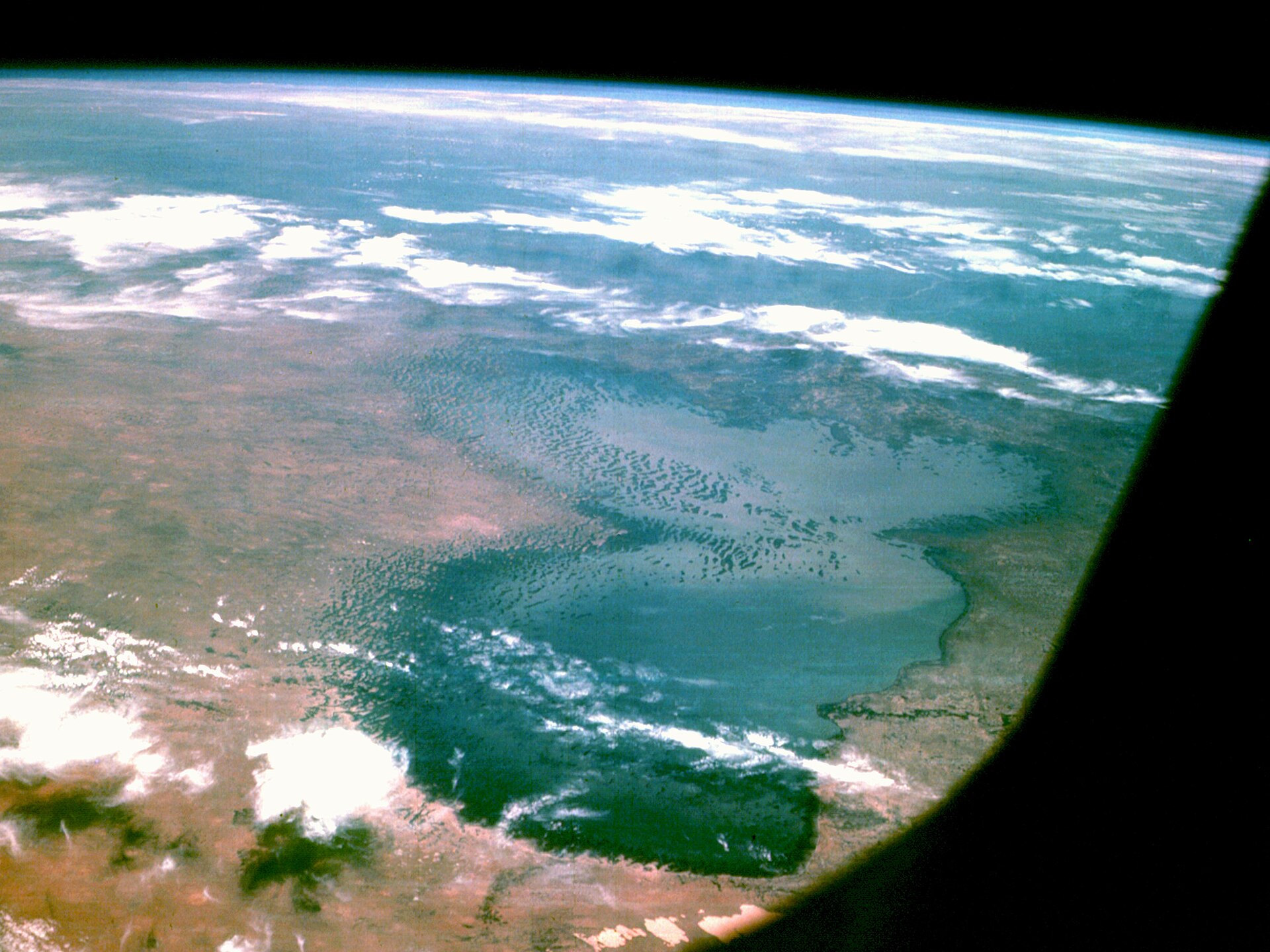
Pulka is located in the operational orbit of Gwoza, near the Cameroonian border and west of the mountainous accesses leading to the Lake Chad basin. Here, the administrative map is misleading. A road may remain under Nigerian control during the day and become impassable after nightfall. Fighters do not need to conquer a city to disrupt the setup: they only need to force a base to go to ground, cut its patrols, and test its ammunition stocks.
The Pulka episode shows three layers that worked together. The first is the resistance of the garrison, which prevented the perimeter from being breached. The second is air support, initially used for surveillance and then against the retreating attackers. The third is the Civilian Joint Task Force, whose local intelligence improved the understanding of the tactical situation. This is not an abstract formula of "joint coordination." On the ground, it means knowing through which axis the enemy is coming and when they are pulling back.
A Defensive Victory, Not the End of the Threat
The Nigerian statement presents the case as proof of Hadin Kai's preparedness. This is defensible but incomplete. A base that repels an attack has gained immediate engagement. It has not necessarily regained the initiative in the villages, on the tracks, or in the wooded areas where the attackers disperse. The army also announces exploitation and search operations after ISWAP's withdrawal: the most important phase often begins after the firing stops, when soldiers attempt to identify caches, guides, and return routes.
This nuance matters in northeastern Nigeria. Human Rights Watch describes a persistent pressure from Boko Haram and ISWAP on the military and communities in Borno, with displacements and returns of populations in areas where security remains fragile. The factions do not always fight in the same way: ISWAP prioritizes pressure on military positions and state resources, while Boko Haram's JAS faction has shown a renewed capacity to strike civilians. The boundary between the two threats remains fluid, and the labels used in early reports can be imprecise.
The Real Center of Gravity Lies Between the Bases
The geography of Pulka explains why a successful defense is not enough. Gwoza, the axes towards Bama, and the passages near Cameroon form a theater where Nigerian forces must hold fixed points while monitoring areas that are difficult to grid. A detachment may have sporadic air support and remain blind to movements in the following week. Aircraft correct a detected attack; they do not replace a permanent ground intelligence network.
The lesson is also regional. The Lake Chad basin remains divided among Nigeria, Cameroon, Chad, and Niger, while military cooperation has been uneven since Niger withdrew from several regional mechanisms. ISWAP can exploit this discontinuity without having to hold territory permanently. A dispersed column, a moved stock, or a bypassed observation post may be enough to reopen a corridor.
What the Attack Says About the Next Phase
The attack on September 7 does not establish a new general offensive by ISWAP. The available information does not provide the exact volume of attackers or their losses, and no independent document confirms the military's complete narrative. But it confirms a stronger trend: armed groups continue to test Nigerian bases to measure the response time between detection, ground reinforcement, and the arrival of air support.
For Abuja, the operational problem is therefore not just to win the next assault. It is to transform Pulka into a sustainable position, with patrols capable of going out, resupplied roads, and local information that survives the rotation of a unit. As long as the garrisons remain islands connected by vulnerable corridors, ISWAP does not need to defeat the army in a pitched battle. It only needs to choose the moment when the island is most isolated.
Sources
- Vanguard Nigeria, Hadin Kai operation statement on the Pulka attack, published on September 22, 2026.
- Human Rights Watch, World Report 2026 — Nigeria, context on Boko Haram, ISWAP, and Borno.
- The Sahel Brief, regional situation and evolution of operations in the Lake Chad basin.
Nigerian soldiers repelled an attack by ISWAP in Pulka on September 7, 2026, maintaining their defensive position. One soldier was injured, and air support was utilized against the retreating attackers. The military reported recovering weapons and ammunition, but did not disclose the extent of enemy losses. The ongoing threat from ISWAP and Boko Haram continues to pressure military and civilian communities in the region.
- Nigerian soldiers repelled an ISWAP attack in Pulka on September 7, 2026.
- One soldier was injured, and weapons and ammunition were recovered.
- Air support was used against retreating ISWAP fighters.
- The attack did not result in a significant enemy loss report from the military.
- The situation in the region remains tense with ongoing threats from ISWAP and Boko Haram.