
Italy Chose GCAP in 2026 While Its Army Waits for Armor
 Alexandra Reeves
Italy Chose GCAP in 2026 While Its Army Waits for Armor
Italy has made a choice that looks futuristic on a briefing slide and uncomfortable in a war-planning meeting. Rome is putting €875 million into the Global Combat Air Programme in 2026 while spending on new army tanks, fighting vehicles, and Ariete upgrades falls to €177 million. The numbers come from Italy’s delayed 2026 defence budget, reviewed by Defense News on November 13.
This is not simply a story about an air force winning a budget fight. It is a test of how a NATO ally is interpreting the next war. Italy is betting that long-range sensing, air power, and industrial sovereignty matter more than quickly replacing heavy ground equipment. That bet may be defensible. It is also a dangerous way to discover that deterrence requires more than one service.
The Budget Tells a Clearer Story Than the Speeches
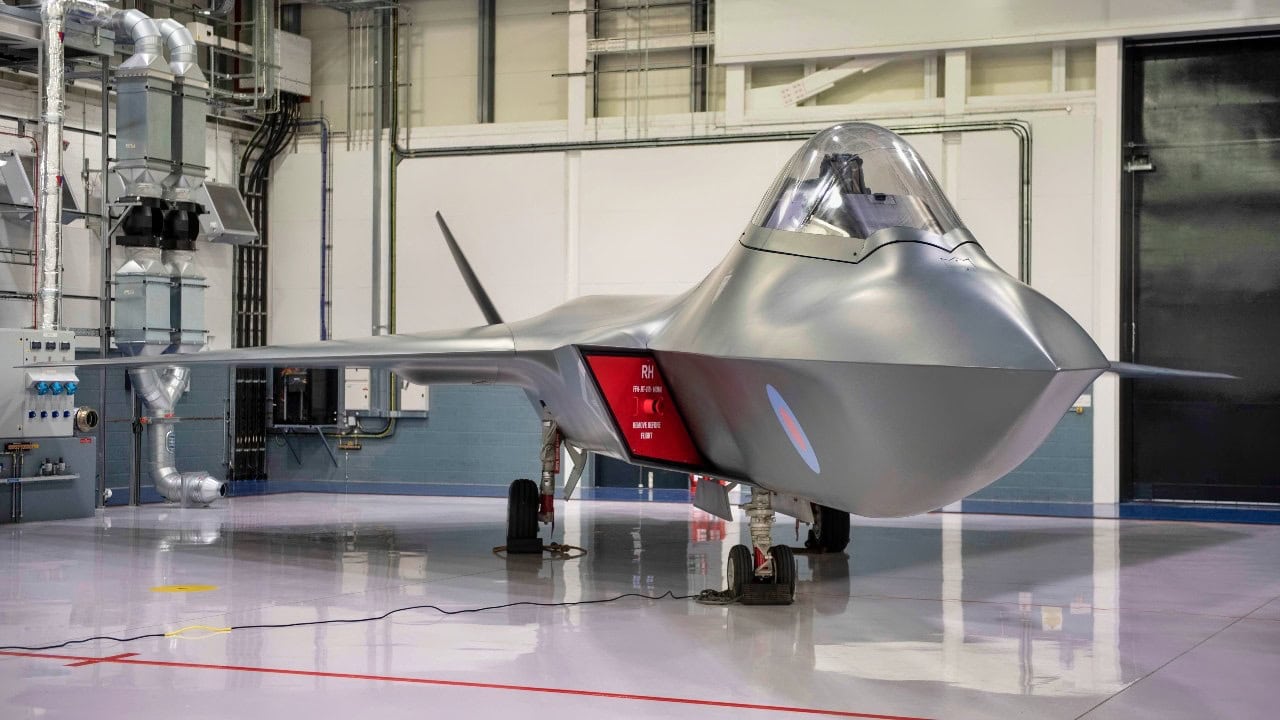
Italy’s GCAP allocation is up sharply from €625 million in 2025 and more than three times the €275 million that planners had expected to spend in 2026 in the previous budget document. The new budget forecasts €696 million for the programme in 2027. That is not a symbolic commitment. It is a decision to protect a major industrial programme even while other equipment lines move more slowly.
GCAP is the sixth-generation fighter effort shared by Italy, the United Kingdom, and Japan. Its intended capability is not just a more stealthy aircraft. The programme is built around a crewed combat aircraft connected to uncrewed systems, advanced sensors, electronic warfare, and a digital combat network. The exact configuration and weapons fit remain subject to development decisions, but the strategic idea is straightforward: the fighter should function as a node in a wider force rather than as a solitary aircraft.
That ambition explains why the programme is politically attractive. It keeps Italian firms inside a future combat-air supply chain, preserves design expertise, and gives Rome a seat at decisions that will shape European air power after the F-35 and Eurofighter. It also ties Italy to London and Tokyo at a moment when European governments are trying to reduce dependence on American technology without pretending they can replace it overnight.
What Italy Is Delaying on the Ground
The contrast is stark. Italy’s planned armoured-vehicle programme envisages 1,050 Lynx infantry fighting vehicles and 272 Panther main battle tanks in a deal valued at roughly €23 billion. Yet spending on the Panther, Lynx, and Ariete upgrade lines totals only €177 million in 2026, down from €281 million in the previous plan and far below the €425 million forecast for this year.
Defense News also reported that Defence Minister Guido Crosetto said in July that Italy would seek an 18 percent reduction in the cost of the programme. The budget projects a rebound to €872 million in 2027, so this is not an outright cancellation. But a delayed armoured force is still a capability gap. Tanks and infantry vehicles do not become available when a minister announces an industrial ambition; they arrive after contracts, production slots, training, spare parts, and years of field integration.
That matters because NATO’s recent arguments about rearmament are increasingly about mass and endurance. Ukraine has shown that precision fires and drones can punish exposed armour, but it has not made protected mobility irrelevant. Armies still need vehicles to move under fire, hold ground, recover damaged equipment, and survive the ugly middle distance between a missile strike and a political settlement. A future fighter cannot perform those tasks.
The Real Trade-Off Is Industrial Versus Operational Time
Rome is not choosing between a good weapon and a bad one. It is choosing between two clocks.
GCAP is a long industrial clock. The partners must develop an airframe, engines, sensors, software, weapons integration, and a manufacturing system that can sustain the aircraft for decades. If Italy cuts too deeply now, it risks losing influence and paying more later. The July development contract worth £4.6 billion across the three partner nations made clear that the programme has moved beyond a political slogan. There is a real industrial machine to keep running.
Armoured vehicles run on a shorter operational clock. Italy already has an ageing tank fleet and has obligations on NATO’s eastern flank, even if its main strategic focus remains the Mediterranean. A crisis involving Russia would not wait for a sixth-generation aircraft to reach initial operating capability. Nor would a contingency in the Balkans or a land-force deployment tied to alliance commitments.
Here is the part that European defence debates often avoid: a country can be technologically ambitious and militarily under-equipped at the same time. Italy’s 2026 budget may be doing exactly that. The country is funding the weapon that defines its industrial future while postponing the vehicles that define its immediate land-force credibility.
Why This Matters Beyond Italy
For NATO, the issue is not whether GCAP is worth building. It is whether allied procurement is becoming a collection of prestige programmes that cannot be assembled into a usable force. Italy’s air ambitions will contribute to alliance air defence, deep sensing, and strike capacity. Those are valuable, particularly as Russia invests in layered air defence, electronic warfare, and long-range missiles.
But air power works best when the rest of the force can exploit what it creates. Ground units need resilient communications, air defence, logistics, and protected mobility. They also need stocks of ammunition and replacement parts. A fighter programme can strengthen deterrence, yet it cannot compensate for a brigade that lacks vehicles or an army that cannot sustain a deployment.
The political timing makes the decision harder to dismiss as bookkeeping. Italy is heading toward national elections in 2027, while Prime Minister Giorgia Meloni’s defence policy faces criticism from coalition allies, opposition parties, and protesters. Defence spending is being judged not only as strategy but as a competition with health and domestic priorities. GCAP offers jobs, exports, and a national technology story. Tanks offer a less glamorous promise: that soldiers will have equipment when the alliance asks them to move.
What to Watch Next
- Whether the 2027 armoured-vehicle allocation actually converts into signed contracts and production milestones.
- Whether Italy’s 18 percent cost-reduction effort changes the size or schedule of the Panther-Lynx programme.
- Whether the GCAP partners define credible delivery milestones rather than allowing the programme to remain a permanent development project.
- Whether NATO can connect Italy’s future air capability to the logistics, air defence, and land forces required on the eastern flank.
Italy’s decision is understandable. GCAP protects industrial expertise that Europe cannot easily rebuild, and the sixth-generation air battle will reward countries that control software, sensors, and networks. But the budget also exposes a familiar European weakness: planning for the war that might define the next decade while accepting shortages in the force that must deter trouble this year.
The uncomfortable question is not whether Italy should build GCAP. It is whether Rome can afford to call itself ready while its tanks remain on the promise of next year’s budget.
Sources: Defense News, “Italy boosts GCAP fighter spending as Army vehicles take a hit in budget,” November 13, 2026; Italian Ministry of Defence 2026 budget documents as reported in that article; public GCAP programme descriptions from the United Kingdom, Italy, and Japan.
Italy allocated €875 million to the Global Combat Air Programme (GCAP) for 2026, significantly increasing its investment while cutting army vehicle spending to €177 million. The planned procurement includes 1,050 Lynx infantry fighting vehicles and 272 Panther main battle tanks, valued at approximately €23 billion. This shift reflects Italy's strategic focus on air power and industrial sovereignty, despite concerns over ground force readiness.
- Italy is investing €875 million in the Global Combat Air Programme (GCAP) for 2026.
- Spending on army tanks and vehicles is reduced to €177 million.
- Italy plans to procure 1,050 Lynx infantry fighting vehicles and 272 Panther main battle tanks valued at €23 billion.
- The GCAP allocation has increased significantly from previous years.
- Italy's defense strategy is focusing on air power over ground equipment.