
Russia demands NATO withdrawal to 1997 borders — Europe's defense promises under stress test
 Dr. Klaus Weber
Russia demands NATO withdrawal to 1997 borders — Europe's defense promises under stress test
The demand is older than the current negotiation channel, but its political function has changed. According to reports from the New York Times, Moscow is demanding in talks about a possible Ukraine settlement the withdrawal of NATO to its positions from 1997 and an end to military support for Kyiv. This is not a realistic negotiation proposal. It is a test of whether Europe understands its declared defense readiness since 2022 as a political commitment or merely as a budgetary formula.
An ultimatum against institutional order
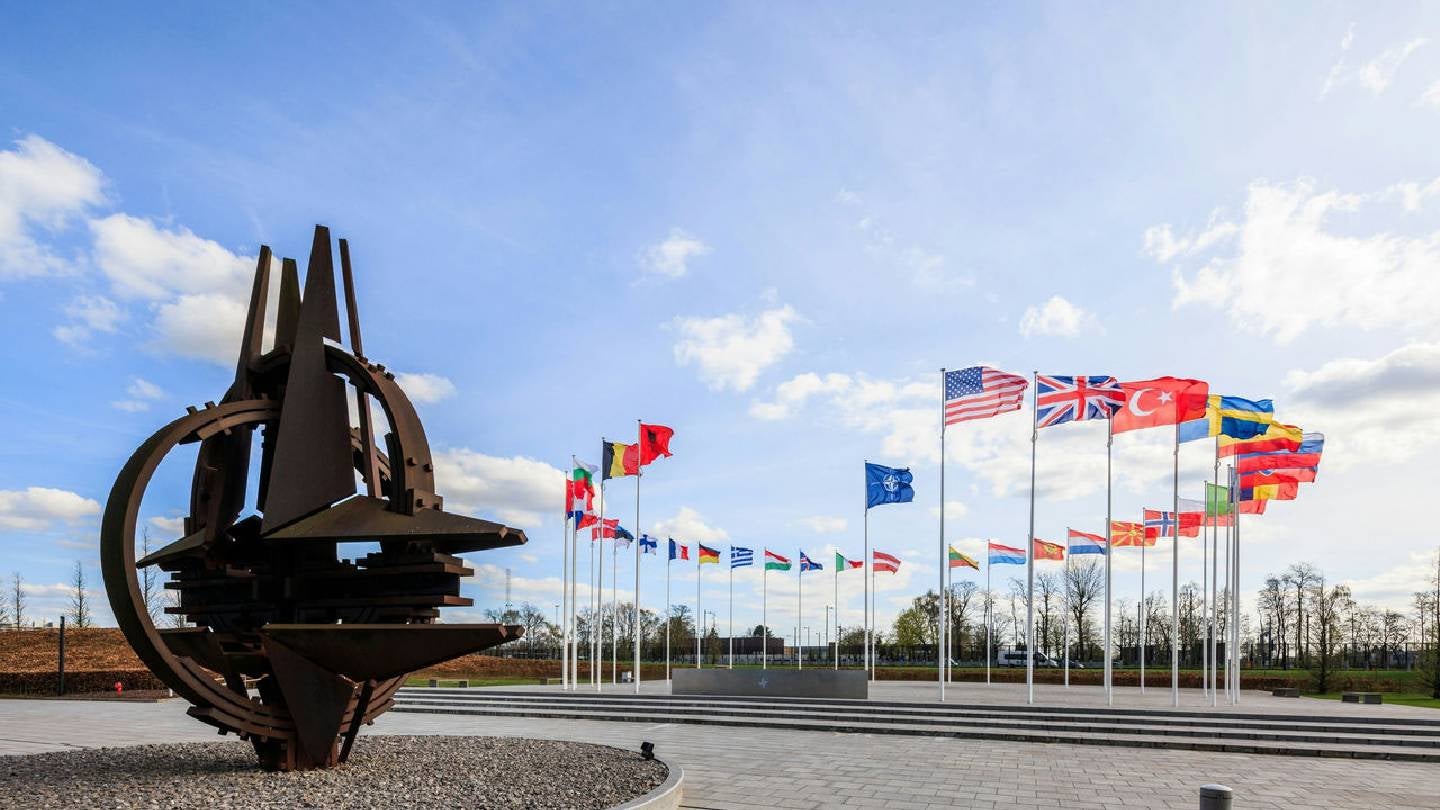
The year 1997 is deliberately chosen. At that time, NATO and Russia signed the Founding Act on Mutual Relations, Cooperation, and Security. Poland, the Czech Republic, and Hungary were on the verge of joining; the later rounds of expansion had not yet taken place. Moscow is now trying to turn a historical snapshot into a permanent security boundary. This would retroactively place the sovereign decisions of numerous Central and Eastern European states under Russian reservation.
The problem lies not only in the demand itself but in its coupling to Ukraine aid. A withdrawal of NATO and an end to Western arms deliveries are apparently to be treated as a package. Anyone who agrees to this package accepts not only a territorial reorganization but also the principle that Russia has a say in the alliance choices of its neighbors. For Estonia, Latvia, Lithuania, Poland, and Finland, this would not be an abstract constitutional question but an immediate change in their military risk calculations.
Europe's political response lags behind the threat
Finland deemed the Russian withdrawal demand unacceptable according to Bloomberg. This is the correct political reaction. However, political rejection is not yet a deterrent. It only becomes credible when Europe can show that its armed forces possess not only budgets but also available ammunition, air defense, reconnaissance, and command capabilities in a crisis.
This is precisely where the well-known European discrepancy between input and output lies. NATO is discussing higher defense spending while Ukraine simultaneously reports that Europe is hitting limits with Patriot missiles. UNITED24 Media reports on new ways to supply Ukrainian air defense. An alliance can only reject Moscow's demand if it has the capability to sustain a long war of attrition materially. This is an industrial question, not a question of summit rhetoric.
The idea of an EU army does not automatically solve this deficit
A Politico analysis of a GLOBSEC survey published on November 13 concludes that a majority of respondents in eleven EU countries support the creation of an EU army. This is politically significant but militarily still incomplete. A joint army does not first need a new label but rather common rules of engagement, secured financing, interoperable systems, and a clear decision on who gives orders in case of emergency.
The EU already has instruments like PESCO, the European Defense Fund, and the Common Security and Defense Policy. Its problem is not the lack of acronyms. It is the lack of willingness among member states to permanently subordinate national procurement, operational planning, and industrial interests. An EU army without common air defense, satellite reconnaissance, and ammunition stocks would be an institutional façade. It would raise expectations without changing the Russian calculation.
The transatlantic factor remains the uncomfortable core
NATO Secretary General Mark Rutte is pushing for closer transatlantic cooperation in the defense industry according to Defence Industry Europe. This sounds less sovereign than the political demand for European autonomy but is more realistic. Europe can only reduce its dependence on the United States if it first expands its own production base without prematurely talking American capabilities out of the alliance.
The strategic consequence of the Russian ultimatum is therefore not that Europe must establish an EU army tomorrow. It must prove within the next budget cycles that NATO's eastern flank, Ukraine aid, and European arms production are considered together. Otherwise, the rejection of the demand remains morally correct but militarily underpinned only by American capabilities.
Europe's dilemma is thus precisely described: It must reject Moscow's security order from 1997, even though it cannot yet fully finance and equip its own security order from 2026. More money is necessary. But as long as it is not translated into available capabilities, it remains primarily a political promise.
Sources
- New York Times, November 14, 2026, report on Russian demands in Ukraine negotiations
- Bloomberg, November 13, 2026, Finnish assessment of NATO withdrawal demand
- Politico, November 13, 2026, GLOBSEC survey on EU army in eleven EU countries
- UNITED24 Media, November 13, 2026, European Patriot stocks and Ukraine supply
- Defence Industry Europe, November 13, 2026, Rutte on transatlantic defense industry
Russia demands NATO withdraw to its 1997 borders and end military support for Ukraine, framing this as a test of Europe's defense commitments. Finnish officials have rejected this demand as unacceptable. The report highlights the challenges Europe faces in responding to Russian pressure while ensuring adequate military readiness and cooperation with NATO.
- Russia demands NATO withdrawal to 1997 borders.
- Moscow links NATO withdrawal to military aid for Ukraine.
- Finnish officials deem the Russian demand unacceptable.
- The EU faces challenges in establishing a unified military response.
- Transatlantic cooperation in defense is emphasized as necessary.