
Niger Under Pressure — 37 Civilians Killed in Tillabéri as JNIM and ISSP Clash Over the Sahel
 Marie Dubois
Niger under pressure — 37 civilians killed in Tillabéri as JNIM and ISSP vie for control of the Sahel
Tillabéri, Niger — On November 12, residents of the village of Tillim heading to the weekly market in Téra fell into an ambush on a road in western Niger. At least 37 people were killed, according to local sources cited by Agence France-Presse and reported by The Hindu. The toll includes eleven members of a self-defense group, seven women, and twenty men; several injured individuals were evacuated to the hospital in Téra. The assailants remain unidentified. This detail matters: mechanically attributing each attack to JNIM or the Islamic State in the Sahel would be faster than the available intelligence.
A market road at the center of the operational theater
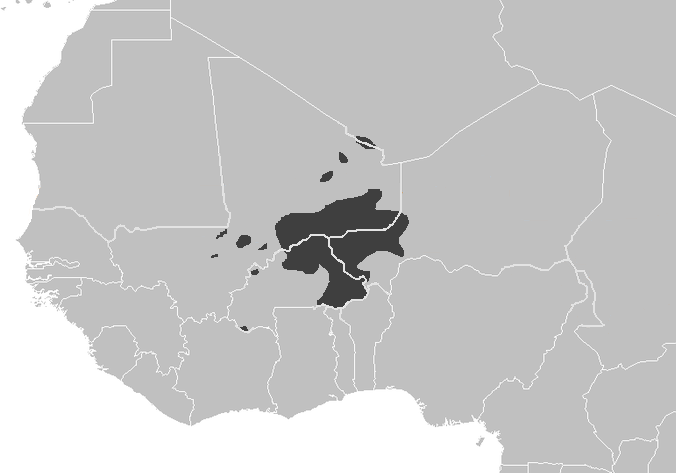
Tillabéri is not a forgotten periphery. The region forms the Nigerien flank of Liptako-Gourma, in close proximity to Mali and Burkina Faso. The paths connecting villages to markets traverse areas where the state often only controls the main routes, and even then intermittently. For a motorized column, the problem is elementary: an escort does not protect a route if it does not know the crossing points or the villages capable of signaling an armed presence. For civilians, a market day then becomes a risky operation.
The attack in Tillim occurs in an area already described as the epicenter of jihadist violence in Niger. ACLED's tracking reminds us that Tillabéri was, last year, the deadliest region in central Sahel for civilians. The United Nations also counted a significant share of registered displaced persons in Niger there. The exact figure of the latest massacre still needs to be consolidated: the authorities in Niamey had not published an independent detailed toll at the time of writing.
Local militias close one gap and open another
Faced with a lack of troops, Nigerien authorities have tolerated and then encouraged the formation of village self-defense groups. Their advantage is concrete: they know the paths, the families, and unusual movements. Their weakness is just as significant: they become identifiable targets, with variable protection and discipline. Eleven of their members are reported to be among the dead in Tillim. In February, 25 self-defense militia members had already been killed in several ambushes in Tillabéri, according to the same cross-section of local sources.
This dynamic creates a vicious circle. Each attack pushes new villages to arm themselves; each additional militia gives jihadist groups a motive and a target to punish communities suspected of cooperating with Niamey. The distinction between intelligence, retaliation, and social control becomes blurred. On the ground, this is not a border war: it is a battle to decide who can move, sell livestock, access the market, and convey information.
JNIM and ISSP fight each other without letting the state breathe
The regional situation adds a complication rarely visible from the capitals. According to an analysis published by Al Jazeera on November 13, JNIM — Jama’at Nusrat al-Islam wal-Muslimin, affiliated with Al-Qaeda — and the Islamic State Province in the Sahel, or ISSP, have been engaged in increasingly deadly clashes in northern Burkina Faso and border areas since September. Claims of casualties, sometimes numbering in the hundreds of fighters, remain largely unverified. However, ACLED has recorded about 320 clashes between the two organizations since the beginning of their rivalry, with over 2,200 deaths among fighters.
It would be tempting to see this as good news for the juntas of the Sahel States Alliance. An enemy busy fighting another enemy can indeed divert resources from the front against the army. But this reading overlooks geography. JNIM remains present in Mali, Burkina Faso, and Niger; ISSP exploits the same porous spaces and may seek new corridors when pressure increases. A weakened faction does not necessarily disappear: it can fragment, change areas, or intensify kidnappings and attacks against civilians.
The promise of a regional force does not yet protect the markets
Burkina Faso, Mali, and Niger have announced a unified force of 5,000 men. This is an important political signal following their break with ECOWAS and the withdrawal of several Western partners. It is not yet a demonstrated operational capability. A regional force must share intelligence, maintain units on the ground, and protect routes over time; it is not measured solely by the announced number of soldiers.
The tragedy of Tillim precisely exposes this deficit. Forces may retake a post or conduct a one-off operation, but if residents cannot reach Téra without reliable escort, territorial control remains theoretical. Armed groups do not need to hold every village permanently. They only need to make movements unpredictable, tax flows, and punish those who speak out.
The toll of 37 dead is attributed to unidentified assailants; any attribution to JNIM or ISSP remains, at this stage, to be confirmed.
The next alert will likely not come from a major announced battle. It will come from a secondary road, a relocated market, or a village that suddenly stops signaling its movements. As long as Niamey cannot secure the corridors between Tillim, Téra, and the Malian and Burkinabe borders, Tillabéri will remain the point where Niger's political map meets the reality of the operational theater.
Sources
On November 12, an ambush in Tillabéri, Niger, resulted in the deaths of 37 civilians, including 11 members of a local self-defense group. The victims were attacked while traveling to the weekly market in Téra. The assailants have not been identified, and the region is known for its ongoing jihadist violence.
- 37 civilians killed in an ambush in Tillabéri, Niger
- Victims included 11 members of a self-defense group, 7 women, and 20 men
- Attack occurred while civilians were traveling to a market
- Assailants remain unidentified
- Tillabéri is a hotspot for jihadist violence in Niger