
Italy's 5031 APKWS for the Eurofighter will solve the drone problem cheaply in 2026 — but not European
 Dr. Klaus Weber
Italy's 5031 APKWS for the Eurofighter will solve the drone problem cheaply in 2026 — but not European
5,031 guidance sections for 364 million dollars sound like a leap in efficiency. That is exactly what is behind the American export approval for Italy's air-launched APKWS-II kits from August 21. From a classic NATO perspective, the logic is compelling: If European Typhoon jets can shoot down slow drones in the future with modified 70-millimeter rockets instead of expensive AMRAAM missiles, the interception costs will drop dramatically. However, from a European industrial policy perspective, the real message is different. Italy is not buying its way out of dependence. It is buying deeper into an American solution architecture.
A cheap interception layer for an expensive problem
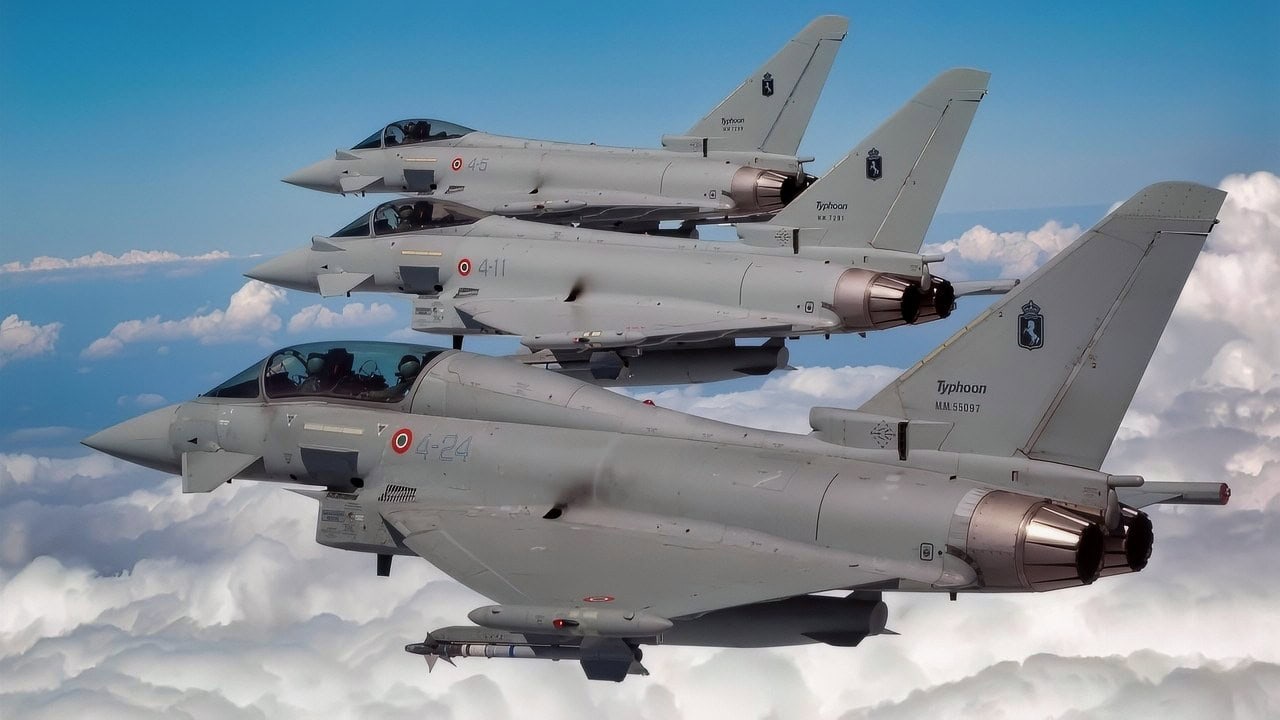
The American State Department has approved the potential sale of 5,031 WGU-59B/B guidance sections, LAU-131 launch rails, warheads, rocket motors, and logistical support. The crucial point is not just the quantity, but the function. APKWS transforms unguided rockets into precise, comparatively inexpensive air-to-air interceptors against drones and other slow targets. Defense News points out that such an upgraded shot can cost less than 100,000 euros, while an AMRAAM is roughly several times more expensive. This cost asymmetry has become central: Russia and Iran-aligned actors have been forcing Europe for months to waste very expensive defense resources on very cheap targets.
This is precisely where the operational appeal lies for Italy. The Aeronautica Militare is already regularly conducting NATO airspace protection and faces the same banal but uncomfortable calculation as other European air forces: A Typhoon shooting down a cheap drone with a high-quality air-to-air missile gains tactically but loses fiscally. Therefore, a second, cheaper interception layer is not a luxury but a matter of sustainability.
London shows why Rome is now following suit
The real pace-setter for this decision is not Italy, but the United Kingdom. The British Ministry of Defense reported back in May that RAF Typhoons had transitioned the system to operations in the Middle East within less than two months after tests in March and air-to-air shooting in April. This speed is politically more important than the technology itself. It shows that NATO air forces are no longer working on whether cheap drones are a structural problem, but only on how quickly they can retrofit their existing combat aircraft for it.
This is attractive for Rome because it is institutionally low-risk. There is no need to develop a new interceptor, establish a European program, or engage in a lengthy burden-sharing debate. One integrates an existing US product onto an existing European jet. This is perhaps the purest form of today's European defense reality: sovereignty through integration, not through construction.
The problem is not firepower, but ownership
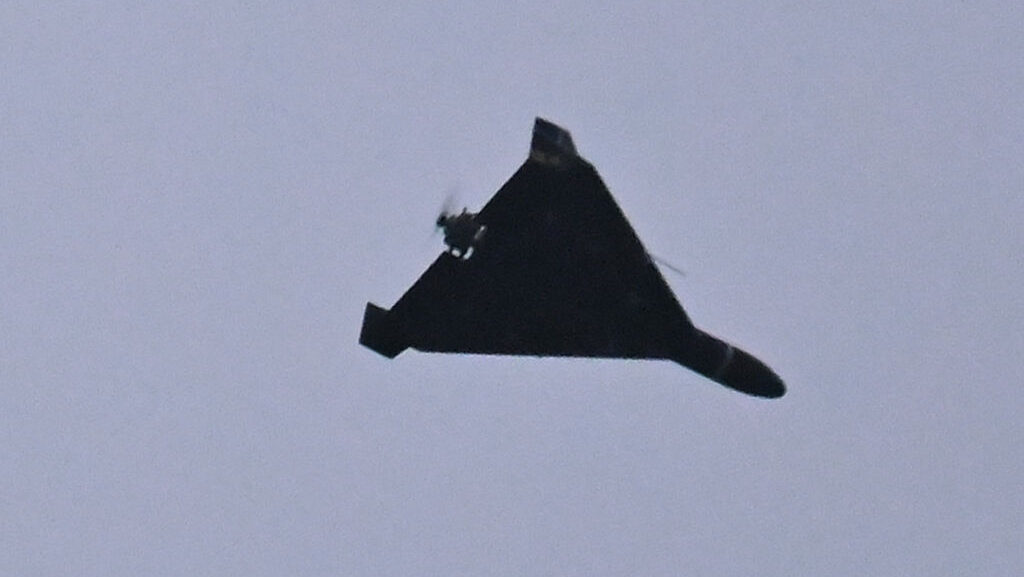
Precisely for this reason, the procurement is strategically ambivalent. The US announcement sells the deal as a contribution to Italy's homeland defense and to NATO Integrated Air and Missile Defense. This is formally correct. However, strategically, it obscures the crucial question: Who controls the industrial and technological key position of this new interception layer? The answer is not Rome, not Brussels, and not a European consortium, but BAE Systems in New Hampshire within an American-approved Foreign Military Sales framework.
Europe is not creating its own standard solution for the cheap drone war; it is importing one. This is not a semantic difference. Whoever controls the guidance section, the interfaces, the documentation, and the export approval also controls the pace at which a tactical lesson becomes a scalable capability. This is crucial in an area that could quickly scale to large quantities.
One could phrase it positively: Italy is quickly closing a capability gap. One could also phrase it more honestly: Europe is responding to the continent's cheapest air threat once again with an American supply chain. This is not a scandal, but it is a strategic statement.
A Eurofighter with US kit remains a non-European system
This is the real Weber question. The Eurofighter is often regarded in Berlin, Rome, and London as a European sovereignty carrier. However, as soon as the mission shifts from classic air combat to mass drone defense, it becomes evident, especially on the munitions side, how limited this sovereignty is. The jet is European, but the inexpensive solution for the current threat type is American-licensed, American-supplied, and framed politically by the Americans.
This repeats a familiar pattern that has already been observed with Patriot, F-35, and other programs. Europe is allowed to integrate, configure, and finance. The actual leverage position remains elsewhere. The military argument for APKWS is strong. The industrial policy argument for Europe is weak. Moreover, the more successfully European air forces operationalize this interim solution, the greater the political pressure will be not to develop an alternative of their own. Efficiency can create integration pressure, but it can also cement a lack of innovation.
Italy's purchase is rational — and precisely for that reason uncomfortable
Rome is therefore not acting incorrectly. On the contrary: Given the growing drone threats, it would be almost negligent not to seriously consider a more cost-effective interception option for the Typhoon. But rationality at the national level does not solve the European structural problem. It can even exacerbate it. If the UK is already operationally using the system and Italy is now following suit, a NATO standard is effectively being established from the bottom up before there has even been a serious European debate about its own industrial solution.
The uncomfortable point is therefore: Italy's potential 5,031 APKWS will undoubtedly make the Eurofighter more useful in 2026. However, they will not make Europe more autonomous. The continent is learning once again to fight cheaper without learning to build for itself. This is the real contradiction of European air defense in the drone age. Europe is finally finding an affordable answer to cheap threats — but again only by preserving the most expensive form of dependence, namely technological.
Italy is acquiring 5,031 American APKWS-II kits to enhance its Eurofighter jets' capabilities against drones by 2026. This decision follows U.S. State Department approval and reflects a strategic shift towards American defense solutions amid rising drone threats. The cost-effectiveness of using APKWS over traditional missiles like AMRAAM is a key factor in this procurement.
- Italy is acquiring 5,031 APKWS-II kits for Eurofighter jets.
- The U.S. State Department approved the sale on August 21.
- The cost of intercepting drones with APKWS is significantly lower than using AMRAAM missiles.
- The acquisition reflects Italy's deeper integration into American defense solutions.
- The move is seen as a response to increasing drone threats in Europe.