
Italy's GCAP spending rises to 875 million euros in 2026 — while Panther and Lynx decline
 Dr. Klaus Weber
Italian GCAP Spending Rises to 875 Million Euros in 2026 — While Panther and Lynx Decline
Italy is expected to spend 875 million euros on the British-Italian-Japanese GCAP fighter jet in 2026. The previous year's plan allocated only 275 million euros for this purpose, while 625 million euros were spent in 2025. At the same time, funding for the two central Italian army programs is decreasing to 177 million euros — down from 281 million the previous year and a prior plan of 425 million. These figures from the delayed Italian defense budget are more than just a shift within a budget. They show how Rome is financing its industrial future by allowing its current land forces to languish.
GCAP Politically Prioritized
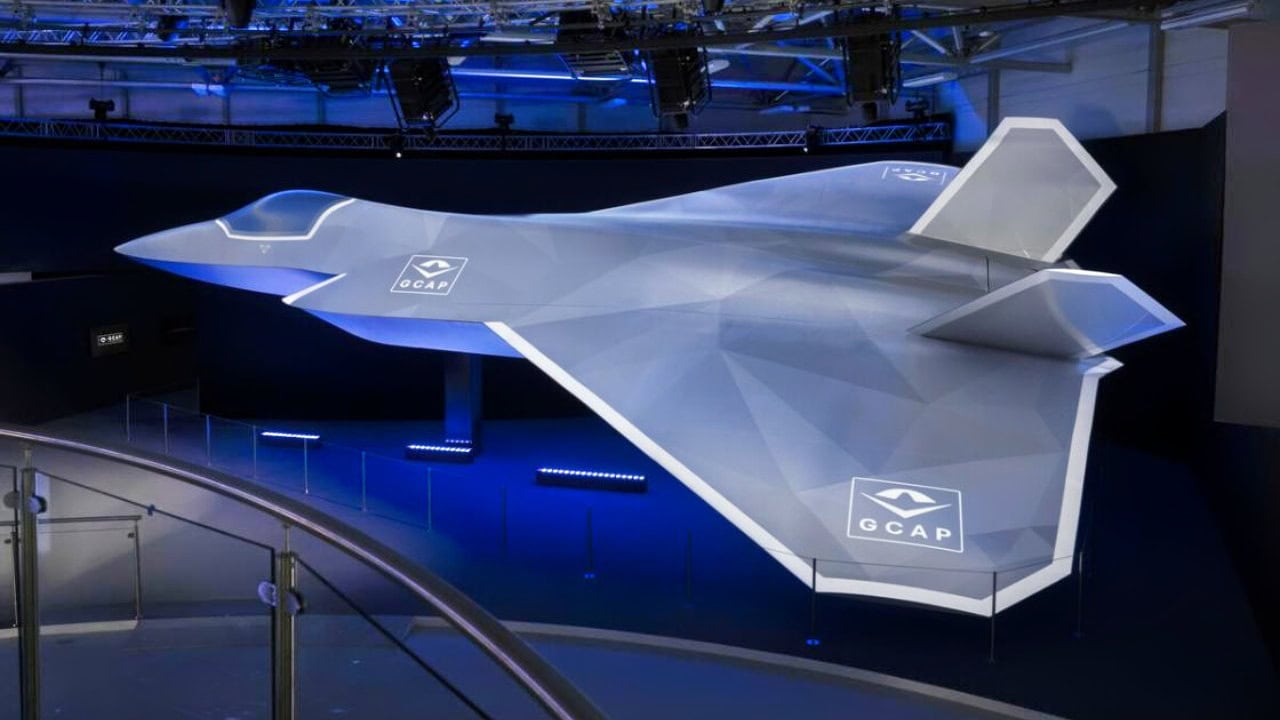
The Global Combat Air Programme aims to lead Italy, the United Kingdom, and Japan into a joint sixth-generation fighter aircraft. In July, the national industrial consortia received a development contract worth £4.6 billion for the next 18 months. Italy is participating through Leonardo; however, the political value of the program extends far beyond the individual platform. GCAP promises access to advanced sensors, networked combat management, and unmanned companion aircraft. For Rome, it is therefore not just a procurement project but a ticket to the future European and Indo-Pacific aerospace industry.
However, the new budget approach of 875 million euros is not simply the result of a maturing program. It is more than three times higher than its own previous forecast for 2026. This indicates a political acceleration of payments after the partners finalized the development contract in the summer. For 2027, the ministry plans 696 million euros — less than in 2026, but still significantly more than in previous plans. The message to London and Tokyo is clear: Italy wants to remain in the core team and secure its industrial position.
Panther and Lynx Bear the Opportunity Costs
The price of this priority is visible in the army. Italy is planning a heavy vehicle package worth around 23 billion euros in collaboration with Rheinmetall. This includes 1,050 Lynx infantry fighting vehicles and 272 Panther main battle tanks; additionally, upgrades for the aging Ariete fleet are planned. According to the current budget document, however, these three lines will only be funded with 177 million euros in 2026. While a jump to 872 million euros is planned for 2027, a shift does not equate to delivery. A vehicle that is not ordered, produced, and integrated today does not strengthen the brigade simply because its funding appears in a table for the next year.
Defense Minister Guido Crosetto also announced in July an 18 percent cost reduction for the vehicle program. This could be a realistic adjustment to Italy's budget constraints. However, it could also mean that quantities, equipment, or schedules need to be renegotiated. This is particularly problematic for heavy land forces. A tank is not just a platform but part of a chain of spare parts, recovery vehicles, ammunition, training, drone defense, and tactical reconnaissance. Cutting back on this chain does not create a cheaper capability but rather a smaller and slower deployable force.
The F-35 Reinforces the Pattern
The F-35 program also shows that Italy's aviation priorities come at a cost. The procurement of ultimately 115 aircraft will cost around 782 million euros in 2026 — less than the 961 million expected in the previous year's plan. Together with GCAP, the modern combat aircraft fleet thus ties up significant resources before the funding for the army program even stabilizes. Italy is trying to participate simultaneously in the American F-35 architecture and the European or trilateral GCAP future.
Strategically, this dual approach is understandable. The F-35 provides readily available stealth and alliance capabilities; GCAP is intended to secure technological sovereignty and industrial value creation in the long term. But two air combat systems do not automatically solve the problem that Italy lacks sufficient protected mobility, fire support, and sustainment on the ground. The question is not whether GCAP is important. The question is which capability will actually be missing in 2035 if the land forces are deferred to the next budget round today.
Industrial Policy Does Not Replace Military Planning
The timing exacerbates the contradiction. Ahead of the Italian parliamentary elections next year, Giorgia Meloni's government is under pressure from coalition partners, the opposition, and a growing protest movement. At the same time, resistance to arms deliveries to Ukraine is increasing. Large programs with visible industrial jobs are politically easier to defend than years of spending on readiness, maintenance, and ammunition stocks. GCAP has a clear national narrative: high technology, export opportunities, and a seat at the table with major partners. A spare parts depot or a trained tank grenadier does not possess this symbolic power.
This is precisely where the European lesson lies. NATO needs not only national defense budgets but also available units with robust logistics chains. A future combat aircraft can broaden Europe's industrial base; however, it cannot fill a gap in heavy brigades. This is particularly relevant for the EU, as joint programs are often evaluated based on industrial participation, while military availability takes a back seat. A project can be integrated into Europe and still be militarily too late.
The Italian Decision is Rational and Risky
Rome is not acting irrationally. GCAP is a real window for industrial participation, and a withdrawal would likely push Italy permanently into the role of a supplier. The delay in the FCAS project with France has also increased the value of alternative partnerships. However, rationality at the program level can create irrationality at the military level. If each ministry protects its strategic future without securing the overall mass of available capabilities, a modern arsenal with old gaps emerges.
Italy's budget figures therefore reveal a fundamental European problem: defense spending is increasing while the order of capabilities is determined politically and industrially rather than militarily. GCAP may be the right aircraft for the 2030s. But in 2026, Italy is also deciding whether its Panther and Lynx brigades will be combat-ready in time. More money for technology is no substitute for capability — and a later budget increase does not equate to a delivered military force.
Sources
- Defense News, November 13, 2026 — Italian defense budget 2026, GCAP, F-35, Panther, and Lynx approaches.
- Defense News, July 3, 2026 — Development contract worth £4.6 billion for GCAP.
- Air Data News, November 15, 2026 — Debate over a possible German accession to GCAP.
Italy is set to increase its defense budget for the Global Combat Air Programme (GCAP) to €875 million in 2026, while funding for the Panther and Lynx programs will decrease to €177 million. This shift reflects Italy's strategic focus on advanced air capabilities, despite concerns over reduced funding for land forces. The F-35 program will also see a budget of €782 million, indicating a dual commitment to both American and European defense initiatives.
- Italy plans to spend €875 million on the GCAP program in 2026, up from €275 million the previous year.
- Funding for the Panther and Lynx programs will drop to €177 million in 2026.
- Italy aims to maintain its position in the GCAP program with the UK and Japan.
- The F-35 program will cost approximately €782 million in 2026, less than previously expected.
- The Italian government faces pressure to balance defense spending with political considerations ahead of elections.