
JNIM and ISSP gain northwest Nigeria — Kebbi becomes the front 2026
 Marie Dubois
JNIM and ISSP Gain Northwest Nigeria — Kebbi Becomes the Front in 2026
In Kebbi, in northwest Nigeria, the border does not resemble a line on a map. It is read in the paths that connect markets, the corridors of transhumance, and the forests where an armed unit can disappear before a patrol arrives. Since April 2026, the rivalry between Jama’at Nusrat al-Islam wal-Muslimin (JNIM) and the Islamic State Sahel Province (ISSP) has crossed the Malian and Burkinabe theater to reach the Nigerien regions of Tillabéri and Dosso, and then Kebbi State. This is not an invasion. It is harder to stop.
Two Groups, One Strategic Depth
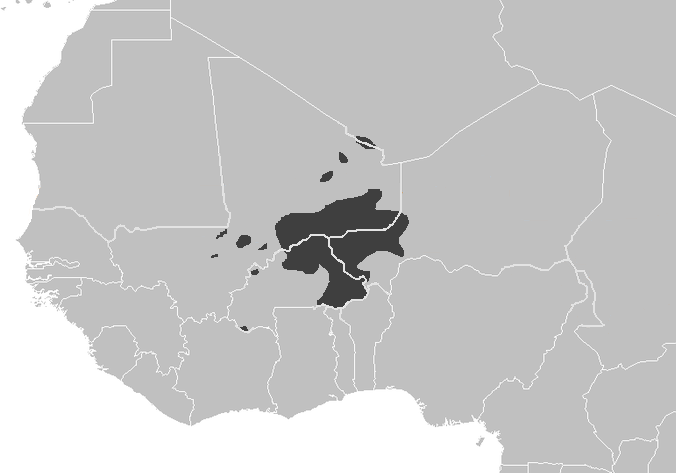
An article from the Africa Defense Forum published on November 11, relying on work from ACLED and an expert report submitted to the UN Security Council, describes the fighting in August and October in northeastern Burkina Faso as the deadliest clashes ever documented between the two organizations. Since the beginning of their open war in 2019, around 320 battles are said to have killed more than 2,200 fighters. The figures must be handled with caution — groups inflate their victories and armies minimize their losses — but the trend is hardly in doubt.
JNIM has the most significant territorial depth in Mali and Burkina Faso. Its model consists of negotiating with certain local leaders, taxing activities, and striking at the state or its allies. ISSP compensates for a narrower foothold with more rigid violence and high mobility. Yet both organizations seek the same thing: recruits, water points, markets, and roads capable of financing a sustainable presence.
Kebbi is Not an Isolated Objective
The progression towards Kebbi follows the logic of Liptako-Gourma. A fighter does not need to cross a border post to change operational zones. They follow traders, smuggling networks, and families that already cross the border. ISSP, from its depth in Ménaka, can transfer men, explosives, and methods to the west of Niger. From there, local relays offer a gateway to northwest Nigeria and to the bandit groups that already control certain forests.
This dynamic should not be confused with the existence of a single command between ISSP and the Islamic State West Africa Province (ISWAP), active around Lake Chad. The link is more practical than institutional: circulation of experience, personnel, and equipment, then adaptation to different terrains. For JNIM, preventing this junction is a matter of survival. Access to Kebbi would give ISSP a new recruitment pool and direct pressure on trade routes to central Nigeria.
The Jihadist War Does Not Protect Civilians
It would be tempting, in Abuja as in the capitals of the Sahel States Alliance, to see this rivalry as an opportunity. Two enemies wearing each other down would supposedly free up space for the armies. This is a reading from a staff room, not from the ground. When JNIM and ISSP dispute an area, villages pay twice: first to provide information or supplies, then to be punished when suspected of aiding the adversary.
The clashes also shift the violence. A defeated faction does not necessarily disappear. It fragments, changes its banner, or turns against the populations that refused to support it. In mining sites and cattle corridors in northern Burkina Faso, the destruction of a market or the assassination of a notable can serve as much to eliminate a rival as to impose a new tax. The border then becomes a selection zone: those who pay, those who collaborate, and those who leave.
The Nigerian Gamble Before 2027
The stakes go beyond Kebbi. According to analyses cited by the Africa Defense Forum, ISSP seeks to influence the bandit groups in northwest Nigeria before the Nigerian presidential election in January 2027. It is not necessarily about converting every gang leader to the ideology of the Islamic State. Limited cooperation — arms, intelligence, safe havens, taxation — would be enough to complicate the work of Nigerian forces on multiple fronts at once.
Abuja has ruled out any ceasefire with Boko Haram and ISWAP and promises to continue the offensive. This firmness is understandable, but it does not address the geographical problem. Nigerian units can retake a post or eliminate a cell. They cannot sustainably hold every path between Kebbi, Dosso, and Tillabéri with garrisons concentrated in the cities. A sweep operation without presence after the columns leave simply leaves a different market to the same predator.
What to Watch on the Ground
- the increase in attacks against markets and convoys in western Niger and northwest Nigeria;
- the appearance of fighters or explosives attributable to ISSP in the states of Kebbi, Sokoto, or Zamfara;
- agreements between jihadist factions and bandit networks, even without public allegiance;
- reprisals against communities accused of trading with the rival group.
Information remains incomplete. The reported losses in the August and October clashes are not independently verifiable, and no public evidence yet confirms that a unified structure links ISSP and ISWAP. But the operational direction is clear. The front is moving towards secondary roads, not towards the capitals. For Nigerian, Nigerien, and Malian forces, the next decisive battle may not be the capture of a base. It will be the ability to let a truck circulate without paying, without escort, and without disappearing between two posts.
Sources
JNIM and ISSP are engaged in violent confrontations in Kebbi, Nigeria, as they compete for control and influence in the region. Since April 2026, the conflict has escalated, with both groups seeking recruits and resources. The situation poses significant challenges for Nigerian forces, particularly with the upcoming presidential elections in January 2027.
- JNIM and ISSP have engaged in over 320 battles since 2019, resulting in more than 2,200 combatant deaths.
- The conflict has spread from Mali and Burkina Faso to Nigeria, particularly in Kebbi.
- ISSP aims to influence local bandit groups in Northwest Nigeria before the 2027 presidential elections.