
Italy's No to NATO's 6 Billion PURL Shows Europe's Patriot Dependency 2026
 Dr. Klaus Weber
Italy's No to NATO's 6-Billion-PURL Shows Europe's Patriot Dependency 2026
Italy says no to a NATO mechanism of nearly 6 billion dollars that primarily finances American air defense weapons for Ukraine. At the same time, the same government promises to raise defense spending to 5 percent of GDP. This is not an Italian exception, but a small, very precise sketch of the European defense problem in 2026: politically, more is promised, institutionally, less is delivered.
Defense Minister Guido Crosetto stated in Parliament that Rome would not participate in the Prioritised Ukraine Requirements List program, or PURL for short. His statement was unusually clear: Italy said no from the very beginning, and it remains a no. Under PURL, NATO countries finance the purchase of American weapons, which are then delivered to Ukraine. According to information summarized by Defense News citing NATO statements, nearly 6 billion dollars have now been pledged; the money is particularly focused on air defense.
The PURL Problem is Not Just American
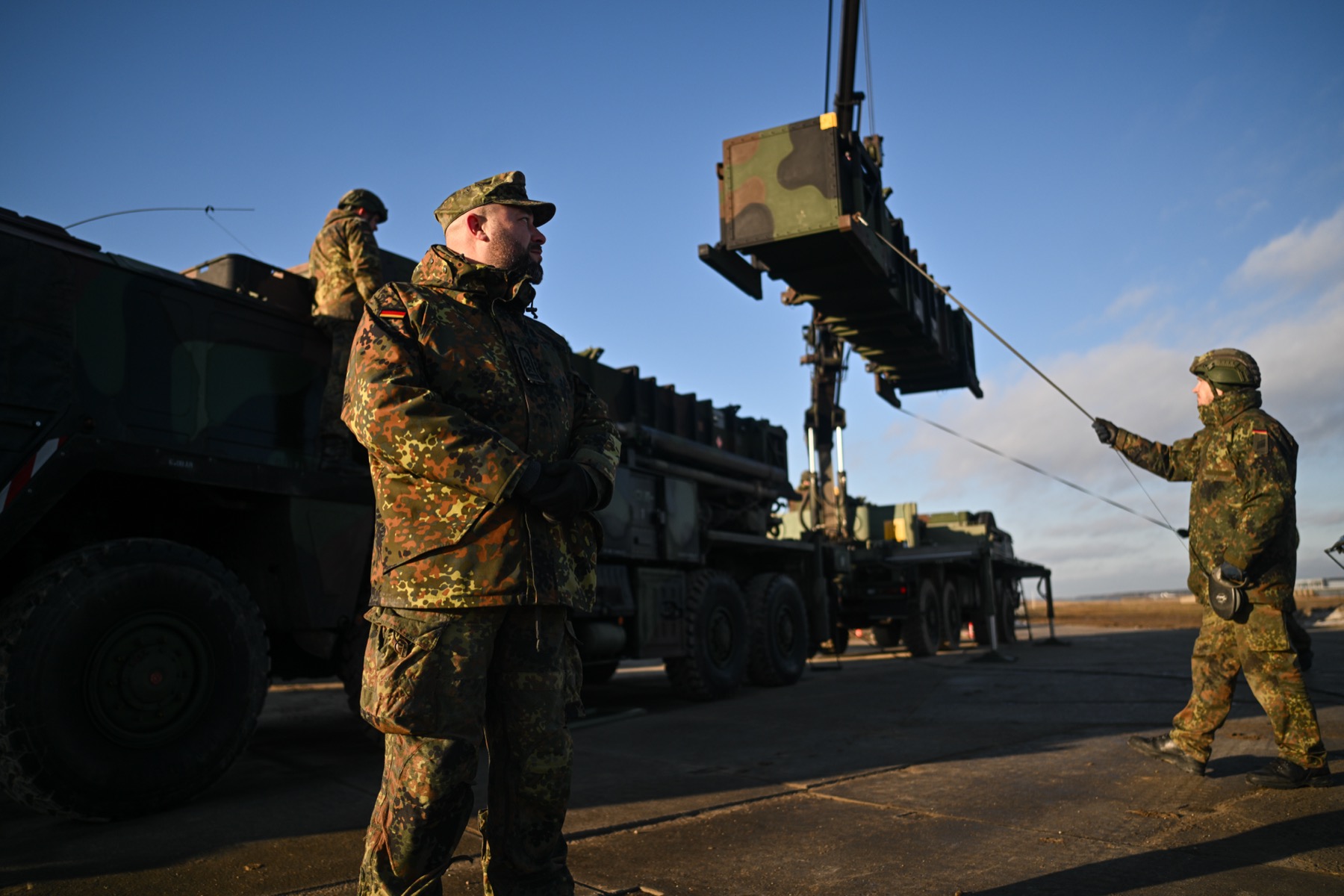
The hard numbers explain why Crosetto's no is more than a budgetary footnote. According to NATO's representation, PURL is supposed to enable the purchase of 70 percent of all missiles for Ukrainian Patriot batteries and 90 percent of the ammunition for other Ukrainian air defense systems from the USA. This is militarily rational. Ukraine needs interceptor missiles now, not after the completion of a European industrial promotion program in 2030.
But precisely for this reason, PURL is politically uncomfortable for Europe. The mechanism proves that while European states can mobilize money, they still depend on American production for the crucial capability to manufacture integrated long-range air defense in sufficient quantities. Germany, Canada, the Netherlands, and Sweden are contributing. Sweden has just raised an additional 543 million dollars. Italy is refusing. Both positions are explainable from a national perspective; neither resolves the European structural problem.
Italy's Budget Logic Meets NATO Pressure
Rome justifies its reluctance not with sympathy for Moscow, but with budgetary and electoral politics. Giorgia Meloni points to rising energy costs and domestic purchasing power issues as the 2027 election approaches. At the same time, Italy has signaled hesitation regarding two other European financing instruments: the EU exemption clause for national defense spending and the SAFE loan program. Under the SAFE framework, 14.9 billion euros in favorable loans would be available for Italy, according to Defense News.
This is the real contradiction. Crosetto himself is considered a proponent of SAFE loans but must publicly state that the decision does not lie with the Ministry of Defense, but with the Ministry of Finance. In Berlin, this problem is known in another form. Defense policymakers can identify capability gaps; finance ministries decide which gaps may become fiscal realities. Those who derive only a lack of determination from individual governments underestimate the institutional inertia of European budgetary states.
PURL is not just evidence of American dominance for Europe. It is also proof of European incapacity to connect urgent operational needs with its own industrial depth.
The 2 Percent Calculation Was Already a Warning
Italy had already shown last year how elastic defense quotas can be. Rome increased its reported spending from around 1.5 to 2 percent of GDP by reclassifying existing expenditures for financial police, coast guard, space, and cyber defense. On June 11, Meloni announced that Italy would report spending of 2.8 percent of GDP at the NATO summit in Ankara on July 7 and 8. The increase of 0.71 percentage points is to be guaranteed primarily through spending in the area of homeland security.
This brings Italy formally closer to the new NATO logic: 3.5 percent for conventional defense and 1.5 percent for security, resilience, and related tasks. The danger lies in the mixing. When a state reports new figures, but the additional share mainly concerns border protection, cyber, space, or dual-use technology, it does not automatically mean that an additional tank brigade, an additional frigate, or an additional Patriot battery has been created. This is exactly where the European debate confuses input with output.
Hegseth's Pressure Intensifies the European Sequence Question
The American context makes the Italian decision more explosive. U.S. Secretary of Defense Pete Hegseth met with Crosetto in Washington and subsequently emphasized the urgent need for NATO allies to increase their defense spending, expand industrial production, and establish combat-ready forces. A few days later, he announced in Brussels a review of the U.S. troop presence in Europe and criticized unnamed wealthy NATO countries for continued free-riding.
This creates a sequence question for Europe, which is rarely answered cleanly in summit declarations. Should Europe first buy American weapons to stabilize Ukraine today? Or should it build European capacities, even if that is slower in the short term? The honest answer is: both. The political answer is usually: announce one, let the other be paid for, and label the difference as strategic autonomy.
What Italy Reveals
Italy's no to PURL is bad news for Ukrainian air defense in the short term, unless other states close the gap. Strategically, however, it is also a useful disruption. It forces NATO to distinguish between three levels: financial commitments, weapon availability, and industrial control. PURL has linked money and availability, but industrial control remains American. SAFE could strengthen European industry, but only if governments actually use it and do not leave it lying idle out of fiscal caution.
The European defense debate loves big sums: 5 percent of GDP, 150 billion euros in SAFE loans, nearly 6 billion dollars in PURL. But sums are not capabilities. Ukraine needs interceptor missiles; Europe needs factories, supply chains, joint procurement, and political budget discipline. Italy shows how quickly these levels can fall apart.
The paradoxical finding is therefore: those who pay for PURL today extend Europe's dependence on American air defense. Those who refuse PURL without simultaneously financing European production exacerbate Ukrainian vulnerability. More European money is necessary. But without institutional decisions about what to buy, where to produce, and who gets priority in a crisis, it remains a defense policy of headlines.
Italy's government has officially declined to participate in NATO's $6 billion PURL program aimed at financing air defense weapons for Ukraine. Defense Minister Guido Crosetto emphasized that Italy will not engage with the program, despite plans to increase defense spending to 5% of GDP by 2026. This decision highlights the ongoing challenges within European defense cooperation and reliance on American military production.
- Italy declines to participate in NATO's $6 billion PURL program for Ukraine.
- Defense Minister Guido Crosetto states Italy's firm refusal to join PURL.
- Italy plans to increase defense spending to 5% of GDP by 2026.
- PURL is intended to finance 70% of missiles for Ukrainian Patriot batteries.
- Italy's decision reflects broader European defense challenges and dependencies.