
JNIM strikes Niamey airport in 2026 — 35 dead and a worrying signal for the Sahel
 Marie Dubois
JNIM strikes Niamey airport in 2026 — 35 dead and a worrying signal for the Sahel
On June 19, in Niamey, the Diori Hamani International Airport and the nearby Air Base 101 were targeted again. The Nigerien Ministry of Defense speaks of a thwarted incursion after several hours of fighting. The immediate official toll reports 13 dead on the Nigerien side, including 11 members of the defense and security forces and two civilians, four injured, 22 attackers killed, and about twenty suspects arrested. Added together, this closed theater of a few square kilometers already accounts for 35 dead.
The Group for Support of Islam and Muslims (JNIM, or GSIM in French), the Sahelian branch of al-Qaeda, claimed responsibility for the operation on Az-Zallaqa, its propaganda channel. The formula used — suicide attack against the airport and the adjacent military base — should be read with caution, as the claim does not replace a ground investigation. But it is enough to raise the operational issue: twice in less than six months, the airport complex of the Nigerien capital has been struck by competing jihadist organizations.
A target too important to remain symbolic
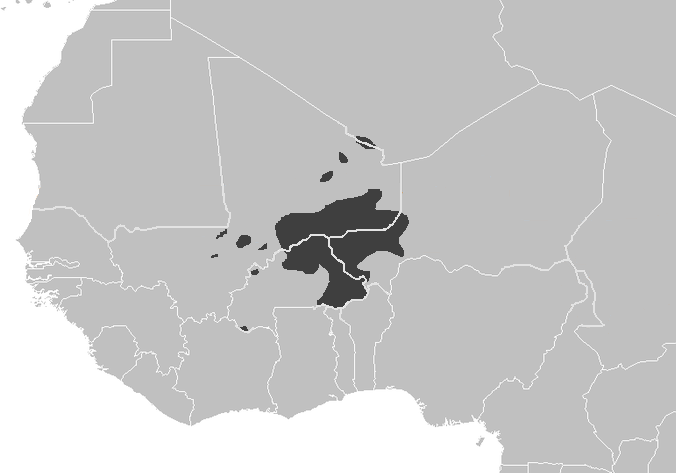
Diori Hamani is not just a simple civilian terminal. The site adjoins Air Base 101, which has long been central to air operations around Niamey, and today hosts sensitive infrastructures, including drone capabilities and command elements related to the Sahel States Alliance, the bloc formed by Niger, Mali, and Burkina Faso. It is also a major logistical point in a landlocked country, where the capital's airport remains one of the few entry points capable of quickly absorbing equipment, advisors, spare parts, and medical evacuations.
On the ground, striking an airport does not need to destroy planes to produce a military effect. It is enough to close access points, force a state of permanent alert, interrupt rotations, or impose a complete inspection of the surroundings. In a theater like western Niger, where the distances between Niamey, Tillabéri, Dosso, and the Burkinabe border already stretch reaction columns, a few hours lost securing the capital can weigh heavily elsewhere.
The psychological dimension is evident, but it is not the only one. JNIM chose a site where the sovereignty of the junta, air security, AES command, and Russian partnerships intersect. Even a thwarted operation allows the populations, military leaders, and diplomatic missions to be told that the capital is no longer out of reach.
The precedent of January changes the reading
On January 29, the same complex had already been attacked, this time by the Islamic State in the Sahel province (ISSP according to the English acronym), with significant damage and four soldiers injured according to the information available at the time. General Abdourahamane Tiani publicly accused France of being behind this first strike, an accusation rejected by Paris. This rhetoric mainly served to transform a security failure into a political battle.
The June attack makes this explanation much less useful. If JNIM does claim the operation, Niamey faces a more serious reality: the two major jihadist poles in the Sahel, al-Qaeda and the Islamic State, are testing the same strategic target. They do not necessarily cooperate. On the contrary, their rivalry may explain the repetition of attacks. When one group proves it can reach a symbol, the other has an interest in showing it can do just as well, or better.
Heni Nsaibia, an ACLED analyst cited by RFI, speaks of a parallel expansion of JNIM and ISSP and a competition for regional dominance. This phrase is dry, but it accurately describes what is seen on the map: administrative borders matter less than traffic corridors, local solidarities, seasonal tracks, and areas where the state patrols too rarely.
What the attack says about the defense of Niamey
An airport is defended in layers: upstream intelligence, monitoring of approaches, control of peripheral villages, barriers, fixed posts, mobile patrols, reaction capacity, and clear command. If the attacker reaches the base and imposes several hours of fighting, at least one of these layers has given way. It is too early to say which one. Public information does not yet indicate whether the group came through urban infiltration, via a road axis, through sleeper cells, or with opportunistic local support.
From experience, the difficulty is not only in holding the immediate perimeter. It is in controlling the depth. Niamey is a capital, but it remains connected to a geography of brush and tracks. To the west, the Tillabéri corridor leads to contact zones with Mali and Burkina Faso. To the east and southeast, the roads open towards Dosso and further into areas where trafficking and armed groups overlap. A force that only protects the airport fence is already too late in its response.
The official response claims that the airport has been secured and that air traffic has resumed. This is important to avoid panic. But the military criterion is not the reopening of the terminal. The criterion is the ability to prevent the next approaching team from finding another blind spot.
The junta facing its security contract
The Nigerien government justified its break with France and its rapprochement with Moscow with a simple promise: to regain control over security. However, the heart of this promise is not only in victory statements. It lies in the protection of places where the state concentrates its resources. When the capital's airport becomes a recurring target, the argument of military sovereignty loses its clarity.
The Russian partners, often presented as more suitable because they would not impose political conditions, do not automatically solve this problem. They can provide advisors, systems, sometimes firepower. They do not replace local intelligence, unit discipline, police-gendarmerie-army coordination, and the relationship with peripheral neighborhoods. In the Sahel, technology helps; it does not hold a village.
It should also be noted the issue of uranium. RFI reminds us that stocks related to disputes with Orano are located in the strategic environment of the airport. Even if the attack did not directly target this issue, its presence adds a layer of political vulnerability. An incident involving this type of cargo would immediately transform a jihadist operation into an international crisis.
The risk in the coming weeks
The immediate danger is not that JNIM will take Niamey. This scenario remains unlikely. The danger is more sober and realistic: a campaign of harassment against the symbolic nodes of the state, combined with more classic attacks in Tillabéri and on the axes towards Burkina Faso. The goal would be to force the junta to keep its best units around the capital while armed groups breathe elsewhere.
The next area to watch is therefore not just the fence of Diori Hamani. It is the villages, markets, bus stations, and tracks that form the outer ring of Niamey. If the Nigerien authorities do not take the initiative in this depth, every security declaration will have a short lifespan. In the Sahel, a base attacked twice is no longer an accident. It is an invitation that the enemy has learned to read.
JNIM conducted an attack on Niamey airport and the adjacent military base on June 19, 2026, resulting in 35 fatalities, including 13 Nigerien personnel. The assault involved a prolonged engagement with Nigerien forces, highlighting the vulnerability of key strategic locations in the Sahel. This incident marks the second attack on the airport complex within six months, indicating a troubling trend in regional security.
- JNIM claimed responsibility for the attack on Niamey airport.
- 35 total fatalities reported, including 13 Nigerien and 22 attackers.
- The attack involved a prolonged engagement with Nigerien defense forces.
- This is the second attack on the airport complex in less than six months.
- The incident raises concerns about the security of strategic locations in the Sahel.