
Italy's PURL-No 2026 Shows Europe's Patriot Dependency Despite 6 Billion Dollars
 Dr. Klaus Weber
Italy's PURL-No 2026 Shows Europe's Dependence on Patriot Despite 6 Billion Dollars
Six billion dollars have now been pledged for PURL. Italy is not paying a single euro. The real problem of European aid to Ukraine lies precisely in this difference: not the lack of solidarity formulas, but the inability to turn national budget decisions into a reliable military supply chain.
A No from Rome with Greater Significance
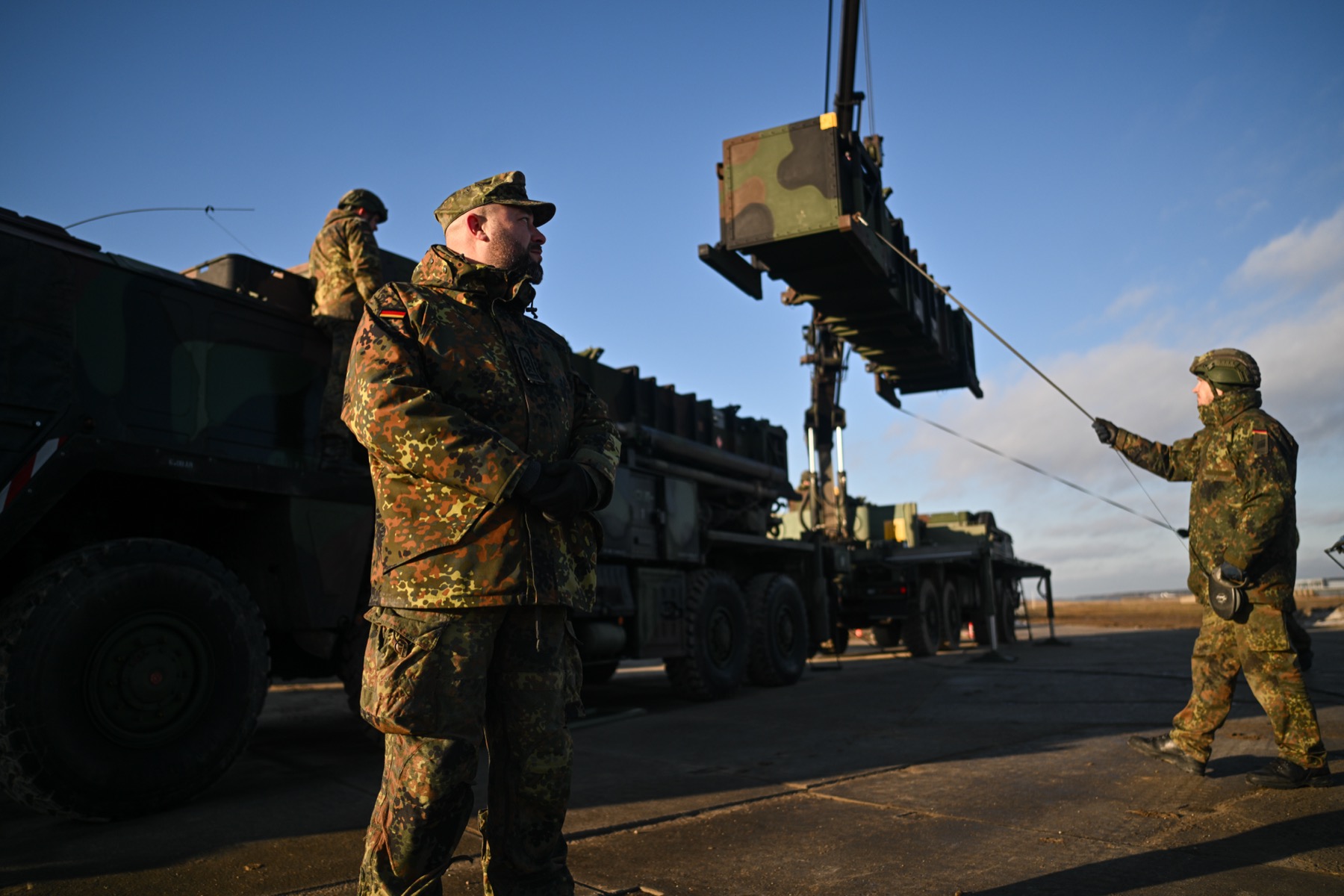
Italian Defense Minister Guido Crosetto has confirmed to Parliament in Rome that Italy will not participate in the NATO mechanism for the Prioritized Ukraine Requirements List. PURL is technically simple: SACEUR identifies urgent Ukrainian needs, the United States supplies from its industrial and military depth, and European and Canadian allies pay for the packages. Politically, it is less simple. It is a system that translates European willingness to pay into American firepower.
According to NATO, around 4 billion dollars have already been pledged for American equipment through PURL; Defense News reported on June 19 that pledges have now reached nearly 6 billion dollars, primarily targeting air defense. Two figures are particularly telling: According to NATO, PURL financed 70 percent of all missiles for Ukrainian Patriot batteries and 90 percent of the ammunition for other air defense systems. Anyone reading these figures should not first think of generosity. They should think of dependence.
Italy is therefore not simply a laggard payer. Rome reveals what many European governments would prefer to hide behind summit declarations: Ukraine needs ammunition, missiles, and spare parts at a pace that European industrial programs cannot deliver. That is why Europe buys American. But because these purchases must be nationally financed, each package remains politically vulnerable.
PURL is Not a European Production Strategy
The PURL model solves a short-term problem and enlarges a long-term one. In the short term, it is correct to finance American Patriot missiles, PAC-2/PAC-3 components, and other air defense means when Russia is attacking Ukrainian cities with ballistic missiles, cruise missiles, and drones. No European government can seriously claim that Kyiv should wait for a multi-year industrial build-up phase.
In the long term, however, PURL does not replace a production base. It is procurement, not sovereignty. The crucial industrial value creation, the final assembly of critical missiles, technical certification, and a large part of export control remain in American hands. Europe can pay the bill, but it does not control the tap from which the supply flows. This is not a moral accusation against Washington. It is a sober description of the structure.
This structure also explains why the Italian decision is more than just domestic politics. When a large EU and NATO state opts out, it does not just reduce the total of a fund. It reduces the predictability. For Ukrainian air defense, predictability is almost as important as money. A Patriot battery is only strategically relevant if the missile supply is calculable over months. Individual packages generate headlines; ammunition chains generate deterrence.
Italy's Budget Reality Contradicts NATO Rhetoric
Rome has pledged to NATO to move towards the 5 percent target: 3.5 percent of GDP for conventional defense and up to 1.5 percent for security-related expenditures. At the same time, Italy shows how elastic such categories can become. The government reported a jump from about 1.5 to 2 percent of GDP by 2025, among other things by including expenditures for tax police, coast guard, cyber, space, and other security-related areas. On June 11, Giorgia Meloni even announced 2.8 percent for 2026 for the NATO summit in Ankara. A significant part of this increase is supposed to come from homeland security, border protection, cyber, space, and dual-use technology.
This is legal within the new political logic. But it does not answer the military question. A statistically improved NATO quota does not fire an Iskander missile. It does not replace a PAC-3 MSE, a SAMP/T-Aster-30, a NASAMS-AMRAAM, or an IRIS-T-SLM missile. The NATO definition allows for many expenditures, and the 1.5 percent component for resilience is deliberately broadly defined. But the broader the definition becomes, the weaker its statement about combat power.
Here, Weber's old distinction between capability and capacity becomes evident. Italy can look better in the table without providing an additional missile in the Ukrainian air defense chain. This is not an Italian special problem. It is a European pattern.
SAFE Only Helps if Governments Use It
The EU offers up to 150 billion euros in loans for joint procurement through SAFE. Italy had reserved 14.9 billion euros but now wants to call up only four to five billion, or renegotiate the mechanism politically, according to Euronews reports. Already in May, Defense News reported that Rome could forgo up to 27 billion euros in potential defense financing along with the national exemption clause. Meloni's argument is politically understandable: Energy prices, purchasing power, and the 2027 election are more immediate for Italian voters than Ukrainian air defense packages.
That is precisely why the case is important. SAFE is a credit instrument, not a defense ministry. It creates liquidity but no political obligation. It can facilitate joint procurement, but it does not force any government to set unpopular priorities. Anyone who believes that an EU financial vehicle can neutralize national budget conflicts has not been paying close enough attention to European defense policy since Maastricht.
There is also an industrial conflict of interest. SAFE is supposed to favor European and Ukrainian companies and expand joint procurement. PURL finances American systems. Both instruments are plausible in their logic. Together, however, they reveal the division of the European approach: For urgency, one buys in the USA; for autonomy, one writes EU credit programs. Between both levels, the bridge is missing.
The American Review Increases Pressure
On June 18, U.S. Secretary of Defense Pete Hegseth announced a review of the American troop presence in Europe lasting up to six months in Brussels. At the same time, he threatened consequences for allies who continue to free ride from the American perspective. One does not have to like Hegseth's tone to recognize the core of the argument. Washington wants Europe to take on more responsibility. But Europe's quickest way to support Ukraine leads precisely through American stocks and American industry.
This is the paradox: The more the USA pressures Europe towards independence, the more visible it becomes how little independence Europe possesses in critical ammunition classes. The EU points to 75.2 billion euros in military support for Ukraine and over 100 billion euros in expected procurement expenditures for 2025. These are impressive sums. But if 70 percent of the Patriot missiles are financed through a U.S.-based PURL mechanism, the crucial question is not how much Europe spends. The question is, what scarcity can Europe resolve itself.
What Must Be Learned from Italy
Italy's no should not be dismissed in Berlin, Paris, and Brussels as a moral failure. It is an early warning signal. If support for Ukraine relies on voluntary national contributions, American production lines, and politically contested budget categories, no lasting security architecture will emerge. A series of ad-hoc packages will be created that must be renegotiated each time.
Germany, Canada, the Netherlands, and Sweden can partially fill Italy's gap in the short term. Sweden has just contributed an additional 543 million dollars to PURL. But this also confirms the finding: The European order works as long as individual governments are willing to fill the gaps of others. This is not an institution. This is luck with protocol.
Europe needs PURL because Ukraine cannot wait. However, Europe must not confuse PURL with strategic autonomy. The uncomfortable truth is: More money is necessary, but not sufficient. Without binding multi-year ammunition contracts, European licensed production for critical air defense missiles, and a clear separation between statistical NATO quotas and real combat power, every new billion will repeat the same question.
Italy has said no. The problem is not just this no. The problem is that Europe's air defense architecture is still built in such a way that a national no makes an entire Ukrainian supply chain politically palpable.
Italy's government confirmed its refusal to participate in NATO's Prioritized Ukraine Requirements List (PURL) for 2026, despite 6 billion dollars pledged for military aid. This decision highlights the challenges in European defense logistics and the dependency on U.S. military supplies. Italy's defense spending remains politically sensitive, with significant implications for Ukraine's air defense capabilities.
- Italy has pledged no financial support to the NATO PURL mechanism for Ukraine.
- Approximately 6 billion dollars have been pledged for PURL, primarily for air defense.
- 70% of missiles for Ukrainian Patriot batteries are financed through PURL.
- Italy's defense spending is politically vulnerable and does not contribute to Ukraine's immediate military needs.
- The EU's SAFE mechanism offers loans for joint procurement, but Italy is hesitant to utilize it.