
J-10CE Lands in Uzbekistan: 2026 Chinese Military Industry Opens Up Central Asian Fighter Jet Market
 Li Minghui
J-10CE Lands in Uzbekistan: China’s Military Industry Opens Up the Central Asian Fighter Jet Market in 2026
On August 30, Uzbekistan's national television aired footage of a J-10CE taxiing on the runway as part of its coverage of the 35th anniversary of independence. For those who have been closely following Chinese fighter jet exports, this shot carries more weight than any airshow display. For over a year, there have been rumors that Tashkent had placed orders for Chinese fighter jets, but an official confirmation had been lacking. Now, it can at least be said that the first batch of deliveries is basically confirmed.
A Brief Clip Turns Rumors into Reality
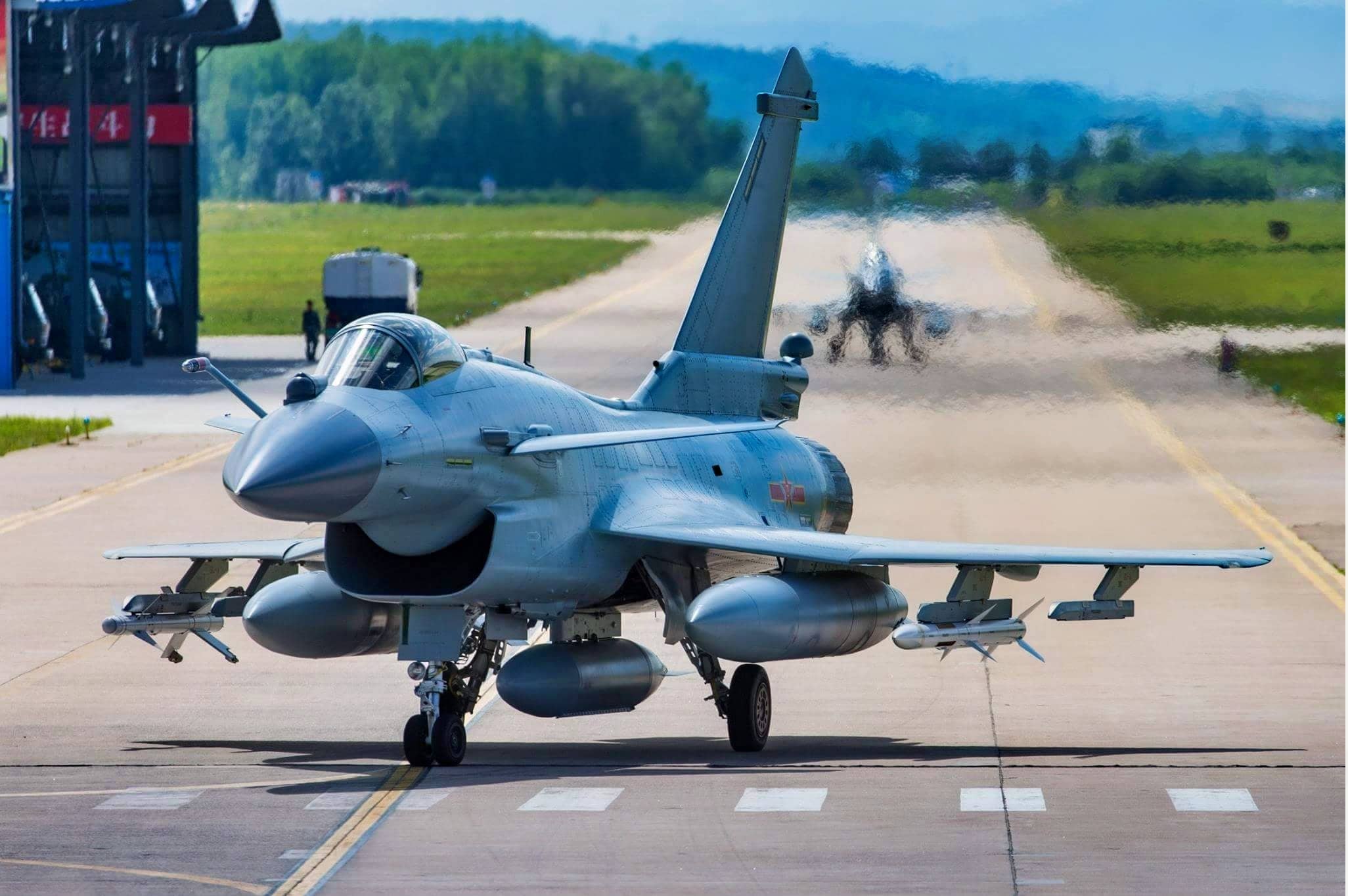
Multiple foreign media outlets, based on the television footage and information previously disclosed by aviation observers, have concluded that Uzbekistan has received its first batch of J-10CEs. The commonly cited figures suggest an initial batch of 6 aircraft, with a total procurement scale of 24 aircraft and a contract value of approximately $1 billion. However, these details still lack formal confirmation from the Uzbek side and can only be regarded as high-confidence external assessments. Notably, this time Uzbekistan did not showcase models, posters, or speeches from leaders, but instead allowed the actual aircraft to appear on national television, indicating that it no longer treats the procurement as a sensitive rumor.
Why Uzbekistan?
Interestingly, the real analysis needed is not whether the J-10CE has been sold, but why it has landed in Central Asia first. The Uzbek Air Force has long relied on Soviet-era platforms, with an aging fleet, difficulties in upgrades, and increasingly fragile logistics chains—this is not new. What is new is that, against the backdrop of Russia still being viewed as the traditional security provider in Central Asia, Tashkent has chosen not to continue patching up the Russian system but instead has placed part of its hopes for upgrading its advanced tactical air force on China. In simple terms, this is not just about replacing a batch of aircraft; it is about changing the supply chain.
From a product perspective, the selling points of the J-10CE are not mysterious:
- An active electronically scanned array radar is now the entry ticket for this class of export fighter jets, no longer just a bonus.
- Equipped with the PL-15E long-range air-to-air missile, with a publicly stated export range of about 145 kilometers, which is sufficient to form a regional air combat deterrent for Central Asian countries.
- Single-engine, single-seat, multi-role configuration makes procurement and maintenance costs more controllable compared to twin-engine heavy aircraft.
- Chinese military industry is more willing to package training, ammunition, and follow-up support together, which is often more attractive than paper performance.
This is also a point that Li Minghui has always emphasized: military trade is never a beauty contest. Many countries purchasing fighter jets do not first look at who is the most advanced, but rather who can deliver on time, whose missiles can keep up, and whose maintenance costs won’t break the budget. Uzbekistan's choice this time essentially follows this logic.
For China’s Military Industry, the Significance of This Order Is Not Just About 6 Aircraft
If one only focuses on the number of initial deliveries, this news does not seem exaggerated. Six aircraft cannot change the air power landscape in Central Asia, let alone immediately shake the existing advantages of Russian equipment. However, from an industrial and market perspective, this step carries significant weight. The most important overseas model for the J-10CE previously was Pakistan, but Pakistan's uniqueness is too strong, with both geopolitical ties and a long-standing military cooperation foundation. Uzbekistan, on the other hand, is a more typical third-party customer. If such customers begin to accept Chinese fourth-and-a-half generation fighter jets, then Chinese military exports will have taken a step from “politically directed sales” to “replicable regional market breakthroughs.”
There is also a background that is easily overlooked. After the 2025 India-Pakistan air conflict, the international attention on the J-10 series and PL-15 has significantly increased. Even if some claims about the results are still controversial, market psychology has already changed. Many buyers will not wait for all details to be publicly verified before making judgments; they care more about one question: does this system have real combat endorsements, does it have sustained production capacity, and has anyone already made a purchase? Uzbekistan's public appearance of the J-10CE essentially provides affirmative answers to the last two questions.
What to Watch Next Is Actually the Support Chain
However, I believe it is still too early to interpret this as “Chinese fighter jets fully taking over the Central Asian market.” What truly determines the quality of this transaction is not those few seconds on television, but whether we can see subsequent supporting information in the next six months, such as ammunition delivery, pilot training, ground support systems, material supply, and the timeline for the second batch. If these aspects are delayed, it will resemble a high-profile display; if they are gradually realized, then Chinese military industry will have truly penetrated the inertia network formed by decades of Russian equipment.
Therefore, the most important aspect of this news is not that the J-10CE has finally been exported to a second country, but that Chinese military industry has the opportunity to establish a sustainable model in the high-end fighter jet market in Central Asia for the first time. To truly determine whether this is a turning point, it may be worth focusing on a more practical question: six months from now, will there be more than just the aircraft itself publicly appearing, but also a complete Chinese-style support system operating around the J-10CE?
Uzbekistan received its first batch of six J-10CE fighter jets from China on August 30, 2026, marking a significant shift in its military procurement strategy. The total order includes 24 aircraft valued at approximately $1 billion. This move indicates Uzbekistan's transition from reliance on Russian military equipment to Chinese systems, reflecting a broader change in regional defense dynamics.
- Uzbekistan has received its first batch of J-10CE fighter jets from China.
- The initial delivery consists of 6 aircraft, with a total order of 24 aircraft.
- The contract value is approximately $1 billion.
- This marks a significant shift in Uzbekistan's military procurement strategy away from Russian equipment.
- The J-10CE is equipped with advanced radar and long-range missiles, enhancing regional air combat capabilities.