
J-20, J-16, J-10C "Three Dragons" Gather, Drawing Swords in the Clouds!
Recently, a certain unit of the Air Force organized J-20 "Mighty Dragon," J-16 "Hidden Dragon," and J-10C "Fierce Dragon" three main fighter jets to conduct cross-day-and-night air combat training focusing on multiple subjects such as situational sharing, coordinated strikes, and electromagnetic countermeasures. The "Three Dragons" gathered and showcased their prowess in the clouds.
As the tower issued commands, multiple types of fighter jets taxied out in succession and took off, leading to intense air combat.
Radar locking, evasive maneuvers, and cross-positioning were performed in turn, with the offensive and defensive exchanges between both sides changing rapidly: the red side's J-16 and J-10C alternated in providing cover and quickly occupied positions, while the J-20 waited for the right moment to launch a surprise attack; the blue side employed different tactics, leveraging the stealth advantage of the J-20 to lure the enemy and conduct covert reconnaissance, while the J-16 and J-10C feigned movements to disrupt and counter the opponent, resulting in a back-and-forth contest with victories on both sides. This training exercise centered on "integrated advantages and collaborative victory," breaking down the barriers of single-type training and exploring multi-type mixed tactics through real combat scenarios.
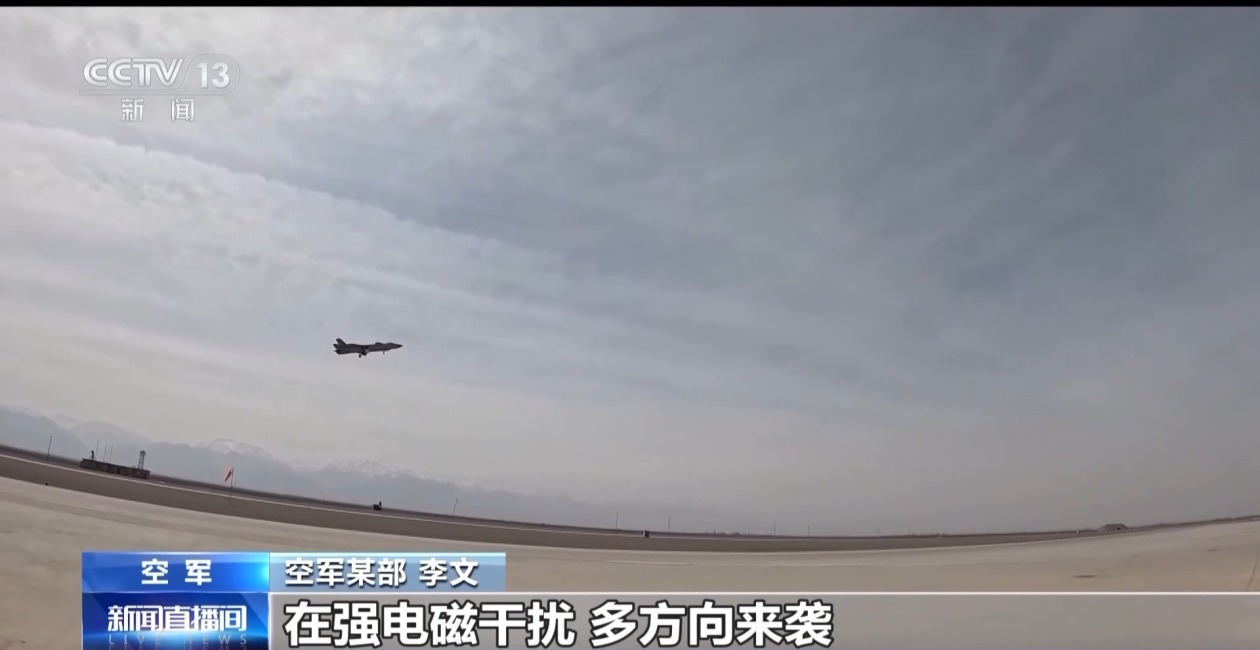
Air Force Unit Li Wen: This air combat confrontation had no fixed script and was conducted entirely according to the rhythm of real combat. In the context of strong electromagnetic interference, multi-directional attacks, and on-the-spot adjustments, we further streamlined the collaborative links, allowing the three types of fighter jets to fully utilize their performance characteristics, achieve complementary advantages, and enhance firepower, gradually transforming the advantages of a single platform into collaborative victory capabilities.
After the confrontation, both sides' pilots gathered in the debriefing room to review flight data, tactical maneuvers, and collaborative actions, discussing tactical methods and focusing on confrontation issues to explore targeted improvement plans, effectively addressing practical challenges such as multi-type collaborative command and sequential fire strikes, continuously strengthening the deep transition from "taking off together" to "fighting together."
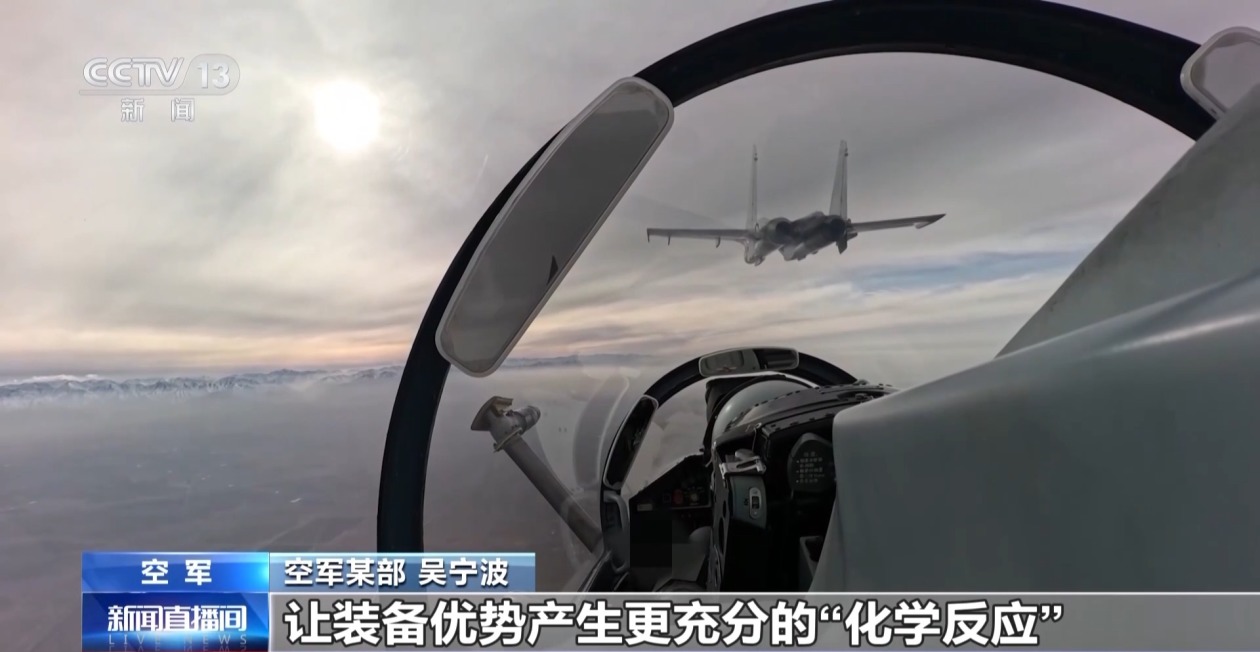
Air Force Unit Wu Ningbo: From single-type training to multi-type joint training, we have gained a deeper understanding that future battlefields will definitely involve systemic confrontations; there is no strongest single aircraft, only more perfect advantage combinations. Moving forward, we will continue to strengthen the frequency of multi-type collaborative training, constantly testing and refining tactical methods, allowing the advantages of our equipment to produce a more complete "chemical reaction" and achieve greater practical effectiveness.
The People's Liberation Army Air Force (PLAAF) conducted air combat training involving J-20, J-16, and J-10C aircraft at an unknown airbase. The training focused on tactics such as situational sharing and electromagnetic countermeasures, with pilots reviewing performance data to enhance coordination. This exercise aimed to improve multi-type aircraft collaboration in realistic combat scenarios.
- The PLAAF conducted air combat training with J-20, J-16, and J-10C aircraft.
- The training focused on tactics such as situational sharing and electromagnetic countermeasures.
- Pilots reviewed tactics and performance data post-exercise to improve coordination.
- The exercise emphasized multi-type aircraft collaboration and real combat scenarios.