
Japan and Vietnam's 2026 High-Speed Landing Craft Talks Will Change South China Sea Defense
 Tanaka Takashi
Japan and Vietnam's 2026 Fast Landing Craft Talks Change South China Sea Defense
In a photo from the talks in Tokyo on July 13, the distance between Defense Minister Shinjiro Koizumi and Defense Minister Phan Van Giang, shaking hands across their national flags, is close. However, the agreement reached on the "fast landing craft" joint development and production talks is much more practical and a more complex issue than it appears.
According to a July 15 announcement from the Ministry of Defense, both countries agreed to begin discussions on the joint development and production of fast landing craft, including the possibility of defense equipment and technology cooperation. Naval News reported on the 17th that this agreement marks a new phase in Japan's Indo-Pacific defense industrial cooperation.
Equipment Cooperation Without Blueprints
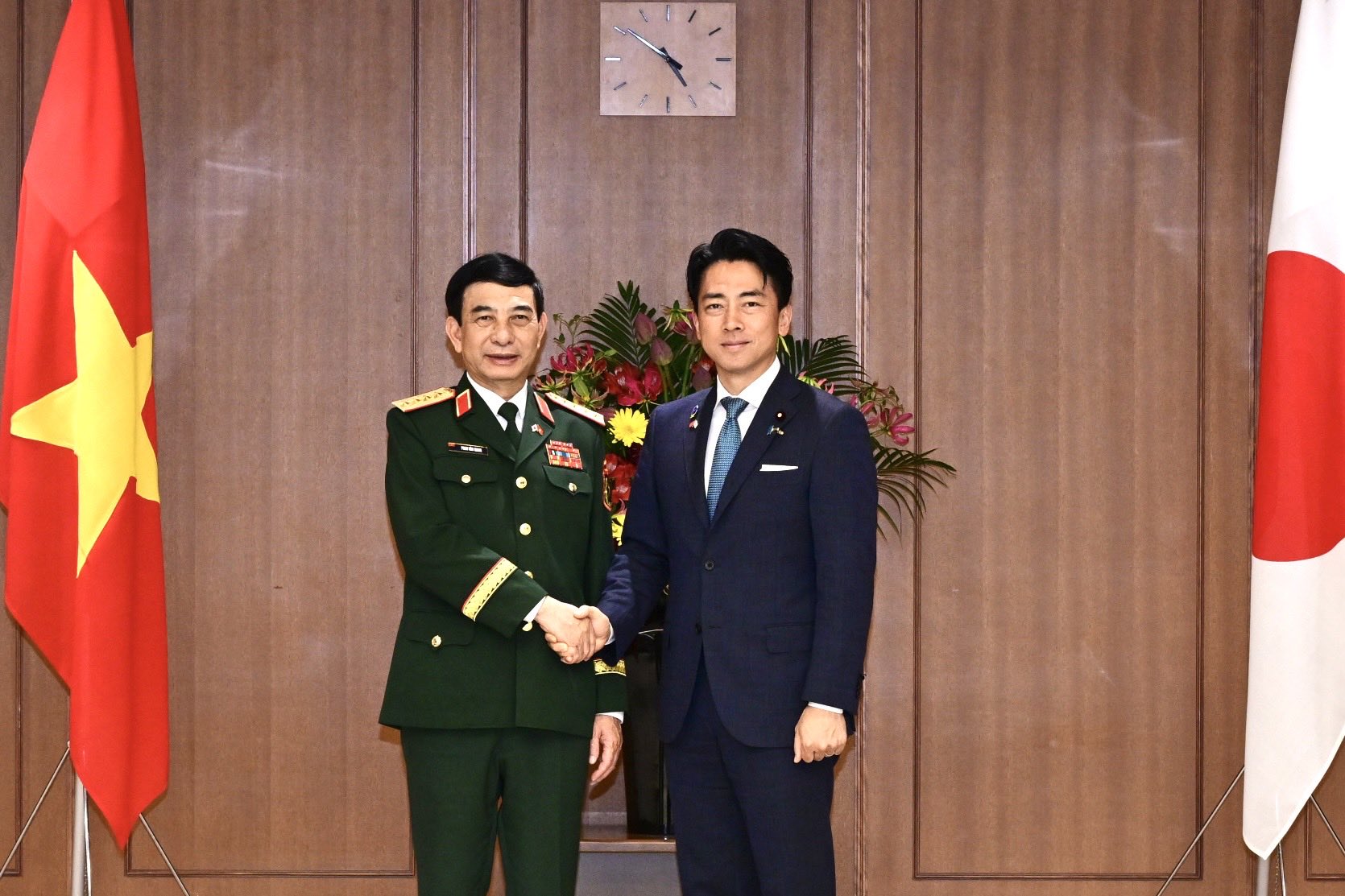
During a press conference on July 17, Minister Koizumi explained that this craft is intended to "rapidly transport personnel and supplies from offshore transport ships to the coastal areas." The aim is to enhance mobility not only for amphibious operations but also for disaster relief compared to conventional landing craft. However, details regarding displacement, payload, propulsion method, speed, construction companies, share ratios, and timelines have not been disclosed.
This ambiguity is both a weakness and a political opportunity. For Vietnam, "landing" is a sensitive term that evokes images of islands and coastal supply in the South China Sea, while for Japan, it involves domestic issues regarding how far to expand the application of the three principles of defense equipment transfer. The emphasis on disaster relief is not merely decorative; it also serves to dilute military implications.
Limitations of the JMSDF's LCAC Experience
The Japan Maritime Self-Defense Force has experience. The three Ōsumi-class transport ships have operated a total of six LCACs, with two on each ship. The ability to rapidly transport personnel, vehicles, and heavy equipment from the sea to the shore is valuable for both the defense of the southwestern islands and disaster relief.
However, that experience is not the same as development experience. Japan's LCACs are manufactured by Textron in the U.S. and have relied on imports through trading companies and operational support from U.S. FMS. While the field can use the craft, the ability of the domestic industry to design, improve, export, or co-produce the craft is a separate issue. In my view, the core of the Japan-Vietnam talks lies here.
Caimen Japan as a Candidate
At this point, the most realistic candidate is the Caimen Japan project, for which ATLA contracted with Japan Marine United and the UK’s BMT in February 2025. According to reports from Naval News at the time, the craft is approximately 30 meters long, adopts a trimaran hull shape, and aims for a speed of over 20 knots. BMT is responsible for the design, while JMU will handle production design and construction in Japan.
This is not a direct successor to the LCAC. Rather, it has the potential to serve as a high-speed maneuverable vessel with lower maintenance burdens than air-cushion hovercraft, suitable for inter-island transport and repeated transport in shallow waters. It seems that what Vietnam seeks is not a massive amphibious assault capability, but rather a small, easily mass-produced transport means that connects dispersed island and coastal bases.
Connecting the South China Sea and the First Island Chain
Japan-Vietnam cooperation should not be viewed in isolation from the Japan-U.S. alliance. In the decentralized maritime operations emphasized by the U.S., the question is how to utilize not only large bases but also small ports, beaches, and temporary supply points. Geographically, Japan's southwestern islands and Vietnam's South China Sea coast are distant, but they are connected in the concept of protecting SLOCs (Sea Lines of Communication).
On the other hand, Vietnam continues its unique balancing diplomacy, strengthening deterrence against China while maintaining economic and political relations with it. It is natural for Koizumi to mention strict screening, information management, and close cooperation with the Vietnamese government regarding the risk of technology leakage. However, merely focusing on preventing leaks is insufficient. Joint development will involve long-term connections regarding design changes, parts procurement, export destination management, and training systems.
Fast landing craft are not flashy missiles. However, what often proves effective in island defense is a craft capable of transporting ammunition, fuel, and casualties.
Reasons for Cautious Progress
If these discussions advance, Japan will take a step from exporting finished products to joint development. Unlike high-end aircraft programs like GCAP, landing craft are relatively small, and the operational requirements of users can be more easily translated into tangible forms. If successful, it could also be applied to disaster prevention and maritime security support for the Philippines, Indonesia, and Pacific island nations.
However, conversely, the potential for failure is also apparent. Simply exceeding a speed of 20 knots is not enough; without wave performance, beach landing capability, vehicle capacity, maintainability, communication security, and night operation capabilities, it may end up being seen as a "convenient experimental craft" in the field. The true risk is not just the leakage of technology to China. It lies in the Japanese side rushing for political results, the Vietnamese side hastening industrial transfer, and postponing the alignment of actual operational requirements.
The fast landing craft talks may seem like small news. However, they encompass the question of how to connect supply and defense industries between the First Island Chain and the South China Sea. Rather than a fleet battle, a 30-meter craft reaching the beach gradually changes the regional order. That is the weight of this agreement.
Key References
- Naval News, 17 July 2026, Japan and Vietnam to Jointly Develop Fast Landing Craft
- Japan Ministry of Defense, 15 July 2026, Japan-Vietnam defense ministers meeting summary
- Japan Ministry of Defense, 17 July 2026, Defense Minister Koizumi press conference
- Naval News, February 2025, BMT and JMU awarded Landing Craft contract by Japan ATLA
Japan and Vietnam agreed to jointly develop fast landing craft during a meeting in Tokyo in July 2026. This collaboration aims to enhance rapid transport capabilities for defense and disaster response in the South China Sea. The project is significant for Japan's defense industry cooperation in the Indo-Pacific and reflects the sensitive political dynamics in the region.
- Japan and Vietnam agreed to jointly develop fast landing craft.
- The agreement was reached during a meeting in Tokyo in July 2026.
- The fast landing craft will enhance rapid transport capabilities for defense and disaster response.
- The project is seen as a new phase in Japan's defense industry cooperation in the Indo-Pacific.
- The collaboration is politically sensitive due to regional security dynamics.