
Japan-U.S.-India Mine Sweeping Exercise with 10 Maritime Self-Defense Force Ships Heads to Mutsu Bay: Focus of 2026 Naval Warfare
 Tanaka Takashi
10 Japanese, American, and Indian Minesweeping Exercises in Mutsu Bay: The Focus of 2026 Mine Warfare
In a press release issued by the Maritime Staff Office on July 3, what caught my attention first was the location rather than the number of vessels. From July 11 to 23, the Japan Maritime Self-Defense Force (JMSDF) will conduct the FY 2026 Mine Warfare Training and a special joint minesweeping exercise with the U.S. and Indian navies in Mutsu Bay. The fact that this is taking place in a closed water area at the northern tip of Honshu, rather than in the southwestern islands, highlights the significance of this training.
10 Vessels and 8 Aircraft Gather in Mutsu Bay
The JMSDF's planned participation includes a minesweeping mother ship, one minesweeper, six minesweeping boats, one escort ship, and one underwater disposal mother ship, totaling 10 vessels. The aircraft involved are expected to include five P-1 or P-3C aircraft and three MCH-101 helicopters, along with underwater disposal personnel and unmanned underwater vehicles. The U.S. Navy will contribute one minesweeper, underwater disposal personnel, and unmanned underwater vehicles, while the Indian Navy will send underwater disposal personnel. The training control officer from the JMSDF will be Rear Admiral Ikeguchi, the commander of the Amphibious Warfare Mine Warfare Group, while the U.S. side will be represented by the commander of the 7th Mine Warfare Squadron, and the Indian side by the underwater disposal team commander.
The training items include mine laying, mine sweeping, mine clearance, and underwater disposal, which may seem classical but are by no means outdated missions. Mines are inexpensive and can leave political ambiguity for the laying side. Considering scenarios such as around Taiwan, a crisis on the Korean Peninsula, or the blockade of ports on the Sea of Japan, minesweeping capability is directly linked to maintaining SLOC (Sea Lines of Communication) just as much as offensive strike capability.
Training Line from Sagami Bay to Mutsu Bay
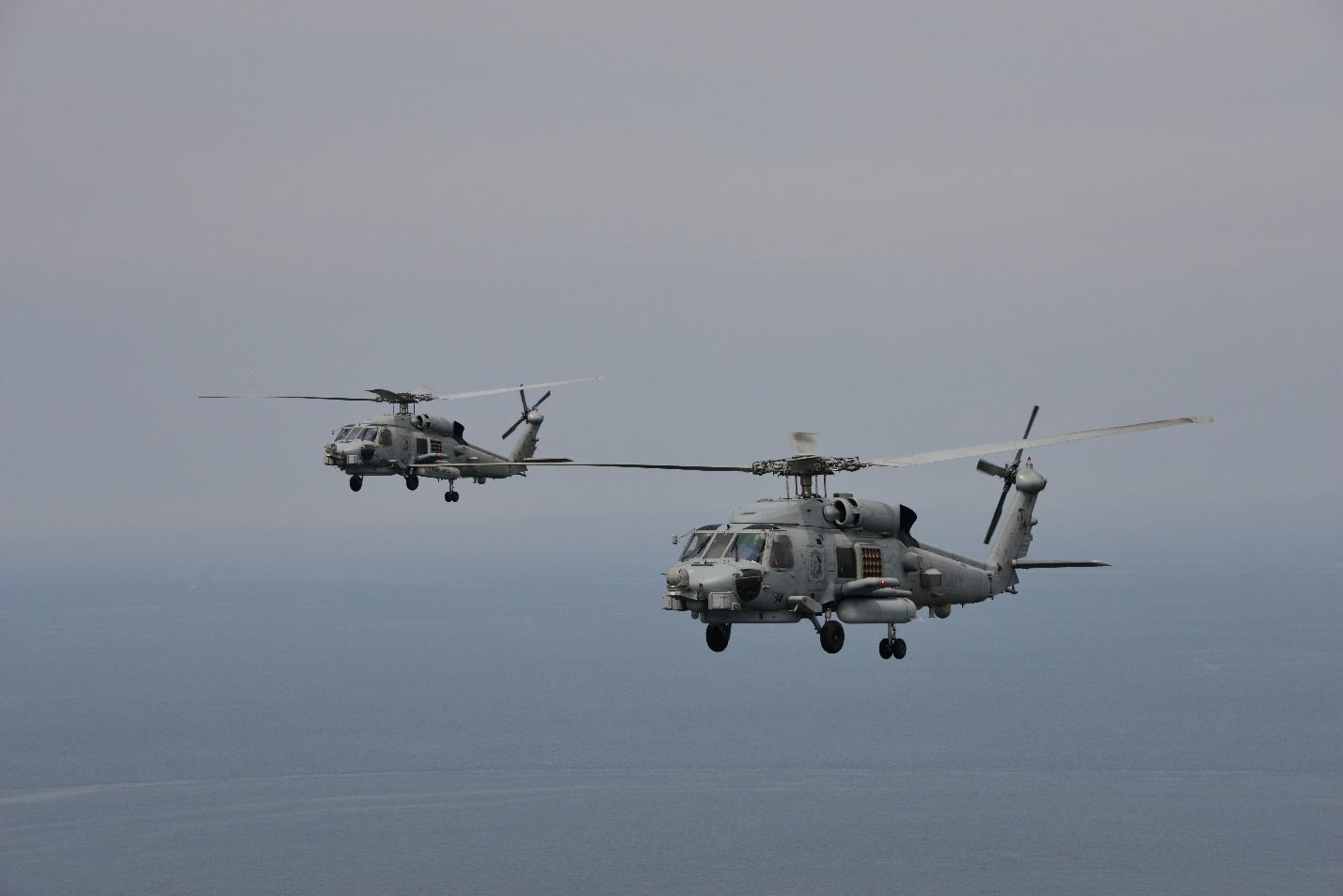
In the same week, the JMSDF also announced that on June 30, it conducted anti-submarine warfare training in Sagami Bay with the U.S. Navy's MH-60R and SH-60L. Additionally, the U.S. 7th Fleet explained that from June 15 to 19, the JMSDF, Japan Coast Guard, and U.S. Coast Guard conducted Pacific Atlas 26-1 in Japanese waters, confirming concepts of communication, rear procedures, and at-sea replenishment. Although these are separate announcements, they are connected in the sense of maintaining dispersed maritime operations.
Mine warfare is not just an issue for minesweeping boats. It involves decisions on where to move the minesweeping forces, which ports to open first, how to protect surrounding waters with anti-submarine helicopters and patrol aircraft, and which units will connect for rear supply. The training in Mutsu Bay indicates that the JMSDF is attempting to connect its disposal capabilities, including unmanned underwater vehicles, with allied and partner nations.
The Significance of India's Participation
A notable feature of this exercise is the participation of the Indian Navy. India is not an ally that directly commits military forces in emergencies around Japan. However, the chokepoints in the Indian Ocean and the SLOC in the Western Pacific are connected as a single shipping route. Sharing procedures for minesweeping, underwater disposal, and port reopening may be less flashy than the political rhetoric of QUAD, but it is practical.
In my view, interpreting India's participation solely as a symbol of encirclement against China is overly simplistic. Rather, for Japan, it should be seen as training to align naval and underwater disposal procedures with navies other than the U.S. Navy, laying the groundwork for future multinational port recovery and civilian vessel protection.
Overlooked Weaknesses
However, challenges remain. The JMSDF's minesweeping capabilities have been highly regarded since the Cold War, but the number of units, securing personnel, and the quantitative development of unmanned vehicles cannot be deemed sufficient. The ability to gather 10 vessels in Mutsu Bay and to continue minesweeping over multiple fronts for an extended period are separate issues.
The danger of mine warfare lies not in the number of sinkings but in the time it consumes. Delaying a port by just three days means that plans for fuel, ammunition, evacuation, and reinforcements must all be recalculated.
Japan's counterattack capabilities are often discussed in terms of the Type 12 enhanced version and Tomahawks. However, if the ports and routes that are prerequisites for counterattacks are not open, deterrence approaches mere numbers on paper. What is truly being tested in the training in Mutsu Bay is not flashy long-range weapons, but the speed at which the sea can be returned to a usable state after war begins.
The Japan Maritime Self-Defense Force is set to conduct joint mine warfare training with the U.S. Navy and Indian Navy in Mutsu Bay from July 11 to July 23, 2026. This exercise will involve ten ships and eight aircraft, focusing on mine laying, sweeping, and underwater disposal operations. The inclusion of the Indian Navy highlights a collaborative effort to enhance regional security capabilities among allied forces.
- Japan Maritime Self-Defense Force will conduct mine warfare training in Mutsu Bay from July 11 to July 23, 2026.
- Ten ships and eight aircraft from Japan, the U.S., and India will participate in the training.
- The training includes mine laying, mine sweeping, and underwater disposal operations.
- The exercise aims to enhance cooperation among allied navies in mine warfare capabilities.
- India's participation signifies a practical approach to regional security cooperation.