

Japan is gearing up to place quantum sensors on inexpensive drones. Why? So it can send them to spy on the narrow stretches of water Chinese submarines must pass through to enter the Pacific Ocean.
Tokyo’s fiscal 2027 defense budget request, published last month, includes funding for research into a quantum magnetic sensor capable of detecting tiny shifts in magnetic fields generated by submerged vessels.
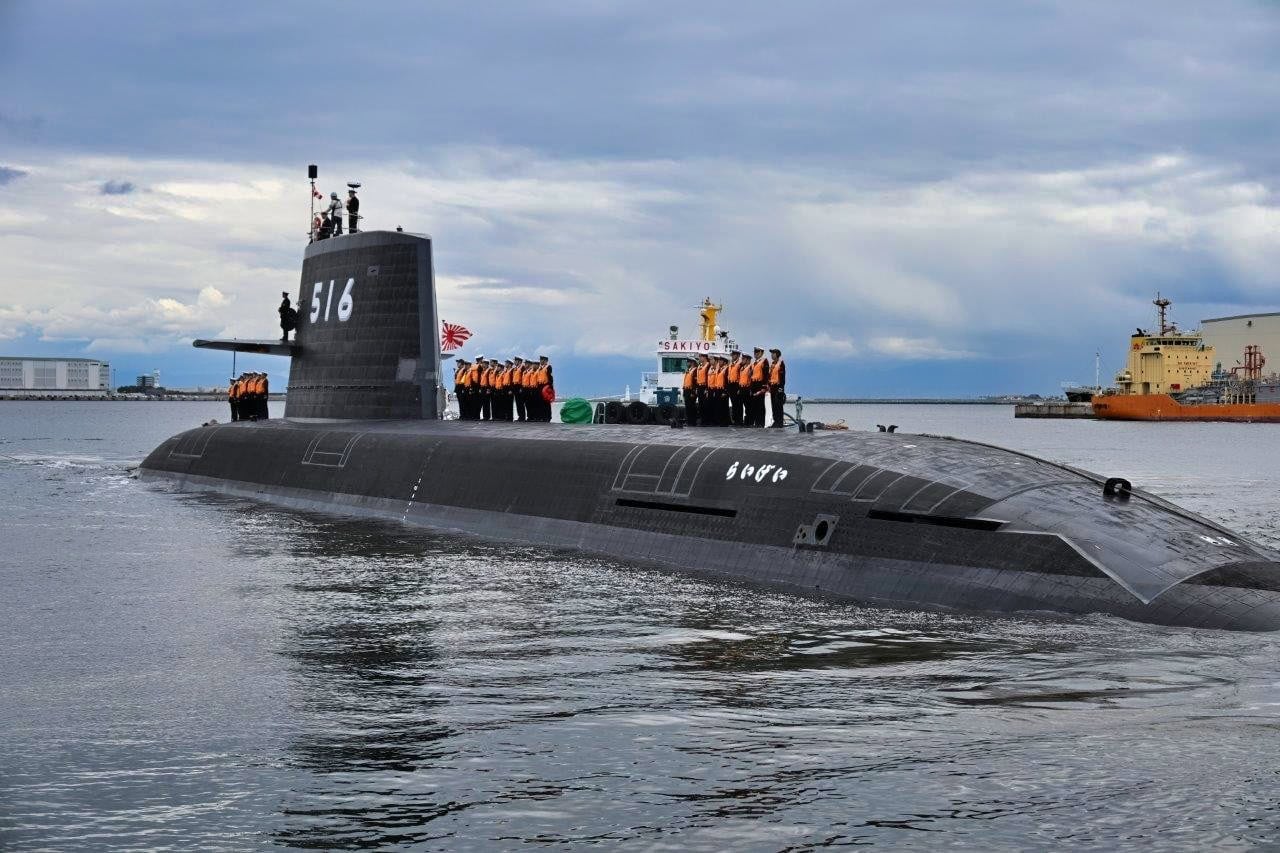
Taigei-Class Submarine. Image Credit: Creative Commons/JSDF.
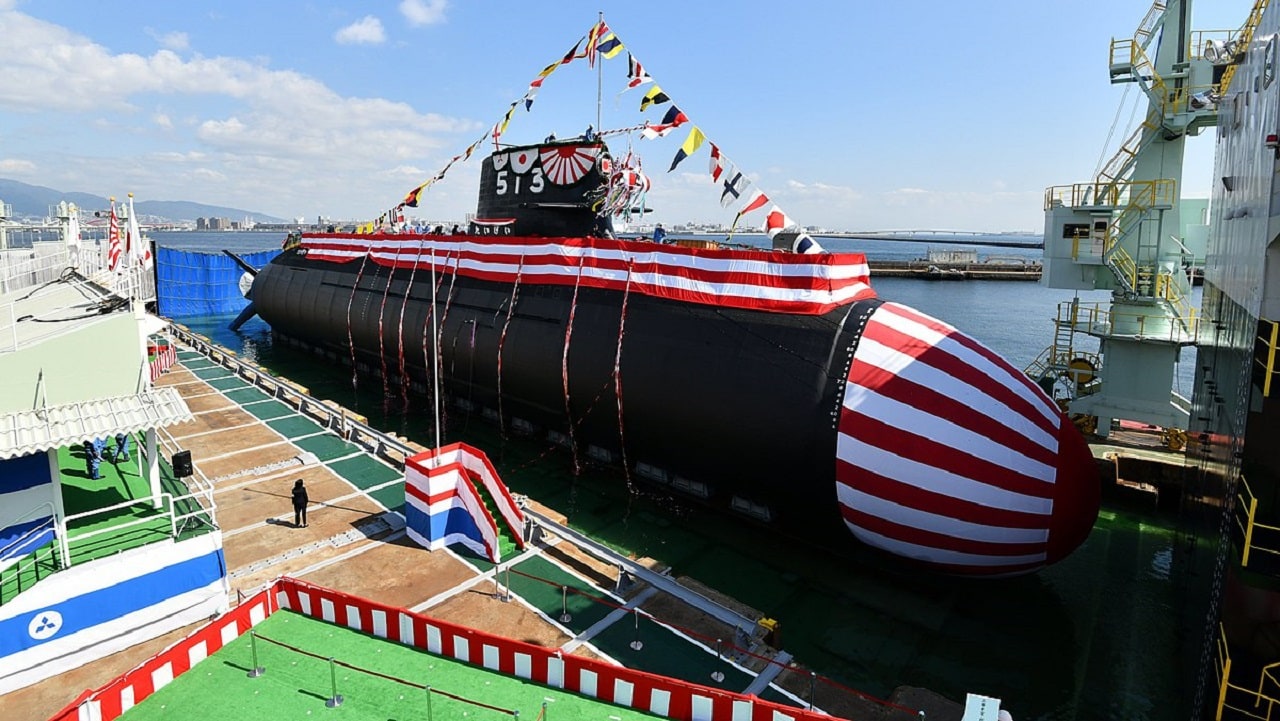
Taigei-Class. Image Credit – Creative Commons.
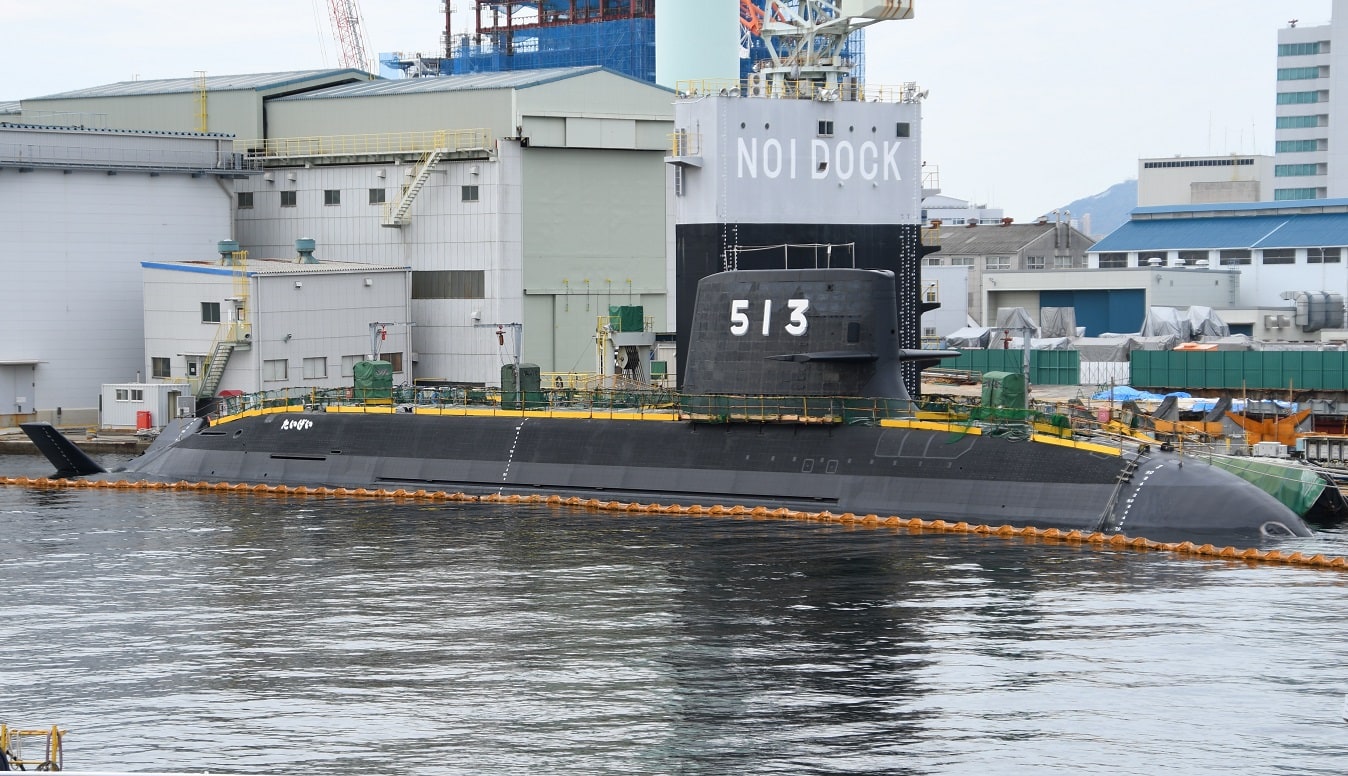
Taigei-class. Image Credit: Creative Commons.
Nikkei Asia said that the Defense Ministry is aiming to develop the system by fiscal 2031 and envisages mounting it on low-cost drones moving near the sea surface from military ships.
Still, this technology does not mean hostile submarines are suddenly easy to detect, as the range of magnetic detectors remains limited.
Geography Matters
Masashi Murano, a defense specialist at the Hudson Institute, told the South China Morning Post (SCMP), a pro-Beijing newspaper, that searching large areas of ocean with crewed aircraft is extremely expensive.
Quantum magnetic sensors have limited detection ranges, he said, but drones carrying them could instead be concentrated around the straits Chinese submarines must navigate to pass through the first island chain.
“Even if the detection range of each individual sensor is short,” Murano said, deploying cheap unmanned systems in numbers could make surveillance more efficient.
Retired Australian Vice Adm. Peter Jones put the possible detection distance at “several thousand meters or less,” according to SCMP.
So it makes sense for Japan to deploy large numbers of relatively inexpensive sensors in areas where submarines have fewer transit options.
China Has Tricks Up Its Sleeves Too
Last April, the SCMP reported that Chinese researchers had tested a drone-mounted quantum sensor offshore.
The system achieved picotesla-level precision while measuring magnetic anomalies.
The research had been published in a peer-reviewed Chinese journal.
Beijing is also building aircraft specifically for the submarine hunt.
At this year’s Singapore Airshow, China’s state-owned AVIC displayed its Wing Loong-X drone with an anti-submarine configuration.
Jane’s reported that the aircraft had previously been shown with four sonobuoy dispenser pods and an ET-60 lightweight torpedo among its weapons.
Naval News analyst H.I. Sutton said on Monday that satellite imagery of a vessel under construction at Hudong-Zhonghua shipyard in Shanghai seems to show a purpose-built mothership for giant underwater drones.
Naval News said it analyzed several satellite images before reaching that assessment.
In Hainan, an island province, China tested a pair of large, uncrewed underwater vehicle designs.
The vessels measured about 35 and 45 meters long.
Sutton said that they were likely around six to eight times the size of the U.S. Navy’s Boeing Orca XLUUV.
Until now, the Chinese craft were transported and launched using floating docks, but recent images have identified a stern-wall dock.
The Submarine ‘Mothership’ Arrives
“The only plausible explanation is that this is a drone submarine mothership,” Sutton wrote.
China has yet to publicly announce this project, but if all is as it seems, the vessel would allow Beijing to maintain, carry, launch, and recover its large underwater drones far more flexibly than the floating docks used during testing.
The craft are probably intended for long-range missions and could eventually operate far from Chinese waters.
China Is Also Expanding Conventional Fleet
Commander of the U.S. Office of Naval Intelligence, Rear Adm. Michael Brookes, told the U.S.-China Economic and Security Review Commission this March that Beijing might have up to 80 attack submarines in its fleet by the mid-2030s.
Half of them could be nuclear-powered.
He specifically warned that “the PLA Navy’s undersea forces may credibly challenge U.S. regional maritime dominance” by 2040.
General Atomics and the U.S. Navy tested an expanded sonobuoy load on the MQ-9B SeaGuardian in December, including the inaugural release of Multi-static Active Coherent buoys from an unmanned aircraft.
General Atomics President David Alexander has noted that the aim was to “broaden and enhance search areas.”
In August, the U.S. Navy said it was probing industry proposals for Silent Anvil, a small, air-launched anti-submarine weapon compact enough to be carried by both crewed aircraft and drones.
The Navy described it as a system intended to “expand the range” of aircraft capable of attacking submarines.
This quantum project is part of the same game plan that Japan and China are pursuing: using a vast network of unmanned sensors rather than a small number of expensive, complex aircraft.
About the Author: Georgia Gilholy
Georgia Gilholy is a journalist based in the United Kingdom who has been published in Newsweek, The Times of Israel, and the Spectator. Gilholy writes about international politics, culture, and education.