
Japan’s spy satellites to ride home-built rocket
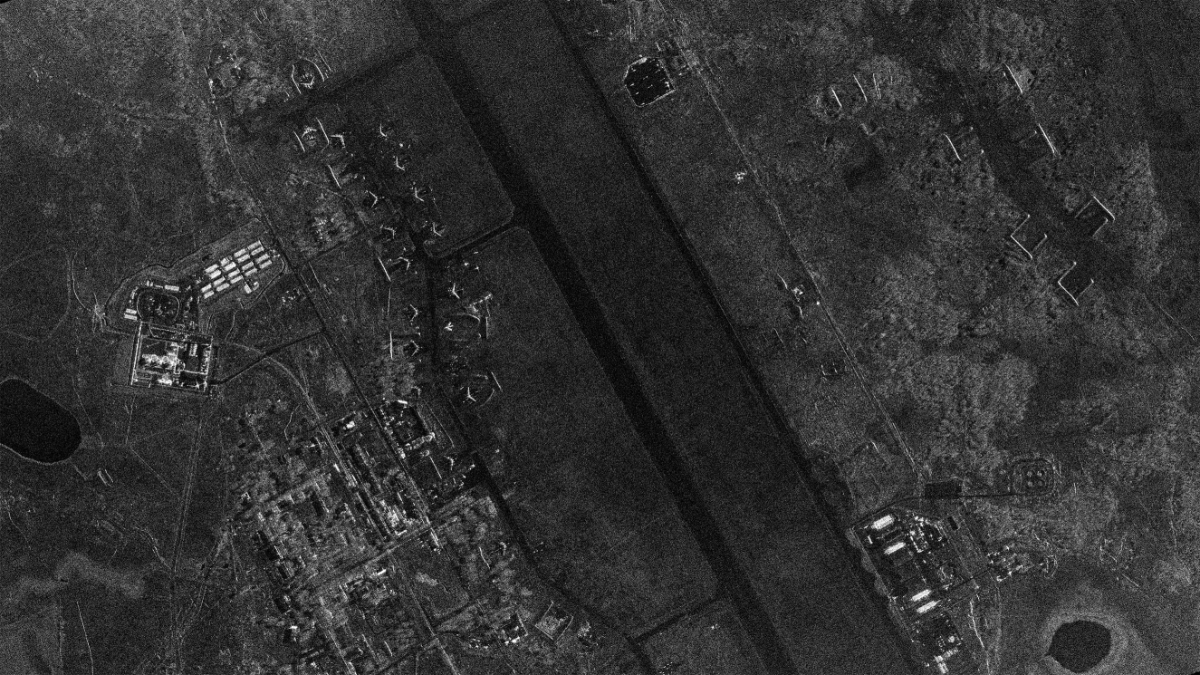
Japanese radar satellite company Synspective has signed a contract with Mitsubishi Heavy Industries to launch two of its StriX satellites on Japan’s H3 rocket in 2027, moving part of a constellation that feeds imagery to Japan’s Ministry of Defense onto a domestic launcher for the first time.
The company announced the agreement Sept. 18. The satellites will lift off from the Japan Aerospace Exploration Agency’s Tanegashima Space Center into a mid-inclination orbit, which the company said allows frequent passes over major economic centers and disaster-prone regions, including the Asia-Pacific. Synspective did not disclose the value of the contract or a specific launch date.
StriX satellites use synthetic aperture radar, which bounces radio pulses off the ground to build images and can see through clouds and at night. Each satellite weighs about 100 kg (220 pounds) and unfolds a radar antenna roughly 5 m (16 feet) wide once in orbit.
Until now, Rocket Lab’s Electron rocket, launched from New Zealand, has carried every StriX satellite into orbit, starting in 2020. The most recent went up Sept. 25, and Rocket Lab still has more than a dozen Synspective missions on its manifest as the company works toward a constellation of about 30 satellites by the end of the decade. Synspective described the H3 deal as a step toward strategic autonomy in reaching space, and said choosing Japan’s flagship rocket gives it a reliable path to build out the constellation quickly.
The constellation is part of Japan’s defense surveillance network. In December 2025, the Ministry of Defense picked a seven-company group that includes Synspective, iQPS, Axelspace, Mitsubishi Electric, SKY Perfect JSAT, Mitsui and Mitsui Bussan Aerospace to build and run a privately financed satellite constellation for national defense imagery. The contract, signed Feb. 19, 2026, is worth 283.1 billion yen ($1.80 billion) and runs through March 2031. Synspective’s share, a subcontract of 105.6 billion yen ($672 million), covers radar imagery to support Japan’s stand-off defense capabilities, meaning its ability to strike threats from beyond their range.
A Synspective executive, Takushi Nakamura, said in the company’s statement that radar data can only be put to immediate use in disaster response, infrastructure monitoring and security if satellites reach orbit continuously and reliably, and that the Mitsubishi contract supports that foundation.
The H3 launches are backed by JAXA’s Space Strategy Fund, a government program that supports Japanese space companies. Synspective said being selected for the fund shows its technology fits Japan’s national space policy.
Mitsubishi Heavy Industries builds and launches the H3, which replaced the H-IIA as Japan’s main large rocket.
Content preview only. Full article available at source. View Full Article
Synspective signed a contract with Mitsubishi Heavy Industries to launch two StriX satellites from Tanegashima Space Center in 2027. This marks the first time Japan's Ministry of Defense will use a domestic launcher for its satellite constellation, which supports national defense imagery. The StriX satellites utilize synthetic aperture radar for imaging, enhancing Japan's surveillance capabilities.
- Synspective signed a contract with Mitsubishi Heavy Industries to launch two StriX satellites in 2027.
- The satellites will be launched from Tanegashima Space Center.
- StriX satellites use synthetic aperture radar for imaging.
- The contract is part of Japan's defense surveillance network.
- The H3 rocket is Japan's main large rocket.