
JNIM and EIGS clash in Niger — the jihadist war opens a new front in 2026
 Marie Dubois
JNIM and EIGS clash in Niger — the jihadist war opens a new front in 2026
In the west of Tillabéri, between the paths along the Niger River and the transhumance corridors towards Mali, jihadist groups no longer behave as a single threat. Recent clashes between the Group for the Support of Islam and Muslims (JNIM, or GSIM) and the Islamic State in the Sahel (EIGS) signal an open struggle for men, routes, and resources. The available information remains fragmented, but the phenomenon is repeated enough to dismiss the hypothesis of a mere local incident.
A rivalry descending towards transit areas
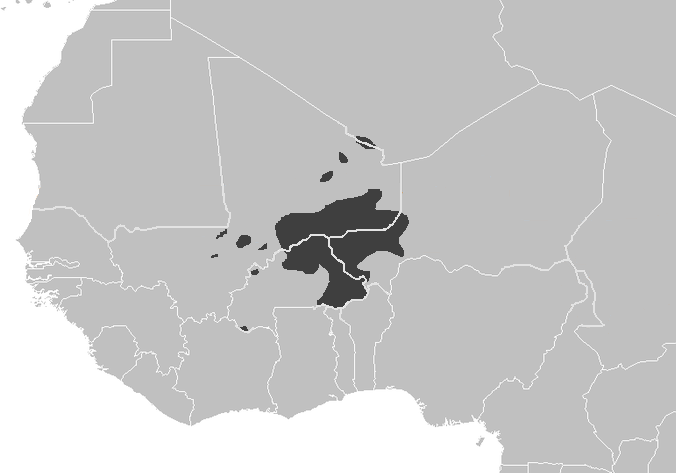
The first reports published on October 16 by Africanews and relayed by several regional media describe an intensification of fighting between networks affiliated with al-Qaeda and the Islamic State in the Sahel. The important point is not only the number of casualties, which has not been independently confirmed. It is the geography of the confrontation. Western Niger serves as a hinge between the sanctuaries in northern Mali, the Tillabéri region, and the routes leading to Benin and Nigeria.
For an armed group, controlling this area means taxing convoys, imposing rules on villages, and moving fighters without crossing an official border. On the ground, the Niger-Malian border is an administrative line that motorized units and local intelligence networks have long circumvented. An ambush a few kilometers from a market can therefore change transportation costs, close a route, and displace a population within days.
JNIM and EIGS do not seek the same form of control
JNIM generally relies on alliances with communities, arrangements with local leaders, and gradual establishment. This does not make it less violent, but its method allows for the preservation of a social network after an attack. EIGS, on the other hand, tends to impose a more brutal and vertical discipline, especially when it wants to prevent villages from negotiating with its rival. These ideological differences become tools for recruitment and coercion.
The competition also concerns fighters. A faction that loses a commander, a katiba, or a group of young recruits does not just lose tactical capability. It loses informants, tax collectors, and guides capable of smuggling weapons between Mali and Niger. The observed transfers of fighters previously in eastern Burkina Faso already show that jihadist loyalty is not static. A local leader may change allegiance if the other camp offers more protection, weapons, or freedom of action.
This is a war within a war. Nigerien forces can exploit rivalries, but they must first know who controls which route and when. A weakened group can avoid direct confrontation with the army and concentrate its resources on civilians suspected of supporting the other camp. The immediate result for the populations is therefore often an increase in reprisals, not a decrease in the threat.
Niamey's calculation in the face of a divided threat
The Nigerien junta has been presenting the break with France and the rapprochement with Russia for months as the conditions for a sovereign reconquest. The rivalry between JNIM and EIGS may seem to offer it an advantage. Two adversaries fighting each other consume ammunition, lose personnel, and divert their attention from military bases.
This reading would be dangerous. Clashes can also create empty spaces that both organizations seek to fill by accelerating recruitment and demonstration attacks. A faction that has just lost ground may launch a raid against an isolated post, not to hold it permanently, but to recover weapons and prove that it remains capable of striking. Nigerien units must then defend fixed positions, while jihadists choose the time and axis of contact.
The withdrawal of Western forces has reduced the depth of available intelligence, particularly aerial surveillance and rapid information sharing between neighboring countries. Russian instructors or contractors may reinforce certain detachments, but they do not automatically replace a regional network of sensors, patrols, and operational links. From experience, a column does not "control" an area simply because it has crossed it once. It controls it when it can return, day or night, without relying on a single informant.
The main risk lies to the south
If competition continues in Tillabéri, the most exposed front will not necessarily be Niamey. It is the axes towards Dosso, northern Benin, and northwestern Nigeria that could come under pressure. Each group has an interest in preventing its rival from reaching coastal areas, where markets are richer, trafficking is more abundant, and military presence is more dispersed.
The latest information does not allow us to assert that a new jihadist coalition is forming, nor that JNIM and EIGS have abandoned all confrontation. They show something more concrete: the map of control zones is shifting. For the armies of Niger, Mali, and Burkina Faso, the danger is to follow enemy statements instead of monitoring the routes, markets, and villages that are changing authority.
In the coming weeks, three indicators will need to be watched. Are convoys ceasing to circulate on the paths of Tillabéri? Are local leaders announcing a new allegiance? Are attacks shifting towards the corridors of Dosso and northern Benin? If the answer is yes, the rivalry between JNIM and EIGS will no longer be just an internal jihadist war. It will become the mechanism by which the Sahelian front moves towards coastal states.
Sources and level of confidence
- Africanews, “Al-Qaeda and IS rivalry sparks fierce fighting across Sahel,” October 16, 2026.
- Modern Ghana, “Rival Sahel jihadists clash in intensifying turf war,” October 16, 2026.
- UA.NEWS, reprint of the article “Fighting between JNIM and IS-linked groups spreads to northwestern Nigeria,” October 16, 2026.
The human toll and specific locations of clashes remain to be confirmed by independent sources. The analysis focuses on operational trends rather than the claims of the groups.
JNIM and EIGS are engaged in intensified clashes in western Niger as of October 2026, competing for control over key routes and resources. This rivalry is impacting local populations and may lead to increased violence. The Nigerien military is attempting to navigate the complex situation as both groups vie for dominance in the region.
- JNIM and EIGS are engaged in open conflict in western Niger.
- The clashes are over control of routes and resources between Mali and Niger.
- The rivalry is affecting local populations and may lead to increased violence.
- The Nigerien military is monitoring the situation but faces challenges due to the evolving dynamics.