
Leopard 2, NATO, and 70 Billion Euros for Ukraine Reveal Europe's Coordination Gap in 2026
 Dr. Klaus Weber
Leopard 2, NATO, and 70 Billion Euros for Ukraine Highlight Europe's Coordination Gap in 2026
The European security debate is currently producing impressive figures, but not yet correspondingly impressive leadership. At the European Council on October 15 and 16, further support for Ukraine was once again at the center of attention. President Volodymyr Zelensky is reportedly advocating for a new European loan of 70 billion euros. At the same time, US Army Europe, NATO allies, and partners tested the coordination of Europe's defense across multiple states with Exercise Avenger Triad 26. Both are interconnected: Europe is trying to take on financial burdens while the military leadership and planning architecture still heavily depend on American structures.
70 Billion Euros Are Not Yet 70 Billion Euros of Combat Power
The sum of 70 billion euros is politically understandable. Ukraine needs predictable funding, and European governments want to avoid having each individual arms delivery become a national crisis summit. However, a loan is primarily a financing instrument. It does not answer the questions that decide on the battlefield: What air defense will be available in six months? How many 155-millimeter shells can actually be delivered? What spare parts, maintenance centers, and training capacities are ready?
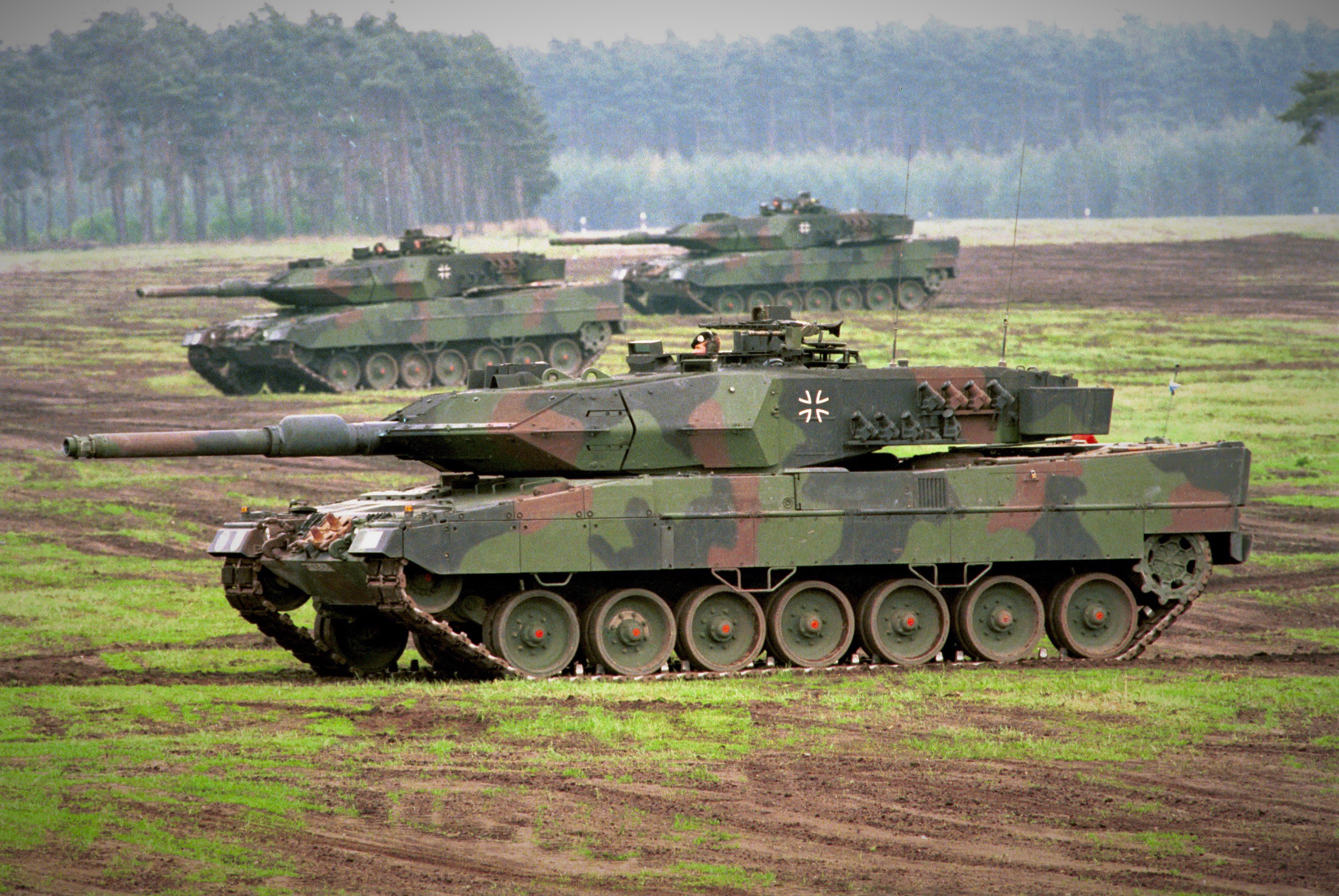
This is precisely where Europe's well-known problem of input and output lies. A Leopard 2 is not a budget item, but a system comprising vehicle, crew, ammunition, maintenance, reconnaissance, and protected logistics. If only the acquisition costs are politically accounted for, the illusion of additional capability arises. In reality, a state can provide more money and still possess too few deployable units. The formula remains: Allocations are not deliveries, loans are not capabilities.
Avenger Triad 26 Shows the Other Half of the Problem
The reported conclusion of Avenger Triad 26 on October 16 is therefore more than just an exercise report. US Army Europe and Africa and NATO partners practiced how allies can coordinate a common European defense across multiple countries. Such exercises not only test troop movements. They assess data connections, command transitions, joint operational planning, logistics, and the ability to integrate national forces into a coalition process under time pressure.
This is the operational reality behind the abstract term interoperability. Europe's armies possess modern platforms, but platforms alone do not constitute a joint force. Germany can supply Leopard 2, France can provide Rafale, and the UK can offer long-range reconnaissance. If the situational awareness is not compatible, national rules govern the release, and supplies run through separate systems, the addition of national capabilities remains smaller than their political sum.
The crucial point is uncomfortable: The exercise strengthens Europe's defense capability, but at the same time makes it clear how important American military infrastructure still is. Europe is taking on more responsibility, but it is doing so within an architecture whose central standards, reconnaissance assets, and command logic are not fully European. This is burden-sharing, not yet strategic autonomy.
Political Coordination Lags Behind Military Coordination
Recent warnings from Estonia also fit this pattern. Estonian government representatives fear that Russia could gradually undermine Western support for Ukraine through hybrid attacks and political influence. The warning is not only a call for more toughness towards Moscow. It points to an institutional deficit: Europe has numerous national communication and sanction mechanisms, but no permanently joint political campaign capability that connects military assistance, protection of critical infrastructure, and public resilience.
The situation is similar in the Black Sea. Romania is calling for a joint NATO structure for the region following reports of drone attacks on ships. This is strategically plausible, as attacks on merchant vessels lie between war, sabotage, and maritime intimidation. A joint command can improve surveillance and responsiveness. However, it does not replace adequate drone defense or the political willingness to act uniformly in a crisis.
What the EU Must Learn from the Number 70
The new Ukraine loan should be tied to verifiable capabilities. First, it needs a transparent delivery plan with quantities, deadlines, and responsibilities. Second, part of the funds must flow into European production lines, without ideologically excluding short-term American procurement. Third, maintenance, training, and spare parts supply should be considered core military functions and not as subsequent administrative costs. Fourth, the EU must connect its financial instruments with NATO planning instead of financing two parallel defense bureaucracies.
This requires a political decision that has so far been avoided. Member states want to pay together but decide nationally on priorities, procurement, and deployment. This is politically convenient domestically but militarily inefficient. More European debt can accelerate production; however, it cannot buy unity on risks, target systems, and command authority.
Europe's Dilemma Remains
The European Council, the 70 billion euro request, and Avenger Triad 26 show a movement in the right direction, but not yet a breakthrough. Europe is spending more, exercising more, and taking on more responsibility. Nevertheless, the crucial gap between political announcement and military availability remains. The bitter point is: Europe can only reduce its strategic dependence by first cooperating more closely with the United States. Those who sell this transitional phase as already achieved autonomy confuse setting up a budget with building a military force.
Sources
- European Council, October 15–16, 2026
- U.S. Army Europe and Africa, Final Report on Exercise Avenger Triad 26, October 16, 2026
- Reuters, Estonia Fears Russia Will Erode Western Support for Ukraine, October 15, 2026
- Reports on Romanian Calls for a Joint NATO Structure in the Black Sea, October 16, 2026
Ukraine sought a new loan of 70 billion euros for military support during the European Council meeting on October 15-16, 2026. US Army Europe and NATO allies conducted Exercise Avenger Triad 26 to enhance defense coordination across multiple nations. Estonia raised concerns about Russia's hybrid threats undermining Western support for Ukraine, while Romania advocated for a joint NATO command structure in the Black Sea following drone attacks on ships.
- Ukraine is seeking a new loan of 70 billion euros for military support.
- US Army Europe and NATO partners conducted Exercise Avenger Triad 26 to test defense coordination.
- European nations are struggling with military leadership and planning architecture reliant on US structures.
- Estonia warns of Russia's potential to undermine Western support for Ukraine through hybrid attacks.
- Romania calls for a joint NATO structure in the Black Sea region in response to drone attacks.