
Ukraine's 2026 Starshield Outage Exposed NATO's Hidden Dependency
 Alexandra Reeves
Ukraine's 2026 Starshield Outage Exposed NATO's Hidden Dependency
Ukraine did not need to lose a city to discover a strategic vulnerability. It only needed a satellite connection to slow down.
On October 15, Reuters reported that the mobile functionality of Starshield, SpaceX's military-grade satellite internet service, had been restored after a disruption that affected Ukrainian drone missions along the front. The interruption lasted long enough to matter, and it arrived during a political fight over an alleged US-Russian energy ceasefire. Ukrainian officials said they were not warned. One presidential adviser called the move deliberate and politically motivated. There is no independent confirmation that the White House ordered the restriction. That uncertainty is precisely the problem.
The outage was operationally small and strategically enormous
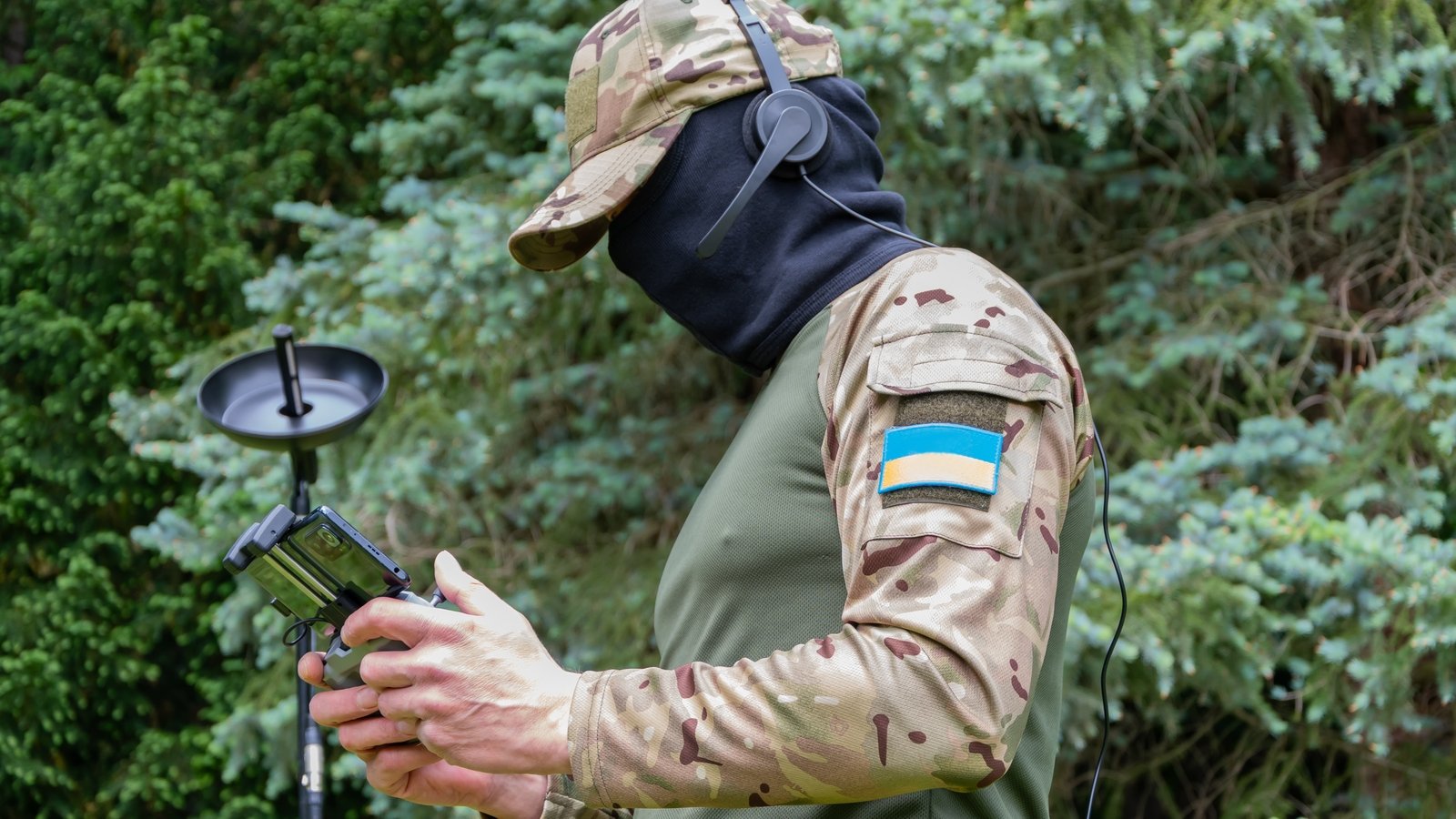
Starshield is not a missile or a fighter aircraft. It is a communications layer built on SpaceX's low-Earth-orbit satellite network and adapted for government and military users. Its value is not mysterious: terminals can move with vehicles, connect units beyond damaged terrestrial networks, and carry the data that makes drones, artillery and command posts function as a system. Reuters reported that the disruption affected terminals moving faster than 100 miles per hour. That detail sounds technical. On a battlefield, it is the difference between a moving unit retaining a live network and becoming temporarily blind.
Ukraine has built much of its wartime operating rhythm around resilient, commercially enabled communications. That has helped Kyiv compensate for inferior mass in artillery, aircraft and manpower. The arrangement also produced an uncomfortable illusion in Western capitals: that a privately owned network could quietly serve as allied infrastructure without creating an allied political dependency.
It cannot.
Russia's strikes make the dependency harder to ignore
The outage came as Russia intensified attacks on Ukrainian energy and civilian infrastructure. In a Reuters report published October 16, Russian drones killed at least three people, wounded others and temporarily cut power to more than one million Ukrainians. The strikes hit Kharkiv, Volyn, Rivne and Sumy, including energy facilities, a food-processing plant, shopping centres and a customs terminal near the Polish border.
Ukraine's Ministry of Defence separately reported that Russian forces suffered an estimated 1,950 personnel losses and 1,396 operational-tactical UAV losses on October 16. Those figures are Ukrainian estimates and should not be treated as independently verified. They nevertheless show the scale of the drone contest in which communications are now a primary weapon. The side that can keep sensors, operators and shooters connected under attack can turn cheap platforms into a high-tempo kill chain.
That is why Starshield is more than an internet service. It is part of Ukraine's command-and-control architecture. When the connection fails, the immediate effect may be a missed drone mission. The larger effect is uncertainty: units cannot know whether the failure is technical, temporary, politically imposed or a warning of a broader change in US support.
Washington's ceasefire politics created the worst possible ambiguity
The timing made the incident especially damaging. Reuters reported that Kyiv had paused attacks on Russian refineries after President Donald Trump announced an energy ceasefire. Ukraine then resumed strikes after accusing Russia of continuing to hit its power grid. President Volodymyr Zelensky told the Financial Times that the refinery strike restrictions were over and demanded additional Patriot interceptors if Washington wanted Kyiv to halt such attacks.
At the same time, Ukrainian officials said they had lost advance warning of incoming Russian strikes and questioned whether the Starshield limitation was connected to US pressure. The United States denied suspending intelligence sharing, while British Defence Secretary Wes Streeting said he welcomed the restoration but did not discuss why the interruption occurred.
This is not a clean alliance dispute with clear red lines. It is worse: an operational system became entangled with an unclear diplomatic message. Moscow can exploit that uncertainty without firing a shot at a satellite. Kyiv has to plan around the possibility that a commercial service may become a bargaining chip. European governments have to ask whether their own forces could rely on the same infrastructure during a crisis if Washington's political priorities changed overnight.
NATO cannot outsource resilience to one company
The obvious answer is redundancy. The less comfortable answer is that NATO has not built enough of it.
European militaries need layered alternatives: sovereign military satellite capacity, protected tactical radio, fibre and microwave links, and interoperable systems that can be reconfigured when one provider disappears. None of these will replicate Starshield immediately. That is not an argument for abandoning the service. It is an argument for treating it as a capability with a contingency plan, rather than as a benevolent utility.
The technical challenge is also political. A satellite network can be bought, but access rules are set by its owner and, in this case, shaped by US export controls and national-security decisions. NATO's planning culture is comfortable counting tanks and aircraft. It is less comfortable counting dependencies: who owns the network, who can throttle it, who receives the warning, and who has the authority to restore it.
Europe's current debate about strategic autonomy often focuses on ammunition factories and long-range missiles. Those matter. But Ukraine's Starshield episode is a reminder that autonomy also means being able to see, speak and coordinate when an ally's policy changes. A force with exquisite weapons but uncertain connectivity is not resilient. It is merely well equipped.
The next test will be political, not orbital
Starshield was restored, but restoration is not reassurance. NATO should demand clear procedures for wartime service continuity, advance notification of restrictions and a jointly funded backup architecture. Kyiv should not have to learn the limits of its communications system during an incoming strike, and European commanders should not discover their own exposure through a Reuters report.
My judgement is straightforward. The outage did not prove that Washington abandoned Ukraine, and it did not prove that SpaceX is an unreliable partner. It proved that a private network can become a strategic choke point faster than governments can write the policy to govern it.
The next Russian drone wave will test Ukraine's air defences. The next political crisis will test something NATO has neglected for longer: whether the alliance can keep its forces connected when the person who owns the connection changes his mind.
Sources
Russian drone strikes targeted Ukrainian infrastructure in Kharkiv, Volyn, Rivne, and Sumy on October 16, 2026, resulting in casualties and power outages. The disruption of the Starshield satellite service affected Ukrainian military operations, raising concerns about NATO's reliance on commercial satellite networks. Ukrainian officials reported significant losses for Russian forces, with 1,950 personnel and 1,396 UAVs estimated lost.
- Starshield satellite service was disrupted, affecting Ukrainian drone missions.
- Russian drone strikes resulted in casualties and power outages in multiple regions.
- Ukrainian officials reported significant personnel and UAV losses for Russian forces.
- The outage raised concerns about NATO's dependency on commercial satellite services.
- Political tensions arose over U.S. involvement in Ukraine's military operations.