
JNIM and FLA Strike Mali in 2026 — 6.8 Million Displaced Report a War of Roads
 Marie Dubois
JNIM and FLA Strike Mali in 2026 — 6.8 Million Displaced Report a War of Roads
On April 25, from Bamako to Sévaré, the Sahelian war ceased to be a series of peripheral skirmishes. Fighters from the Group for the Support of Islam and Muslims (JNIM, or GSIM in French), supported by separatists from the Azawad Liberation Front (FLA), struck several points in Mali almost simultaneously: Bamako, Kati, Gao, Mopti, and Sévaré. This was not just a demonstration of firepower. It was a demonstration of synchronization.
The latest alert from the United Nations Office for West Africa and the Sahel (UNOWAS), presented to the Security Council by Leonardo Santos Simão, confirms what the terrain maps had already suggested: jihadist groups are no longer just seeking to harass garrisons. They administer, tax, control routes, use drones, more sophisticated means of communication, and, according to the UN, financial circuits including cryptocurrencies. Their goal is less spectacular than planting a flag on a capital, but more sustainable: to make the state costly, slow, and locally absent.
An Offensive Targeting Roads as Much as Barracks
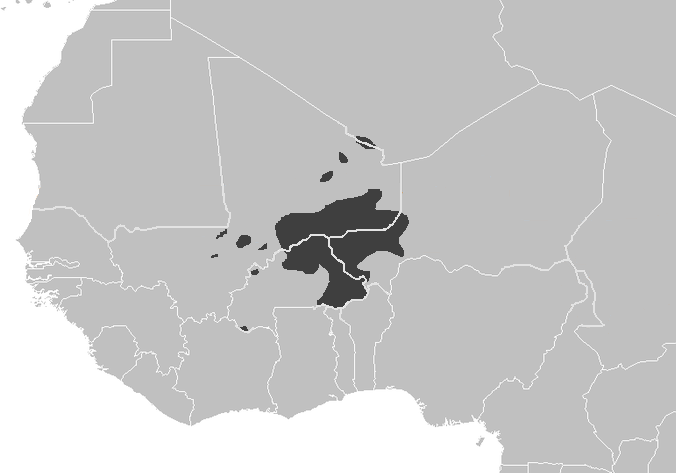
On the ground, the difference is essential. An attack on a military base can be repelled and counted in a statement. A blocked road, however, produces its effects every morning: fuel becomes scarcer, goods more expensive, convoys slowed down, and soldiers forced to escort trucks instead of holding villages. Security Council Report notes that JNIM has imposed blockades on routes leading to Bamako and attacked power lines. On May 6, trucks carrying food to the capital were reportedly set on fire.
This logic recalls the old rule of Sahelian theaters: whoever controls the well, the crossroads, and the bridge often holds more than those who control the prefecture. Between Mopti and Gao, between Kati and Bamako, it is not just about kilometers. It is about reaction time. A unit can cover a distance on the map; it does not cover it the same way if it has to open the road, search for improvised explosive devices, and monitor makeshift commercial drones.
JNIM and FLA — Tactical Alliance, Not Political Merger
The association between JNIM and elements of the FLA warrants caution. It does not mean that the ideological objectives of the jihadists and those of the Tuareg separatists overlap. It rather indicates an operational convergence: weakening the Malian army, exploiting the partial withdrawal of foreign partners, and reclaiming space in the north. After the April attacks, information cited by Security Council Report indicates that the Russian Africa Corps has withdrawn from Kidal as part of a passage agreement with the FLA. The exact details remain to be confirmed, but the signal is clear: Moscow has not turned northern Mali into a locked zone.
This is a sensitive point for Bamako. Since the departure of Barkhane and the end of the UN presence, the Malian strategic bet relies on a simple verticality: fewer intermediaries, more sovereignty, and politically more discreet partners. But a war of roads is not won by verticality. It is won through local intelligence, village relations, repeated logistics, and the ability to return after the convoy has left. From experience, this is where regular armies suffer the most: they can retake a post, but not always rebuild the trust necessary for someone to report the next trap.
The Threat Descends Towards the Gulf of Guinea
The most important passage of the UN briefing may not be Malian. Leonardo Santos Simão warns that the threat, already acute in the central Sahel and northern Nigeria, is quickly targeting the coastal states of the Gulf of Guinea. This is an evolution that foreign ministries have long treated as a future risk. It is becoming a present operational constraint.
The humanitarian figure gives the scale of the strategic displacement. By the end of February, West Africa and the Sahel were hosting nearly 6.8 million internally displaced persons, in addition to 1.3 million refugees and asylum seekers. The coastal states, long considered a rear area, now host about 220,000 refugees. In Liberia, according to the UN, the number of Burkinabé nationals has risen from 40,000 to 140,000 since 2025. This is not just a humanitarian statistic. It is a map of future pressures: land, public services, local police, recruitment, trafficking.
The north of Benin, the north of Togo, and the forest margins leading to the ports do not resemble Liptako-Gourma. The paths are different, the densities too, and the community balances as well. But armed groups do not need to replicate the Malian model exactly. They just need to open corridors, test local forces, and connect their war economy to existing trafficking. The UN also emphasizes the growing role of drugs and transnational criminal networks. This is often how insurgency becomes systemic.
Sahelian Armies Strike, but the Adversary Learns
The armies of the Sahel States Alliance (AES) are not passive. Mali, Burkina Faso, and Niger have claimed coordinated strikes against suspected positions in Mali. Nigeria is also intensifying its operations against Boko Haram and the Islamic State in West Africa (ISWAP), with occasional support from AFRICOM. These actions count. They can kill leaders, disrupt a concentration, and force the adversary to disperse its stocks.
But the UN briefing describes an adversary that learns faster than regional architectures can repair themselves. ECOWAS, AES, African Union, Western partners, Russia: each has a piece of the apparatus, rarely the whole. Intelligence circulates poorly, administrative borders continue to slice through an insurgent space that thinks in terms of paths, markets, and predation zones. On a staff map, the border between Mali, Burkina Faso, and Niger is a line. For a jihadist network, it is sometimes a depth of maneuver.
The point to watch is not just the next claimed attack. It is the next road that the state can no longer guarantee for three weeks.
The Next Front Will Be Logistical
Therefore, the message from New York must be read without illusion. The threat does not change its face because it suddenly discovers technology. It changes because it now combines three things: territorial control, criminal economy, and logistical pressure on the capitals. Drones and cryptocurrencies are tools. The closed road remains the decisive effect.
In the coming weeks, the most vulnerable sectors will be those where a garrison depends on a single axis, where civil authority has no reliable relays, and where the displaced create new pressure on transit cities. In Mali, this means the approaches to Bamako as much as the north. Towards the Gulf of Guinea, this means the northern margins before the ports. If JNIM and its allies can force states to protect every truck, they will not need to win all the battles. They will have already shifted the war to where the Sahelian armies are most fragile: over time.
Sources
- UN News — West Africa and the Sahel: Terrorism is changing its face, July 2026.
- UNOWAS — Briefing of Leonardo Santos Simão before the Security Council.
- Security Council Report — West Africa and the Sahel, July 2026 Monthly Forecast.
On April 25, 2026, JNIM and FLA launched coordinated attacks across Mali, targeting Bamako, Kati, Gao, Mopti, and Sévaré. This operation disrupted military logistics and demonstrated their control over key supply routes, contributing to the displacement of 6.8 million individuals. The groups utilized advanced technology, including drones and cryptocurrencies, to enhance their operational capabilities.
- JNIM and FLA conducted simultaneous attacks in Mali on April 25, 2026.
- 6.8 million displaced individuals reported due to the conflict.
- Attacks targeted military bases and supply routes, disrupting logistics.
- The groups are using advanced technology, including drones and cryptocurrencies.
- The conflict is evolving towards a logistical war affecting civilian supply lines.