
Ukraine's 172-Ship Drone Campaign Is Russia's New Crimea Problem
 Alexandra Reeves
Ukraine's 172-Ship Drone Campaign Is Russia's New Crimea Problem
Russia still talks as if Crimea is an unsinkable aircraft carrier. Ukraine is treating it more like a warehouse with bad fire insurance.
The latest round of Ukrainian strikes in the Black Sea and Sea of Azov is not just another line in the daily war feed. On July 19, President Volodymyr Zelensky said Ukrainian forces hit three Russian shadow fleet tankers in the Black Sea and four fuel infrastructure facilities in Stavropol Krai. The Kyiv Independent, citing Ukraine's General Staff and Security Service, reported that one of the tankers was the Avero, a vessel accused by Kyiv of moving Russian crude during the G7 and EU oil embargo. Ukrinform separately reported that the Security Service of Ukraine used a Mamai sea drone against the tanker and that the targets in Stavropol were roughly 600 kilometers from Ukraine's border.
The important part is not whether every Ukrainian damage claim survives later forensic scrutiny. Kyiv Independent made the right caveat: the outlet could not independently verify the full extent of the attacks. The important part is the pattern. Ukraine is no longer using naval drones simply to embarrass the Black Sea Fleet. It is trying to make Russian logistics around Crimea expensive, brittle, and permanently nervous.
A Campaign, Not A Raid
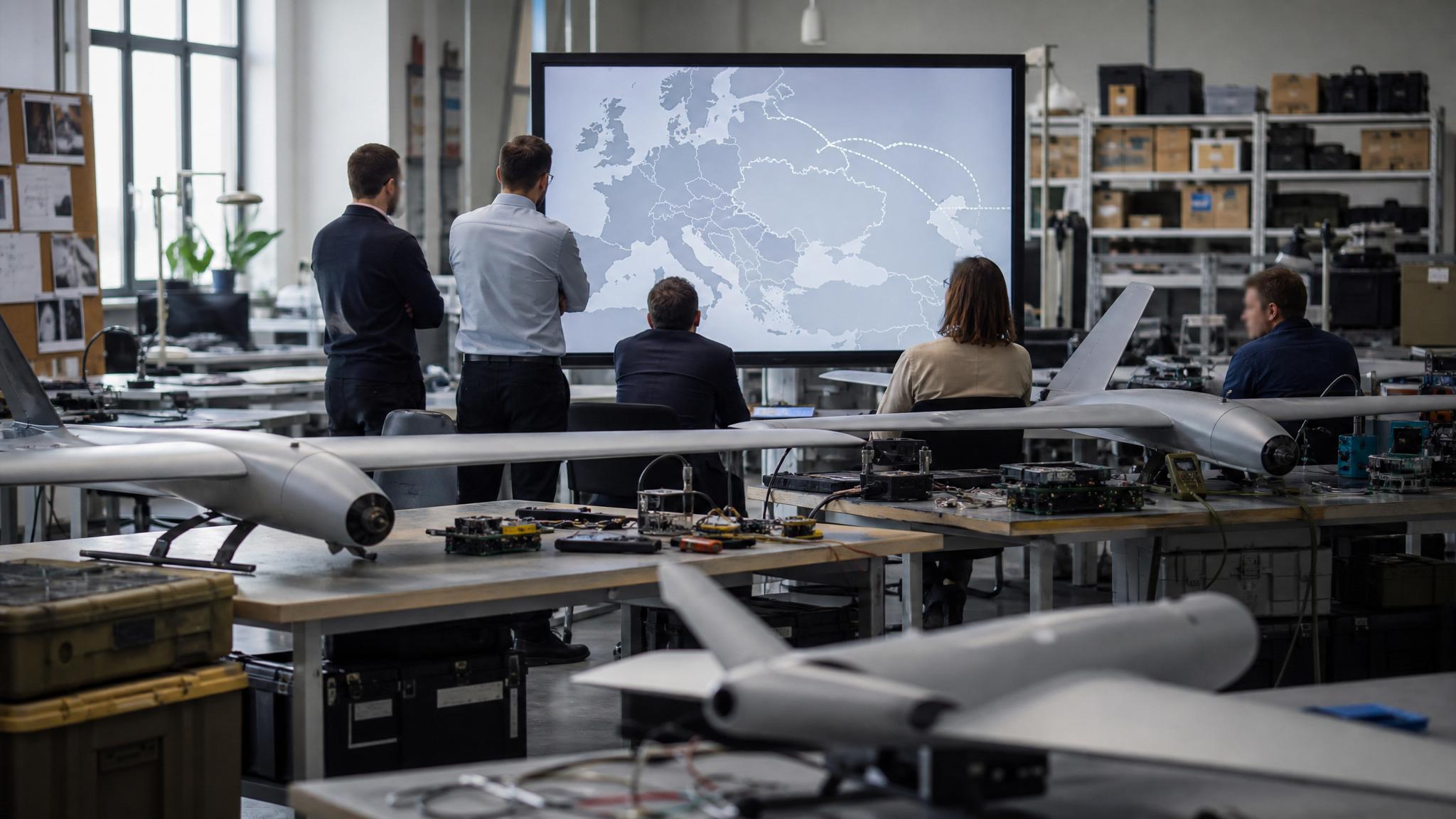
According to the Institute for the Study of War's July 18 assessment, Ukrainian strikes against vessels in the Black Sea and Sea of Azov are reportedly forcing Russia to divert elite drone units and air defence assets away from the front. ISW cited Ukrainian Unmanned Systems Forces commander Robert "Madyar" Brovdi as saying Ukrainian forces had struck 172 Russian naval or maritime-linked vessels over 13 days from around July 5. Brovdi also claimed that Russia had redeployed up to 200 drone crews from the Rubikon Center for Advanced Unmanned Technologies, all of the 51st Air Defence Division, and an anti-aircraft regiment from the Black Sea Fleet to defend vessels.
Those numbers are Ukrainian claims, and they should be treated as such. But even if the actual figure is lower, the operational logic is visible. Ukraine is attacking ferry crossings, tankers, tugboats, floating cranes, cargo vessels, oil depots, electrical substations, and road bridges. That is not random target selection. It is a pressure campaign against the transport layer that lets Russia feed Crimea, export through southern ports, and keep offensive sectors supplied.
Ukrinform reported on July 19 that Ukraine's Unmanned Systems Forces disabled three of the five ferries serving the Kerch ferry crossing during Operation MoLoCHKa between July 6 and July 19, reducing operational capacity by 75 percent. The reported details matter. The ferries Yeisk, Maria, and SKS-One were said to be out of meaningful service, while Lavrentiy and Panagia could no longer operate under their own power and were being used as barges. Brovdi said the ferries had carried 8 to 15 vehicles each and that about 80 percent of their traffic moved under Russian Defence Ministry quotas.
If that description is broadly accurate, Ukraine has found a better target than another trench line.
The Real Target Is Russian Optionality
Crimea depends on redundancy. Russia has the Kerch Bridge, ferries, ports, fuel depots, road routes through occupied southern Ukraine, and civilian-looking maritime traffic that can carry militarily useful cargo. The point of Ukrainian attacks is not necessarily to sever every route at once. It is to make every route require escorts, repairs, air defence coverage, drone operators, tugboats, insurance workarounds, and political explanations.
This is the same logic behind Ukraine's long-range drone campaign against refineries and oil infrastructure inside Russia. A single strike rarely changes the war. Repeated strikes force Russia to spread scarce defensive systems across a huge geography. That is where the Black Sea campaign becomes strategically interesting. Every air defence unit watching a tanker or ferry is an air defence unit not covering an ammunition depot, a command post, or a front-line logistics hub.
There is a Western habit of asking whether Ukraine can retake Crimea in a dramatic military operation. That is probably the wrong question. The more immediate question is whether Ukraine can make Crimea less useful to Russia month by month. A peninsula that needs constant emergency logistics is still occupied territory, but it is no longer a comfortable rear area.
Shadow Fleet Meets Drone Warfare
The attack on tankers also blurs the line between sanctions enforcement and combat operations. Kyiv says the Avero carried Russian crude to China and India during the embargo period. The Security Service of Ukraine argues that vessels in the shadow fleet help Moscow bypass restrictions, earn oil revenue, and finance the war. That framing is deliberate. Ukraine is telling Europe that its naval drones are doing what sanctions paperwork often fails to do: raising the physical risk of Russia's oil trade.
This is where Alexandra in Washington would have raised an eyebrow at Alexandra in London. Western governments have spent years trying to squeeze Russian energy revenues through price caps, shipping restrictions, insurance rules, and sanctions lists. Ukraine is now adding kinetic enforcement at sea. That does not mean every tanker becomes a legitimate target under every circumstance; maritime law and escalation risk still matter. But it does mean Russia's shadow fleet can no longer assume that opacity is protection.
Russia's response tells us something too. Moscow's Defence Ministry claimed it downed 140 Ukrainian drones across Russia, occupied Crimea, the Black Sea, and the Sea of Azov overnight. That claim may be inflated, but it still shows the scale of the defensive problem. Russia is defending ports, ships, oil facilities, bridges, Crimea, and deep rear areas at the same time. Ukraine does not need every drone to get through. It needs enough successful strikes to keep the Russian system reorganising around fear.
What To Watch Next
The next indicator is not a dramatic explosion video. It is throughput. Watch whether ferry traffic across Kerch stays depressed, whether fuel shortages in Crimea become more visible, whether Russian agricultural and energy exports through the Azov route slow, and whether Moscow moves more air defence away from the land campaign to protect maritime logistics. ISW noted that Reuters had reported disruptions to Russian agricultural exports if Azov routes become unreliable. That is a war effect with economic teeth.
Ukraine's problem is sustainability. Sea drones, long-range UAVs, targeting intelligence, and strike coordination all cost money and industrial capacity. Russia will adapt. It will harden ports, disperse fuel, add decoys, change sailing patterns, and push more traffic through routes Ukraine cannot easily reach. But adaptation is not free, and that is the point.
The Black Sea campaign will not win the war by itself. It may do something more useful in the near term: make Russia pay rent on Crimea every day. The uncomfortable conclusion is that Ukraine's most effective path to Crimea may not start with a beachhead. It may start by making the peninsula too costly to treat as a rear base.
Ukrainian forces conducted a series of strikes against 172 Russian naval and maritime-linked vessels in the Black Sea and Sea of Azov from July 5 to July 19. These operations targeted key logistics assets, including ferries and tankers, significantly disrupting Russian supply routes to Crimea. The attacks are part of a broader campaign to increase the operational costs for Russia in the region.
- Ukrainian forces struck 172 Russian vessels over 13 days from July 5.
- Three Russian ferries serving the Kerch ferry crossing were disabled, reducing operational capacity by 75%.
- Ukraine's attacks aim to disrupt Russian logistics and make operations around Crimea costly.