
Two US MSC Ships Show RIMPAC 2026 Has a Logistics Ceiling
 Marcus Chen
Two US MSC Ships Show RIMPAC 2026 Has a Logistics Ceiling
Two logistics ships are sustaining 36 surface combatants at RIMPAC 2026. That is the number that matters more than the 30 nations, five submarines, 206 aircraft, or 25,000 personnel in the official exercise roll-up.
U.S. Pacific Command reported on July 17 that fleet replenishment oiler USNS Guadalupe (T-AO 200) and dry cargo and ammunition ship USNS Washington Chambers (T-AKE 11) are delivering aviation fuel, marine diesel, food, equipment, and other supplies to the surface force around Hawaii. The ships are conducting multiple replenishment-at-sea operations nearly every day, sometimes fueling and moving cargo to ships on both sides at the same time.
That sounds routine because the U.S. Navy has made underway replenishment look routine for decades. It is not routine. It is the hidden math behind every Pacific operation. A destroyer without fuel is a radar picket that becomes a pier ornament. A frigate without missiles is a patrol vessel. A coalition task group without standardized logistics procedures is a photo exercise with a short shelf life.
The Two-Ship Backbone
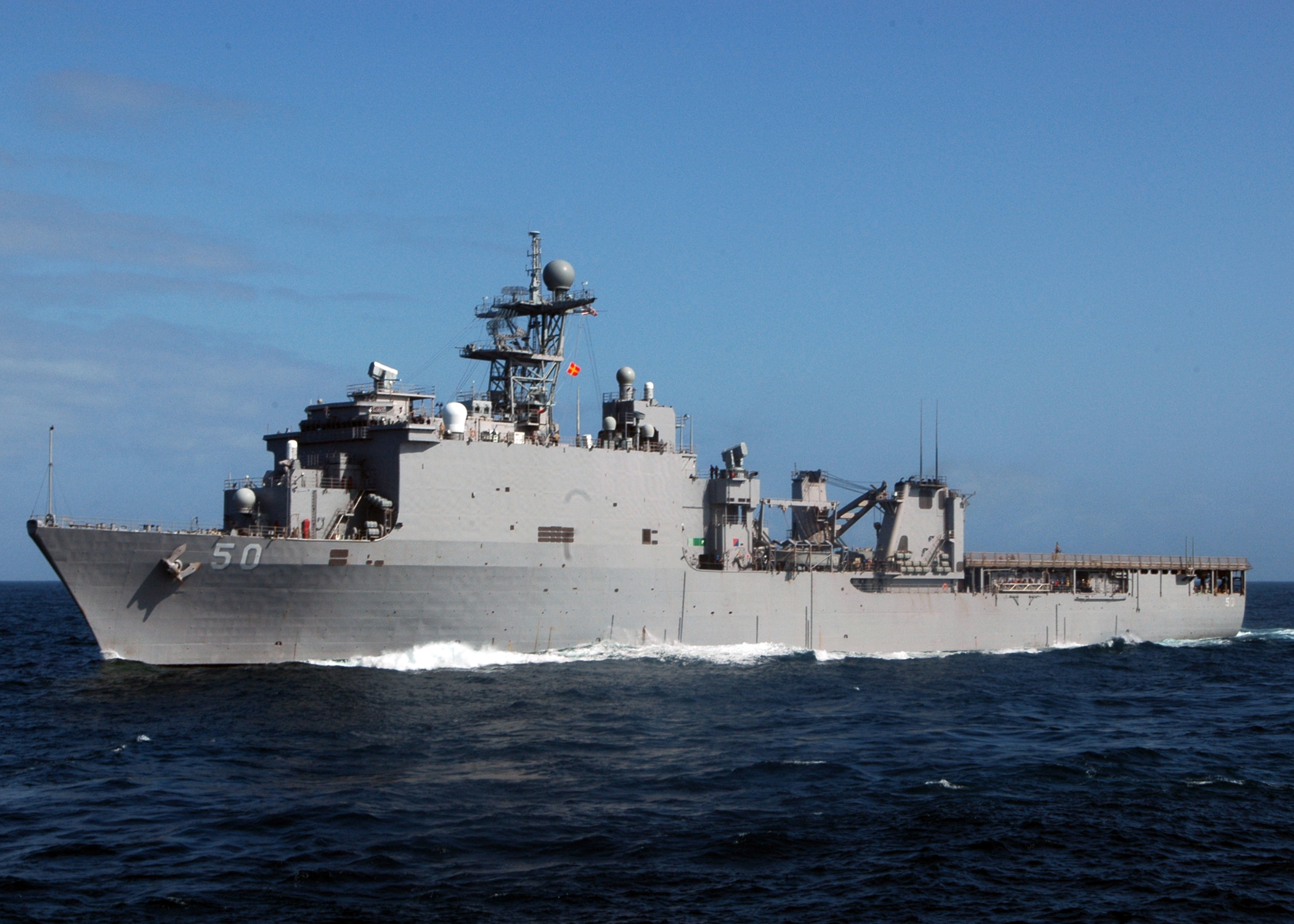
Guadalupe is a Kaiser-class fleet replenishment oiler, 677.5 feet long, roughly 41,000 tons displacement, and capable of 20 knots according to Military Sealift Command data. Washington Chambers is a Lewis and Clark-class T-AKE, 689 feet long, 41,000 tons displacement, and also rated at 20 knots. The oiler brings fuel. The T-AKE brings ammunition, food, repair parts, stores, and small quantities of fuel.
Those specifications are not glamorous, but they define operational reach. A carrier strike group can sprint. A logistics ship usually cannot. A surface action group can disperse. Its fuel demand cannot disperse at the same rate unless the Combat Logistics Force has enough hulls, trained civilian mariners, and protected routes to follow.
The ability to refuel and resupply ships at sea is the logistics backbone that keeps the exercise force sustained and ready, Capt. Aaron Caputo, civil service master of Washington Chambers, said in the PACOM release.
Caputo is right, but the backbone is thin. RIMPAC is a scheduled exercise in friendly waters near Hawaii. Ships know the window, the routes, the communications plan, the replenishment schedule, and the partner participants. Even there, Washington Chambers had to return from a major overhaul at Vigor Marine Group in Portland, get underway for sea trials on June 14, arrive in Hawaii on July 2, and reach Ready for Tasking status on July 6. That compressed timeline is a useful success story. It is also a warning.
In a shooting war west of the International Date Line, the Navy would not get that neat ramp. It would get contested ports, cyber disruption, long-range missile threats, insurance problems for commercial sealift, and a demand signal that changes by the hour.
RIMPAC Tests Procedures More Than Capacity
RIMPAC 2026 runs from June 24 to July 31 around the Hawaiian Islands. Pacific Fleet announced in April that the exercise would include about 40 surface ships, five submarines, 140 aircraft, and more than 25,000 personnel. The July 17 update revised the underway force to 36 surface ships and more than 206 aircraft, which suggests a large and complex training environment, but not one that approximates the Western Pacific fuel problem.
Hawaii is roughly 3,800 nautical miles from Guam and more than 4,500 nautical miles from the Luzon Strait. The RIMPAC operating area is enormous by civilian standards and convenient by Pacific war standards. A replenishment ship supporting forces near Hawaii can cycle back into an American logistics ecosystem. A replenishment ship supporting destroyers east of Taiwan or south of Japan lives in a different risk equation.
The most useful part of the PACOM release is not the public relations language about cooperation. It is the detail about mismatched procedures. Capt. Kevin Sauls, the civil service master of Guadalupe, noted that partner navies bring different chains of command, communications practices, and even measurement systems. The United States still uses imperial measures. Many partners use metric. That sounds minor until a fuel transfer, ammunition movement, or alongside approach happens at night, in weather, with a nervous watch team and a commander trying to keep emissions low.
Anyone who has stood bridge watch on a destroyer knows the closest thing to combat stress in peacetime is being alongside another ship at speed with heavy lines over the water. Now add multinational procedures and a compressed replenishment schedule. RIMPAC is doing real work if it burns down those frictions before a crisis.
The Pacific Fight Is a Sustainment Fight
The U.S. military likes to talk about distributed maritime operations, expeditionary advanced bases, and long-range precision fires. Those ideas all depend on an unromantic question. Who refuels the force after the first salvo?
China has spent years building a missile force designed to make fixed bases and large logistics nodes vulnerable. The U.S. answer has been dispersal, mobility, and allied access. That answer only works if sustainment can follow the dispersed force. A Marine Littoral Regiment, a destroyer group, or a coalition patrol line can create sea denial for a time. They cannot create endurance by themselves.
Guadalupe and Washington Chambers are therefore more than support ships. They are the difference between presence and persistence. But two ships at RIMPAC also show the ceiling. The U.S. can demonstrate interoperability with 30 nations. It can put 36 surface ships to sea around Hawaii. It can run daily replenishments and learn hard lessons about multinational procedures. What it cannot do, at least not yet, is make the logistics base look deep enough for a prolonged fight across the first and second island chains.
That is the uncomfortable part of this exercise. RIMPAC proves the coalition can assemble. It does not prove the coalition can stay supplied under fire.
What Washington Should Take From This
The lesson is not that RIMPAC is hollow. The lesson is that the useful exercise is the logistics exercise. Every replenishment event should be treated as a warfighting drill, not background choreography for the ships with vertical launch cells.
- First, the Navy needs more Combat Logistics Force depth, including oilers, T-AKEs, tenders, and repair capacity.
- Second, allied navies need common replenishment procedures that survive radio discipline, degraded navigation, and language friction.
- Third, Pacific planning should count fuel days and reload options as carefully as missile ranges.
RIMPAC 2026 is advertised as Partners Integrated and Prepared. Integration is visible. Prepared is harder. If two MSC ships can keep a 36-ship exercise force moving near Hawaii, that is good seamanship. It is not proof that the United States can sustain a coalition fleet in the Western Pacific when China tries to break the logistics chain first.
The Pacific war problem is not only about who has more shooters. It is about who can keep those shooters fed, fueled, armed, and repaired after the map stops being friendly. RIMPAC is showing the right problem. Washington should resist the temptation to call that the same thing as solving it.
Two U.S. Navy Military Sealift Command ships, USNS Guadalupe and USNS Washington Chambers, are conducting replenishment operations to sustain 36 surface combatants during RIMPAC 2026 in Hawaii. The exercise, running from June 24 to July 31, 2026, highlights the importance of logistics in military readiness, revealing challenges in multinational procedures and supply chain management. The operations are essential for maintaining the operational capability of the coalition forces.
- Two U.S. MSC ships are sustaining 36 surface combatants at RIMPAC 2026.
- USNS Guadalupe and USNS Washington Chambers are delivering supplies to the surface force.
- RIMPAC 2026 runs from June 24 to July 31, 2026, around Hawaii.
- The logistics operations are crucial for maintaining military readiness during the exercise.
- Challenges include different chains of command and communication practices among partner navies.