
JNIM and FLA tighten their grip on Bamako in 2026 — 700 tank trucks reveal Malian fragility
 Marie Dubois
JNIM and FLA tighten their grip on Bamako in 2026 — 700 tankers reveal Malian fragility
In Kati, about twenty kilometers from Bamako, April 25 was not a peripheral attack. It was a strike against the nerve center of the Malian state, where the military power usually believes it is protected by distance, checkpoints, and familiarity with the terrain. The death of General Sadio Camara, Minister of Defense and a heavyweight of the junta, has changed the operational reading of the crisis. Since then, every truck entering Bamako counts almost as much as a battalion.
The available facts remain incomplete, and several assessments are still difficult to verify independently. But the evidence is strong enough to draw a military conclusion: the tactical coalition between the Support Group for Islam and Muslims, or JNIM, and the Azawad Liberation Front, or FLA, has succeeded in imposing a national mobility problem on Bamako. It is not yet a medieval siege. It is more subtle and more dangerous: intermittent pressure on the roads, fuel supplies, reinforcement routes, and the morale of the barracks.
The road is now worth as much as the city
Le Monde reported that the coordinated attacks on April 25 against Bamako, Kati, and several regions did not overthrow the junta, but they destabilized it to an unprecedented level since the coup in 2020. The same investigation describes the loss of Kidal and then Tessalit, the humiliating evacuation of Malian soldiers and Russian elements, and the pressure exerted on the entry routes to the capital. The most telling detail is not spectacular: a convoy of about 700 tankers escorted by the army and Africa Corps arrived from Côte d'Ivoire. When such a protected mass is needed to supply the capital with fuel, the theater of operations has already shifted.
On the ground, this logic is familiar. Bamako is not held by occupying every kilometer of asphalt. It is held by making every journey costly, uncertain, and slow. The roads from Ségou, Sikasso, and the Ivorian border then become arteries under threat. The jihadists do not need to control all the exits from the capital; they must convince transporters, drivers, and traders that the probability of losing a truck has become too high.
AllAfrica, citing an analysis from African Arguments, emphasizes the geographical scope of the offensive: the attacks have affected points located about 1,500 kilometers apart, from Bamako to Kidal. This dispersion is not a gratuitous demonstration. It forces the Malian staff to choose between protecting the political heart, defending the symbolic north, reopening the roads, and reassuring the cities in the center. None of these choices can be abandoned without political cost.
The JNIM-FLA alliance changes the grammar of war
The partnership between JNIM and FLA does not erase their differences. One carries a transnational jihadist project, the other a Tuareg territorial claim. But a war is often won through temporary arrangements before being lost in political contradictions. For now, their division of labor is effective. JNIM provides the clandestine depth, harassment cells, and the ability to influence economic flows. FLA brings knowledge of the northern corridors, local networks, bypass routes, and the psychological effect of Kidal.
The Associated Press reported in early May that Malian authorities accused some officers of having worked with jihadists and separatists during the recent attacks. This point must be handled with caution: a junta under pressure has an interest in designating traitors. But it also reveals the regime's main anxiety. An attack on Kati is not only read as an enemy breakthrough; it forces every commanding officer to wonder who observed the routines, who knew the access points, and who turned a blind eye.
The double attack reported a few days later in central Mali, with dozens of deaths according to several accounts, confirms that the coalition is not only seeking the capital's effect. It stretches the crisis towards Mopti and the villages in the center, where the Malian state already depends on an intermittent presence. A garrison can hold its enclosure; it does not automatically hold the market, the well, the lateritic track, and the local radio. This is where JNIM excels.
Africa Corps has aircraft but lacks depth
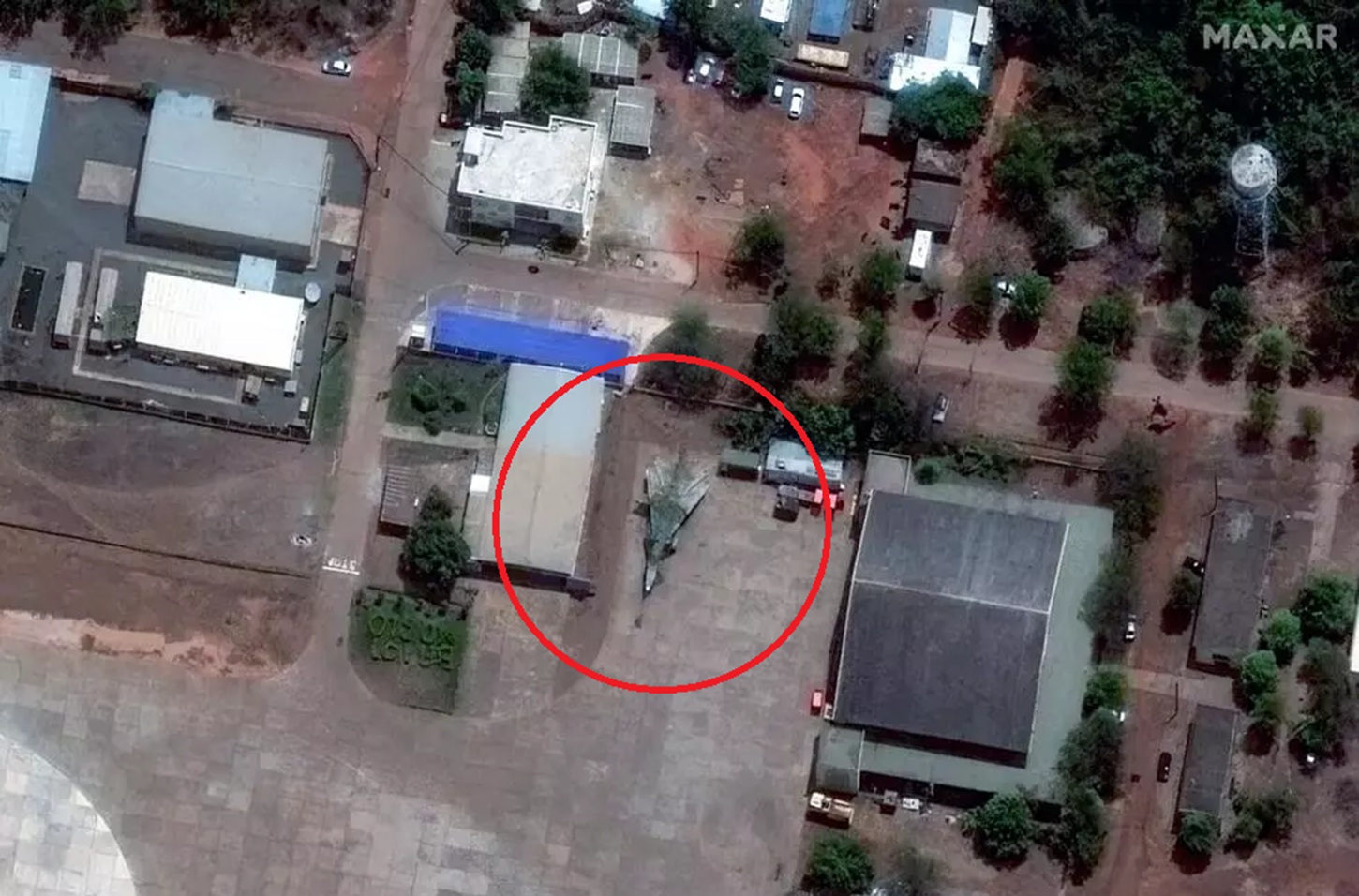
The Russian presence in Mali is often discussed as a geopolitical symbol. This is not enough. Defence Blog documented earlier this month a substantial Russian air asset: Mi-8AMTSh, Mi-24P, Mi-26 helicopters, Orlan and Inokhodets drones, as well as Su-24s operating from Bamako airport. This aviation gives the junta a strike and transport capability that the Malian army could not produce alone. On a map, this is impressive.
But aviation alone does not fix a territorial authority crisis. A Su-24 can strike a column or a camp. A Mi-8 can evacuate the wounded and resupply Hombori or Gao. No aircraft guarantees that a village chief will provide reliable information, that a road will remain open the next day, or that a Malian unit will hold its perimeter under nighttime pressure. The experience of Barkhane had already shown this: air superiority reduces losses; it does not automatically produce political control.
This is precisely the Russian problem. Africa Corps operates as a tactical multiplier, not as a strategic substitute. Le Monde mentions about 2,000 Russians already present and nearly 200 reinforcements arrived on May 6. Even if these figures are approximate, they indicate a force too small to simultaneously secure Bamako, the logistical axes, the Peul center, Kidal, Tessalit, Aguelhok, and Anéfis. The Russians can harden a point. They cannot be everywhere, and JNIM knows this.
The lost north weighs on the south
The loss of Kidal is not only significant for its military importance. It destroys a narrative. Since 2023, Bamako has been selling the reconquest of the north as proof that the departure of France, MINUSMA, and multilateral frameworks had liberated Malian sovereignty. If Kidal and Tessalit become unreachable spaces again, the regime's central promise turns against it. The military leader who claimed to restore the state must now explain why the state can no longer protect its own roads.
One must also consider the season. The heat in Bamako regularly exceeds 40 degrees, power and water outages exacerbate social fatigue, and Tabaski is approaching. In a capital where fuel is becoming scarce and prices are rising, the military effect quickly transforms into political stress. A blown-up checkpoint on a road can end in anger in a gas station queue.
The critical point is therefore not an immediate takeover of Bamako. I do not believe that JNIM and FLA currently have a sustainable capacity to administer the capital. Their rational objective is different: to force the junta to contract, to compel it to consume its reserves, to increase distrust within the army, and to make the Russian partner visible as a costly but insufficient shield.
The next test will be Aguelhok or the Sikasso road
Two areas now deserve close monitoring. The first is the northeast, between Aguelhok, Anéfis, and Gao. If Malian and Russian forces lose the initiative there, the return to the north will become a reconquest operation, not a simple restoration. The second is more discreet but more dangerous for Bamako: the axes that connect the capital to fuel and food supplies coming from the south and Côte d'Ivoire.
JNIM does not need a total victory to produce a strategic result. It is enough for them to make it seem that every convoy is a military operation, every road a political decision, and every fuel shortage a proof of impotence. This is a war of pressure. And in this war, Bamako has not yet fallen, but it has already ceased to be far from the front.
Sources
- Le Monde — Mali's junta effectively under siege since Bamako attack
- AllAfrica / African Arguments — Bamako Under Siege
- Associated Press — Mali accuses military officers of working with jihadis
- Associated Press — Deadly double attack hits two central Mali villages
- Defence Blog — Russia runs full combat aviation grouping in Mali
JNIM and FLA exerted significant pressure on Bamako's supply routes as of April 25, 2026, following the death of General Sadio Camara. A convoy of 700 fuel trucks was escorted from Côte d'Ivoire to support the capital, indicating logistical challenges. The coalition's actions have destabilized the Malian junta, particularly after the loss of Kidal and Tessalit, forcing military leaders to reassess their strategies.
- The coalition between JNIM and FLA has imposed significant pressure on Bamako's supply routes.
- A convoy of approximately 700 fuel trucks was escorted by military forces from Côte d'Ivoire to Bamako.
- The death of General Sadio Camara has altered the operational landscape in Mali.
- Attacks on April 25 did not overthrow the junta but destabilized it significantly.
- The loss of Kidal and Tessalit has political implications for the Malian regime.